What Black Art Has Always Understood About Joy as Resistance
On beauty, pleasure, and the refusal to let suffering become the whole story.
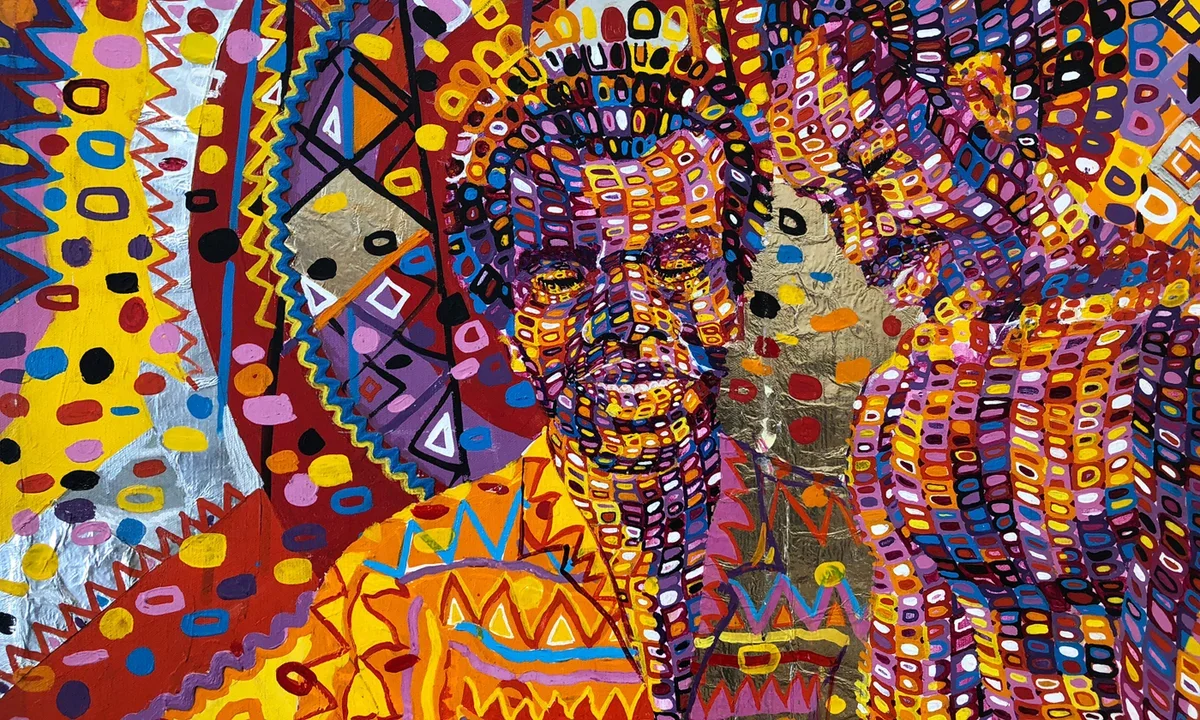
Together We Will Win by Wadsworth Jarrell. Photograph: Courtesy of Kravets/Wehby Gallery
A juke joint sits at the center of Sinners. Ryan Coogler's 2025 film opens with twin brothers building a gathering space in 1932 Jim Crow Mississippi—a place for music, for dancing, for the kind of presence that exists only when a community decides, collectively, that tonight they will be alive.
The threat that arrives is supernatural. What stands against it isn't simply a weapon. It's the blues—music, memory, and a community gathered in the room, refusing to scatter. This isn't new in Black creative tradition. Its history is much longer than the moment.
The Harlem Renaissance and the Politics of Beauty
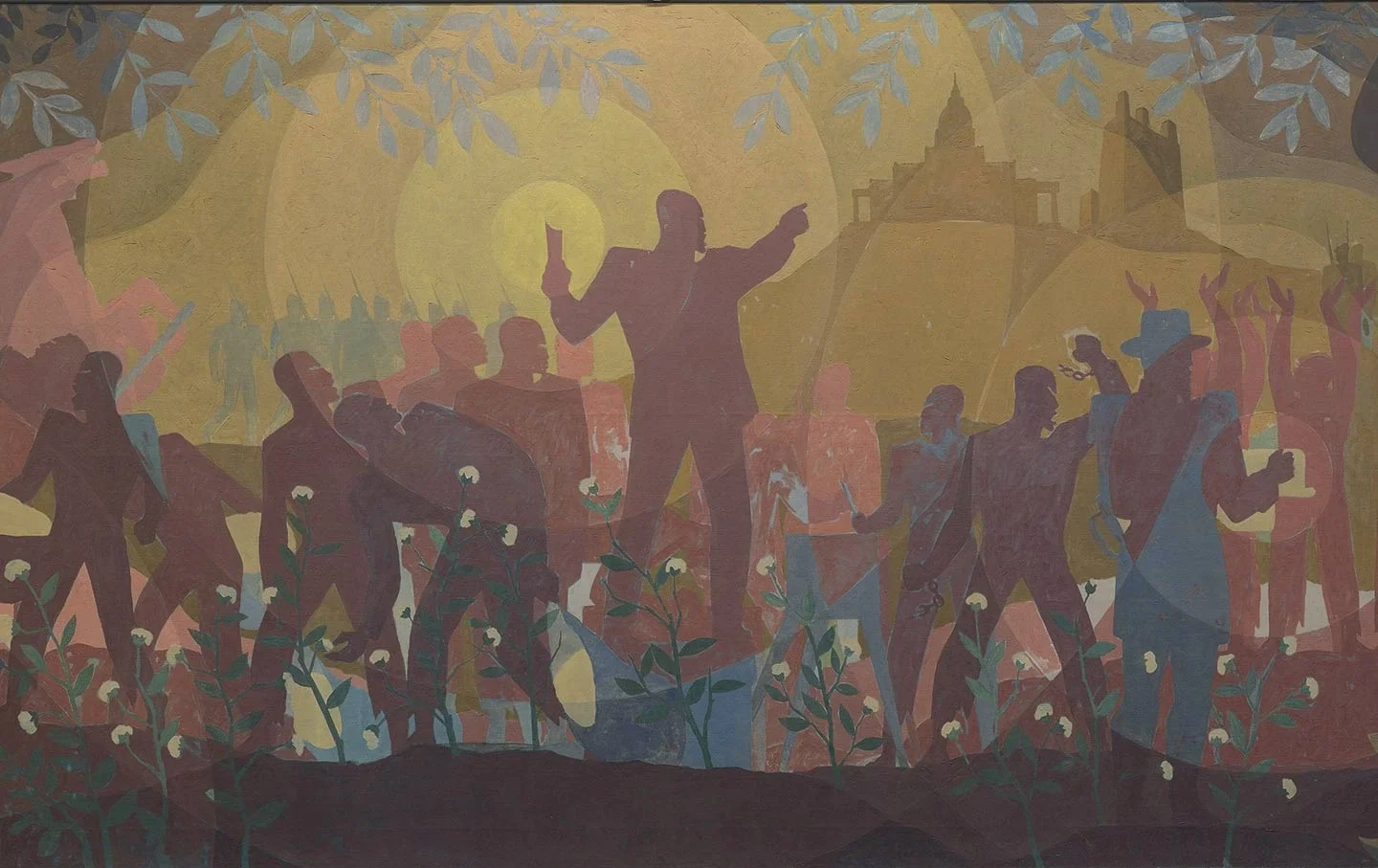
Aaron Douglas, Aspects of Negro Life: From Slavery to Reconstruction, 1934. Schomburg Center for Research in Black Culture, NYPL
In 1925, Alain Locke edited The New Negro, a landmark anthology announcing what became known as the Harlem Renaissance. The context was Jim Crow—systemic exclusion engineered by policy and normalized by law. The art that emerged from it did not accept suffering as the whole story.
Aaron Douglas painted murals of Black figures in silhouette, reaching upward, surrounded by geometric forms drawn from African visual tradition—aspiration rendered as the subject itself, not the exception.
Augusta Savage's Lift Every Voice and Sing, a harp shaped from Black figures, was installed at the 1939 World's Fair as both music and monument. It was destroyed after the fair closed—there was no money to cast it in bronze, and nowhere to store the plaster. That loss is itself part of the story: making beautiful art about Black joy inside systematic dehumanization was a refusal to let dehumanization define the terms of Black life.
The Tradition Continues
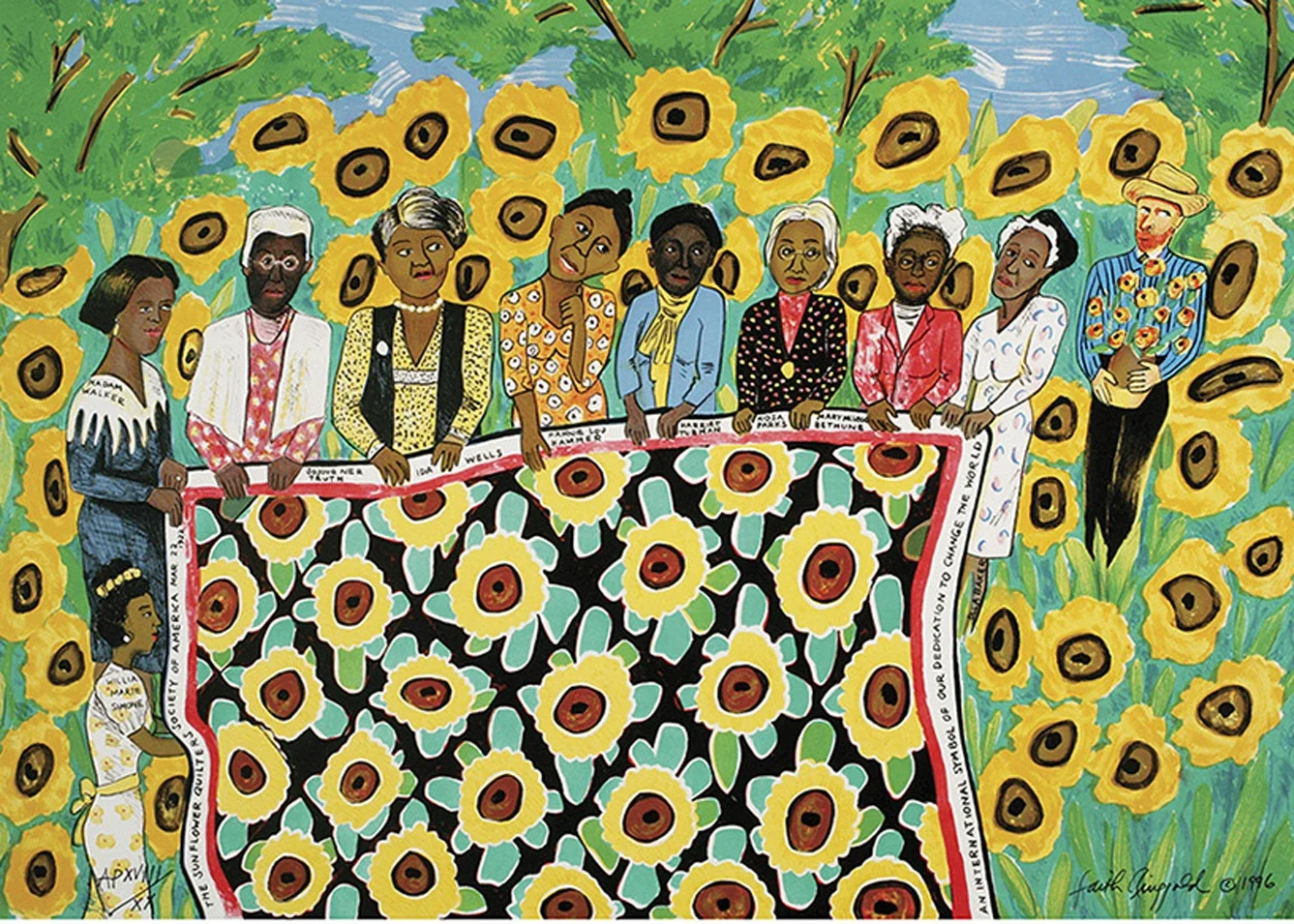
© Faith Ringgold / ARS, NY and DACS, London, courtesy ACA Galleries, New York.
The Harlem Renaissance did not end. It transformed.
In 1968, five Chicago artists founded AfriCOBRA, building a visual language around positive imagery, African-derived forms, text, and the bright, saturated colors they called "Kool-Aid colors"—work built for the community's own walls, not the gallery's approval.
Faith Ringgold carried that same conviction into her story quilts—large-scale textile works combining painting and narrative in a form Western art institutions had long placed below painting and sculpture in the hierarchy of fine art. Her quilts told stories of Harlem, of family, of political struggle. She made a devalued medium monumental, and the joy in that work is inseparable from its defiance.
What the Present Generation Refuses to Simplify
Kehinde Wiley places Black subjects inside the visual language of European Old Master portraiture, giving them the poses and visual authority once reserved for generals, aristocrats, and kings. The effect asks who has been considered worthy of this kind of rendering, and answers by rendering them.
Titus Kaphar works between grief and joy without resolving the tension between them. His paintings excavate art history, cutting and folding canonical Western works to ask who was left out. His recent work on fatherhood holds the weight of racial trauma and the fierce joy of loving his children at the same time. He refuses to choose one.
What the Juke Joint Understood
For more than a century, Black artists have used paint, textiles, and the blues to claim their right to take up space.
The answer is not either/or. The grief and the Saturday night. The family at the table and the dancing in the juke joint. The harp made of figures reaching upward, even after the sculpture itself was gone.
Joy never claimed history didn't hurt. It simply declared that history would never hold the whole of Black life.
Further Reading: On Beauty That Refuses to Apologize
These pieces follow the same idea in different forms—that joy, beauty, and celebration are not the opposite of seriousness, but some of its most disciplined forms.
→ What Amy Sherald Leaves Out: The same refusal, made through a different formal choice—a Black artist stripping away everything that would let a viewer explain a subject's presence away instead of simply reckoning with it.
→ The Art We Call Craft — And Why the Line Was Never Neutral: Faith Ringgold's story quilts, and the century-long habit of calling women's and Black artists' work "craft" to keep it out of the canon