April Book Pick: Wild Dark Shore by Charlotte McConaghy
On protection that stops asking permission.
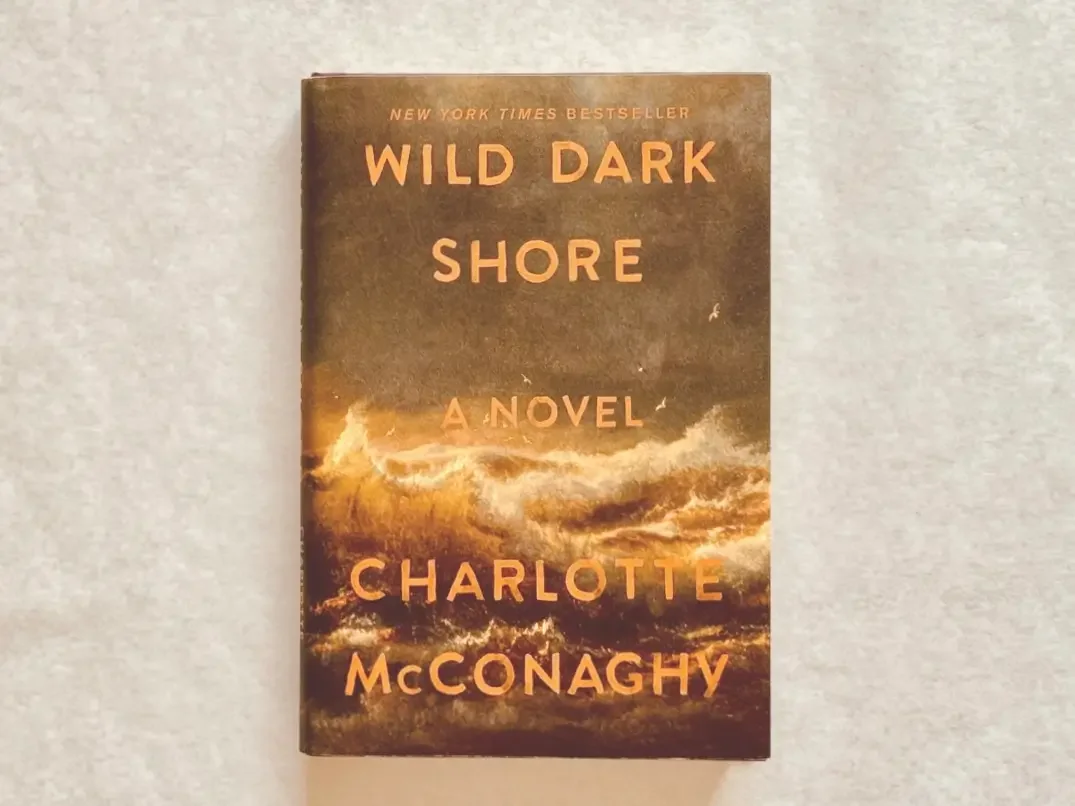
Wild Dark Shore by Charlotte McConaghy
Dominic Salt built a life that needed nothing from the outside world. A seed vault. A coastline nobody visits. A radio he sabotaged himself, so no one could tell him it was time to leave. He did this after loss taught him that safety isn't found. It's engineered.
Then a woman washes ashore, half-drowned, carrying a past of her own. The walls he built to keep danger out have kept something else in.
That's the novel's real subject: when protection stops being love and starts being a door that locks from one side.
Love That Sounds Like Control
Dominic is not written as a villain. McConaghy refuses him that shape. He is a man who loved completely, lost completely, and concluded that control was the only insurance against losing again.
The radios. The secrets. The quiet, permanent sense that something is being managed rather than lived. None of it reads as cruelty. It reads as fear wearing the costume of care.
His daughter Fen absorbs the lesson first. She has learned vigilance the way other children learn a language—early, fluently, without remembering being taught. Watching her is the clearest evidence of what the novel is arguing: control doesn't just fail to protect the next generation. It teaches them to keep doing it.
Trust Practiced Before It's Earned
Rowan arrives with every reason to withdraw. Her past has already shown her the cost of misplaced trust. She stays open anyway.
She doesn't protect the children because she's healed. She protects them while she's still healing—a harder, less photogenic kind of courage than the version usually put on a cover. Her kindness isn't naive. It's a choice she keeps making: to move toward people instead of away from them.
Where Dominic's model treats trust as a risk to be eliminated, Rowan's treats it as a practice—something done before you feel ready, not after.

What the Children Carry Forward
Raff has learned distance. Fen has learned watchfulness. Orly, the youngest, has learned something neither of his siblings quite manage: hope, in a place built to ward off catastrophe. He finds meaning in the seed vault his father tends like a fortress—not as a hedge against disaster, but as evidence that something is still worth carrying forward.
The vault becomes the novel's clearest metaphor. Not everything a family stores away is meant to protect what's inside. Sometimes it's meant to prove there's still a future worth stocking it for.
A Shore Worth Landing On
Near the end, the family and Rowan share a meal, and then, unplanned, they dance on the shore. Nothing has been resolved. The danger hasn't passed. But for one scene, the island stops being a fortress and becomes something closer to a home.
Wild Dark Shore doesn't argue that connection is safer than isolation. It argues something quieter: that isolation was never actually safety. It was only distance, wearing safety's clothes.
Not guarded. Not solved. Just witnessed.