The Table as Connection: How Shared Meals Build Emotional Intelligence
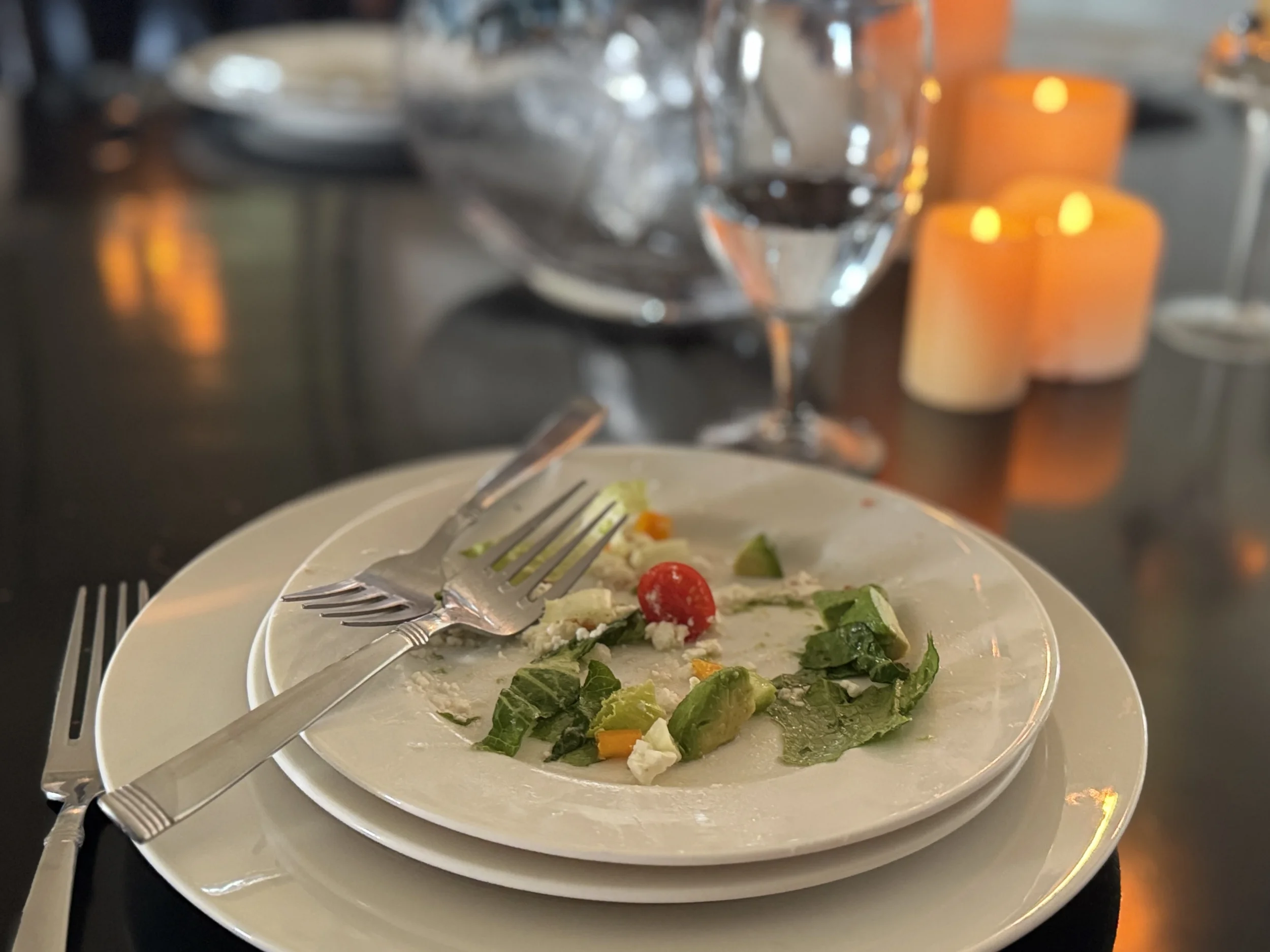
Why sitting down together — across difference, across silence, across whatever is hard right now — might be one of the most underrated emotional practices of our time.
There is a moment that happens at almost every shared meal, if you let it.
It arrives somewhere between the first glass and the second course, when the performance of catching up has softened into something more honest. Someone says something true. Someone else laughs — not politely, but genuinely. A silence falls that doesn't need to be filled. And for a few minutes, the table holds something that the rest of the day rarely does: actual presence.
We talk about food in terms of nourishment, of pleasure, of culture and memory. We talk less about what it does to the people sitting around it — what it quietly asks of them, and what it quietly gives back. The shared meal is one of the oldest emotional technologies we have. And in an age of curated digital interaction and increasing isolation, it may also be one of the most radical acts available to us.
What the Table Actually Asks of You
You sit close to people. You cannot scroll away. You have to respond in real time, without editing, without the buffer of a screen between what you feel and what you say. You pass things. You wait. You listen without knowing when it will be your turn to speak again.
These are not small things. They are, in fact, exactly the conditions under which emotional intelligence develops — not in theory, but in practice. Psychologists who study interpersonal connection consistently identify shared vulnerability, active listening, and sustained presence as the core mechanics of empathy. The dinner table forces all three simultaneously.
It also introduces something that is increasingly rare in modern life: contact across difference. Not the managed, curated kind — but the messy, real kind. The kind where your grandmother's politics and your friend's grief and your colleague's unexpected tenderness all arrive at the same table, and you have to hold all of it at once.
That is not comfortable. It is also exactly what grows us.
The Science of Sitting Together
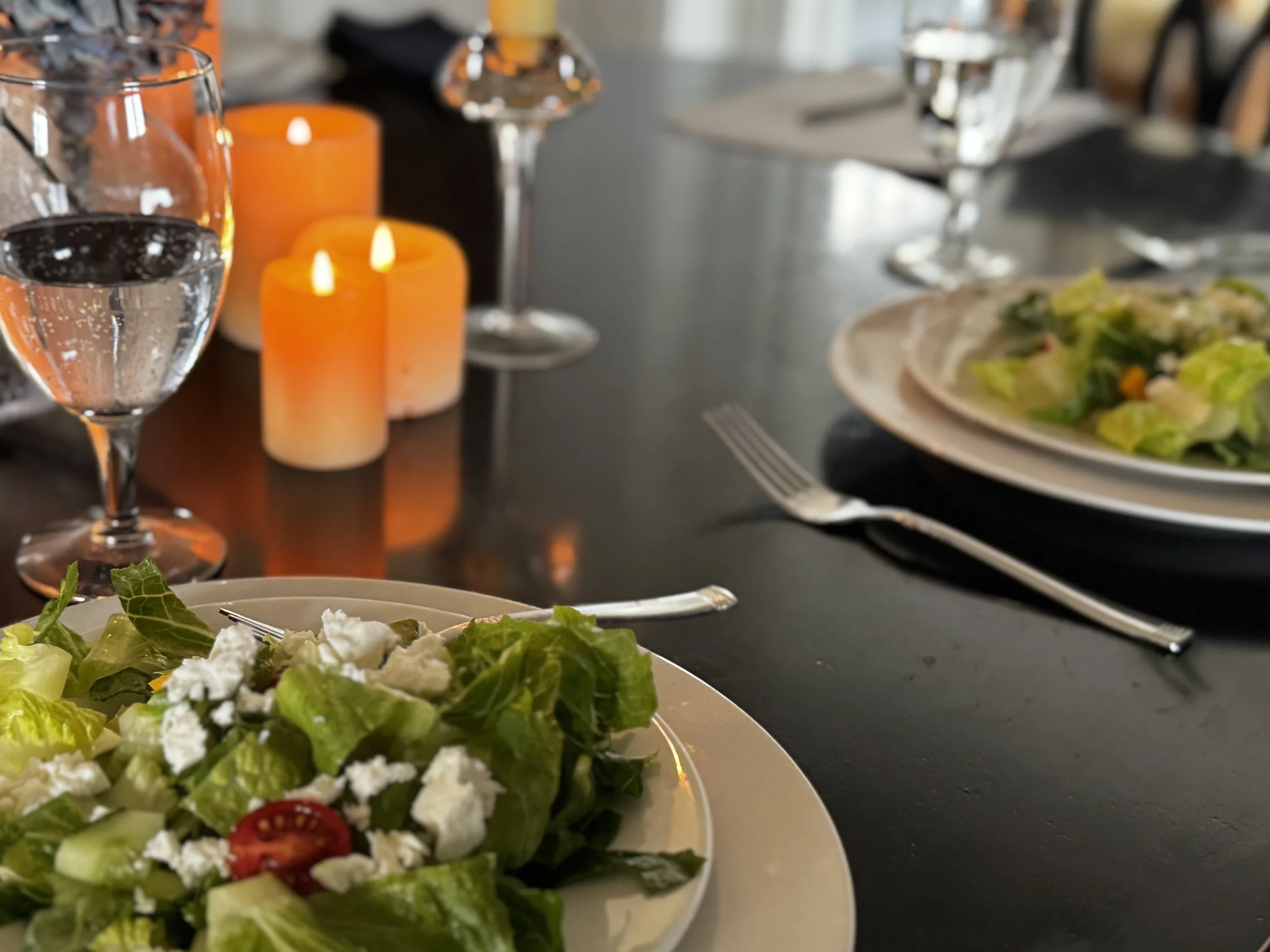
Research on communal eating — from Oxford's social neuroscience work to studies on family meal frequency and adolescent wellbeing — points consistently in one direction: people who eat together regularly report higher levels of trust, lower levels of loneliness, and stronger capacity for empathy across social groups.
Part of this is neurological. Shared eating triggers the release of oxytocin — the same bonding hormone activated by physical touch and laughter. Rhythm matters too: the synchrony of eating at the same pace, reaching for the same bread, pausing at the same moment, creates a subtle physical mirroring that primes emotional attunement.
But beyond chemistry, there is something more specific happening at the table. Food requires vulnerability in a way that most social rituals do not. To share a meal is to share hunger — a need. It dissolves, briefly and imperfectly, the careful self-sufficiency we perform in almost every other context. And in that dissolution, something opens.
What Film and Literature Have Always Known
Stories have understood this long before science confirmed it.
In Roma — one of the films explored in our guide to films about love, grief, and human connection — some of the film's most emotionally charged moments happen not in crisis, but at the table. The daily choreography of meals prepared and shared becomes the language of care where other language fails. Cleo feeds the family she works for. They feed her back, imperfectly, belatedly, but genuinely. The table is where the film's most honest emotional truths live.
Literature returns to this again and again. In Wild Dark Shore — our April book recommendation, reviewed in full — one of the novel's most quietly devastating scenes is a shared meal on the shore: laughter, warmth, an ordinary moment of joy carved out of grief and isolation. Charlotte McConaghy understands what the table means. It is the place where survival becomes something more than endurance.
Even in A Man Called Otto, one of the ten films in our connection guide, healing doesn't begin with a conversation or a confession. It begins when someone shows up at the door with food. The meal precedes the emotional repair. It always does.
This is not coincidence. Writers and filmmakers return to the table because they understand — instinctively, structurally — that it is where human beings become legible to each other.
The Table Across Difference
There is a particular kind of shared meal that deserves its own attention: eating across difference.
Across class. Across culture. Across political fracture or generational distance or the specific tension of people who love each other and disagree about almost everything. These meals are harder. They are also, arguably, more important.
Food is one of the few universal languages — and one of the most generous. When someone cooks for you, they are making a claim about your worth. When you eat what someone else has prepared, you are, in the most literal sense, taking something of theirs into your body. That is intimacy, whether or not either person names it.
This is why food anthropologists and cultural historians have long noted that breaking bread across social difference is not a small symbolic gesture. It is a structural act. It reorganises, even temporarily, the hierarchies that operate everywhere else. At a table where everyone is fed, something equalises.
The meals that stay with us — the ones we return to in memory years later — are rarely the most elaborate. They are the ones where something real was said. Where someone was seen. Where the food itself created enough warmth and ease that the harder, truer conversation became possible.
Building the Practice
If the shared meal is an emotional practice, it can be cultivated — not as performance, but as intention.
That means resisting the urge to make it perfect. The table doesn't need to be set beautifully or the food executed flawlessly. What it needs is people, and time, and the agreement — even implicit — that the phones stay down and the moment is worth being present for.
It means inviting across difference when you can. The friend you've been meaning to introduce to your family. The colleague you don't know well enough yet. The person whose experience is different enough from yours that sitting across from them for two hours might genuinely change something in you.
It means paying attention to what happens in the silences. Not filling them reflexively. Letting the meal do some of the work — because it will, if you let it.
And it means understanding that not every shared meal will be transformative. Some will be ordinary and a little awkward and over too quickly. That is fine. The practice is cumulative. The emotional intelligence being built at the table is not built in a single sitting. It is built the way most meaningful things are: slowly, repeatedly, in the company of people who are also, imperfectly, trying.
The Table Is Not Separate from Everything Else
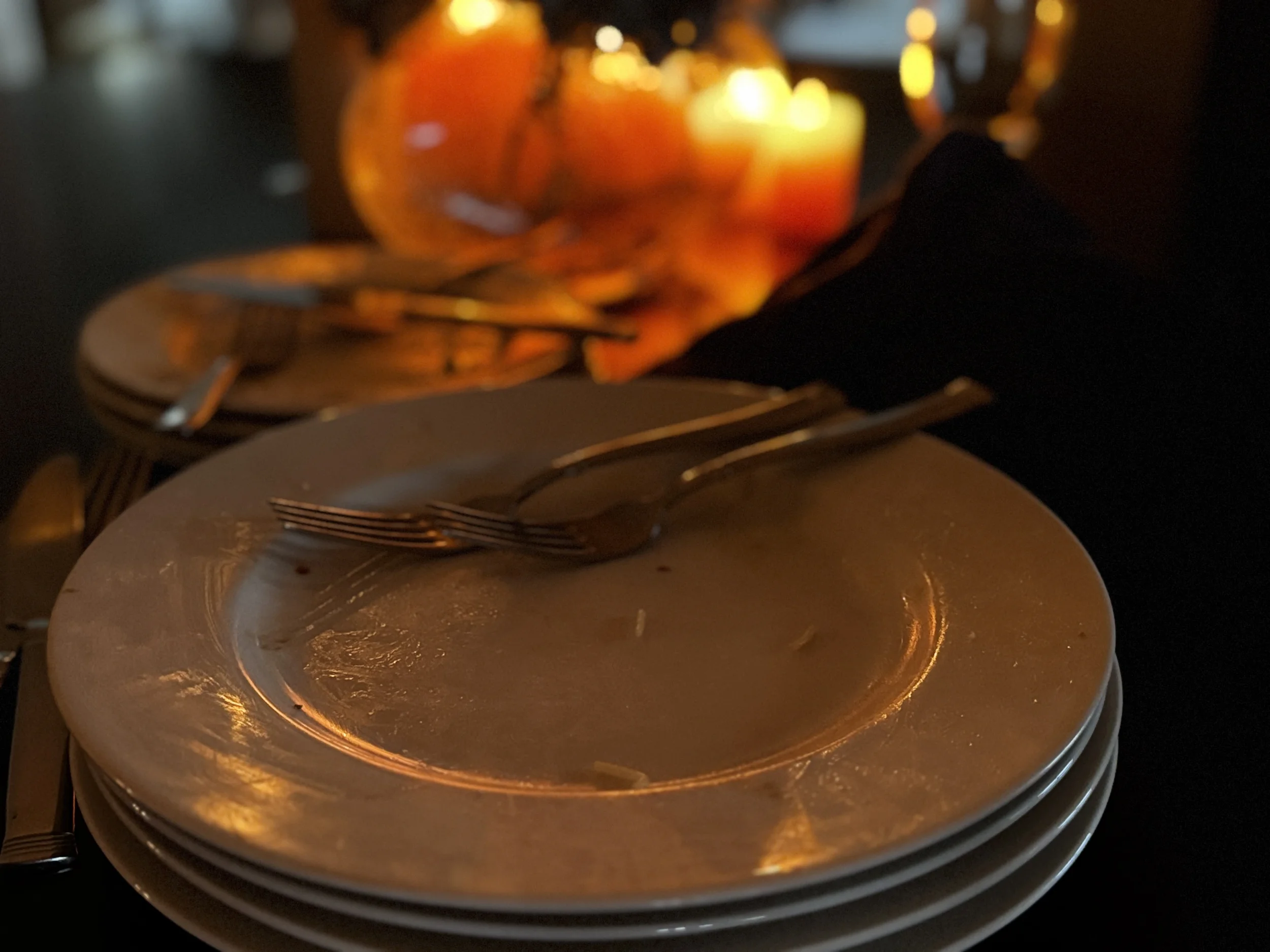
What we are talking about, ultimately, is the same thing we are always talking about when we talk about connection: the willingness to be present with another person and to let that presence mean something.
The films that move us most — Hamnet, Manchester by the Sea, Sinners, The Life of Chuck — are not moving because of their plots. They are moving because of their moments. And so many of those moments happen around food. Around tables. Around the ordinary rituals of sustenance that turn out, on closer inspection, to be the architecture of our emotional lives.
The books that stay with us do the same. The characters we can't stop thinking about are the ones who sat down with each other in the hardest moments and passed the bread anyway.
That is available to all of us. Every day. In the most ordinary way imaginable.
Set the table. Invite someone. Let it be imperfect. Pay attention to what happens.
Further Reading & Watching
If this piece resonated, these pieces explore the same ideas from different angles:
10 Films About Love, Grief, and Human Connection — including Roma, A Man Called Otto, and the best emotional films of 2025
How Films Influence Interpersonal Skills and Emotional Growth — the behavioral science behind storytelling and empathy
Wild Dark Shore — April Book Review — Charlotte McConaghy's novel about survival, grief, and the radical act of letting someone in
Dysfunctional Families in Literature and Emotional Intelligence — how the stories we read shape our capacity for empathy