What Artists Know About Looking at Themselves (That the Rest of Us Forget)
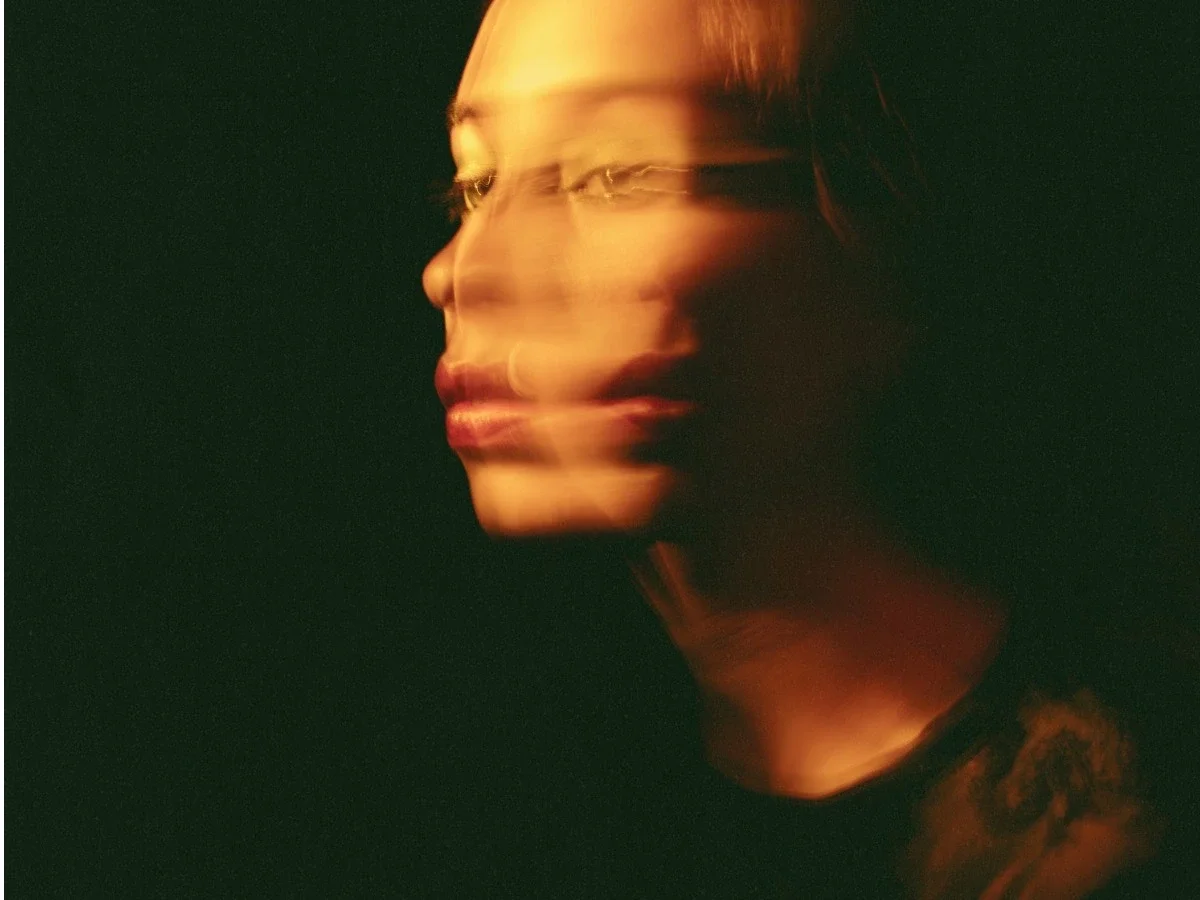
A fragmented self-portrait evokes the unstable relationship between identity and perception explored throughout the history of self-representation.
Most of us look at ourselves briefly and look away. Artists don’t.
From Rembrandt to Cindy Sherman to the front-facing camera, the self-portrait has never been about vanity. It is a discipline of attention: the sustained decision to remain visible to oneself without flinching.
More self-images are made in a single day now than Rembrandt made in his lifetime. Yet the kind of looking he practiced—slow, recursive, unsparing—has become rare. Not because we lack images, but because we rarely stay with them long enough for them to change us.
The Self as Inquiry: Rembrandt to Kahlo
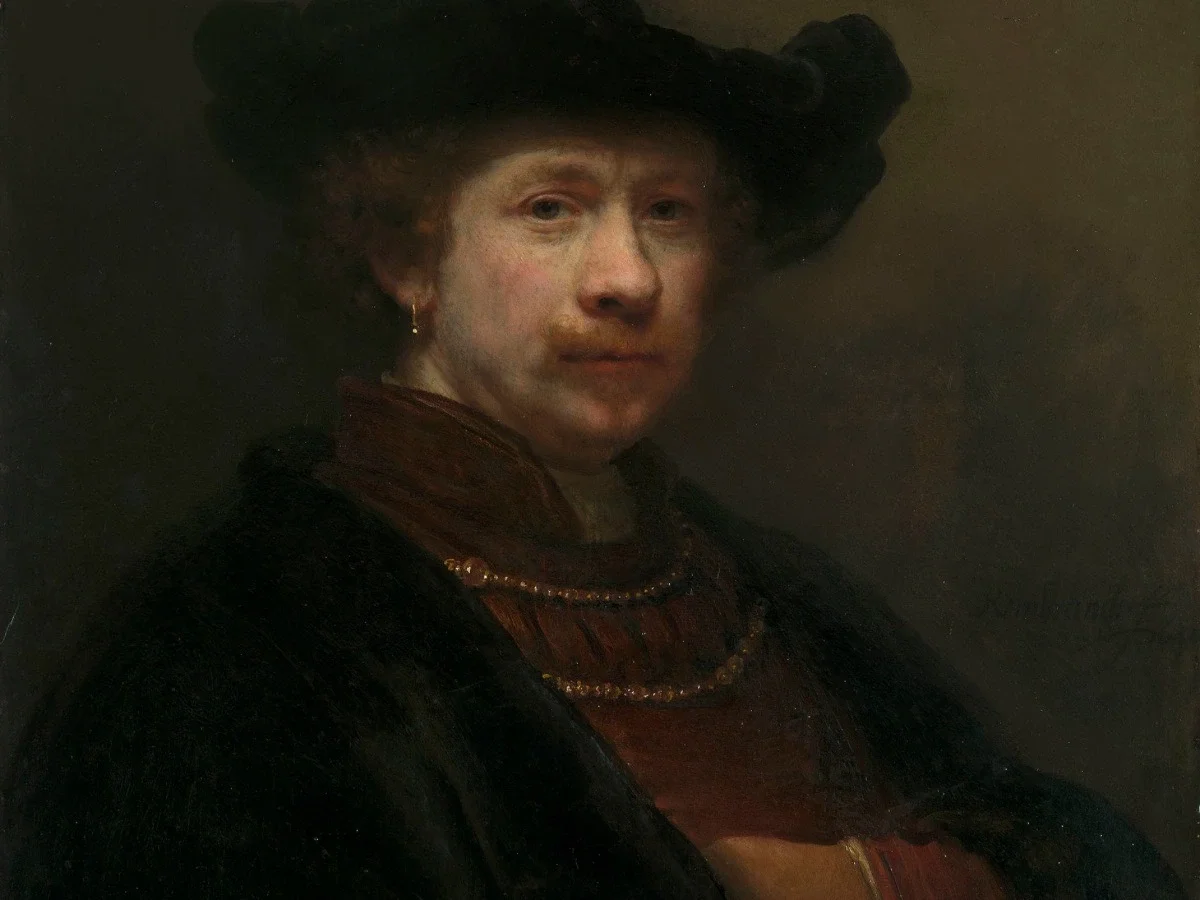
Royal Collection Trust/© His Majesty King Charles III 2022
Across decades of self-portraits, Rembrandt treated his own face as an evolving record of time, attention, and human experience rather than a polished public image.
Rembrandt painted himself more than ninety times across five decades. Not as a record of appearance, but as a method of thinking. The self was always available to him, always shifting, never fully resolved. Each self-portrait is less a likeness than a return to an unfinished question.
Across those decades, the tone changes without warning. The early works are theatrical, almost performative. The late portraits lose that distance. The face becomes heavier, less interested in presentation, more absorbed in presence. He does not refine an image of himself so much as test how much truth a face can carry before it breaks into something else.
The refusal of idealization is what remains. The puffiness, the fatigue, and the unevenness of age are not corrected. They stay as evidence of time passing through the body rather than being edited out of it.
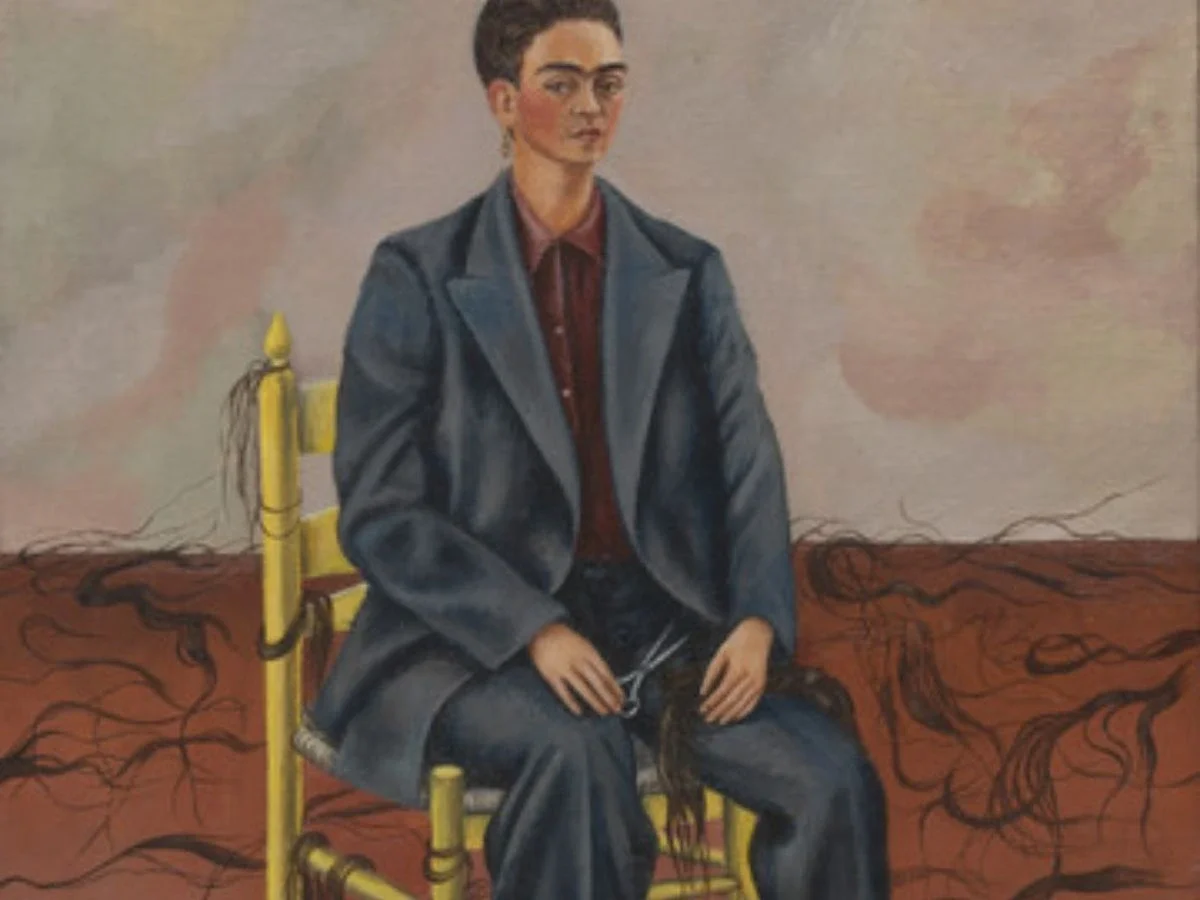
Frida Kahlo Self-Portrait with Cropped Hair 1940
Frida Kahlo used self-portraiture not to idealize herself, but to externalize pain, memory, and psychological truth through symbolic imagery and sustained self-observation.
Frida Kahlo extends this logic inward.
She once said she painted herself because she knew herself best. But her self-portraits are not descriptions of appearance. They are constructions of interior states made visible: injury, fracture, inheritance, desire, grief. The body becomes a site where internal reality is externalized without translation.
A broken column replaces her spine. An artery is held between two versions of herself. A body opens into a symbol without losing its weight.
What matters in Kahlo is not confession, but construction. She does not present herself as she is seen. She presents the conditions of being seen at all.
That distinction is everything.
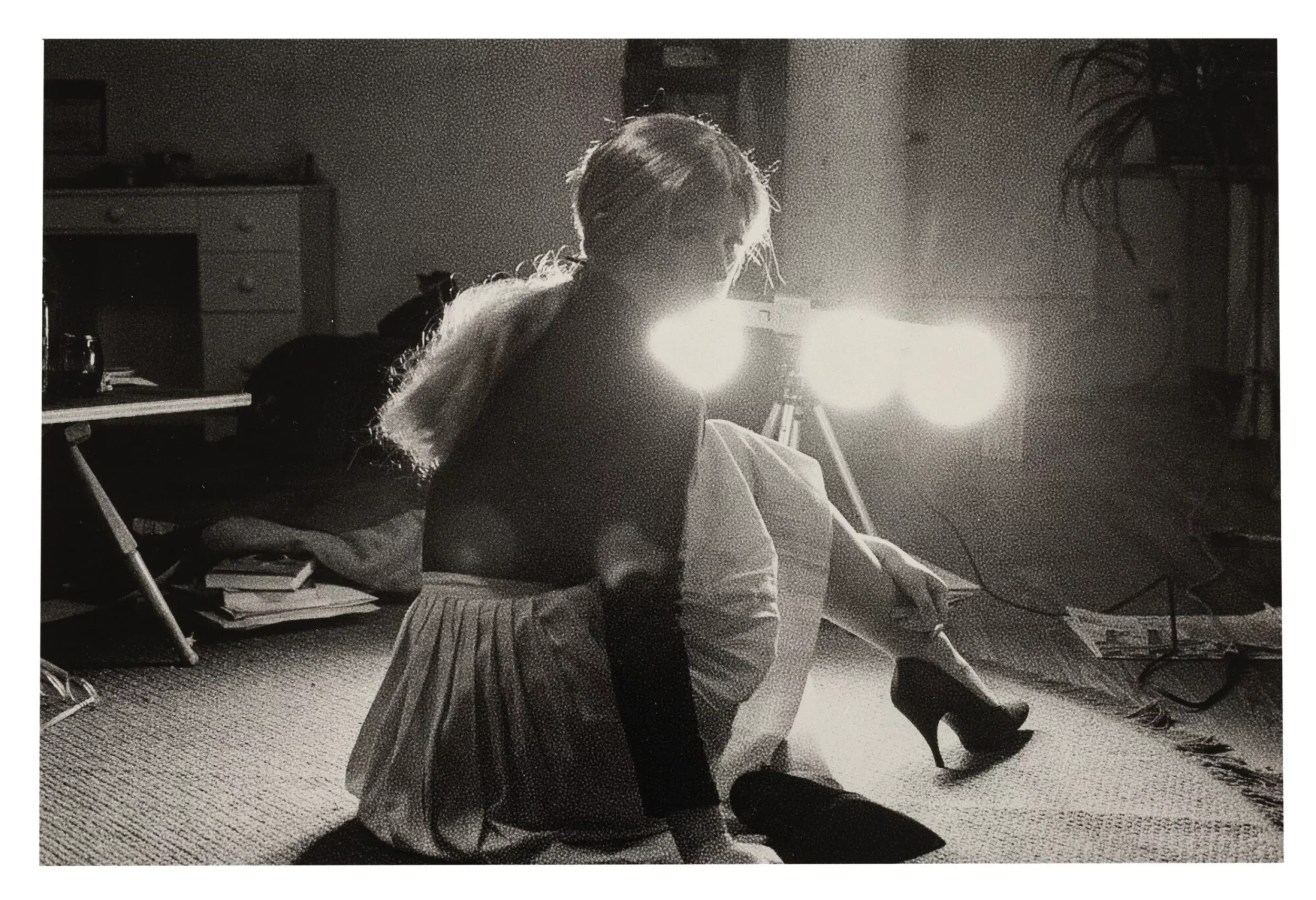
Cindy Sherman Untitled Film Still #62 1977
In the Untitled Film Stills, Cindy Sherman transforms self-portraiture into a study of performance, questioning whether identity is ever fixed or authentic.
Cindy Sherman and the Instability of Identity
Cindy Sherman removes the assumption that a self-portrait must contain a stable self.
In her work, she is always present and never fixed. Makeup, costume, framing, and posture do not reveal identity—they produce it temporarily, then undo it again. The image is not a window onto a person. It is evidence that personhood can be staged.
In the Untitled Film Stills, she appears as familiar figures: the woman in transit, the woman waiting, the woman paused mid-narrative. None resolves into a biography. They remain legible as types, but unstable as selves.
Sherman does not ask what she looks like. She asks how many versions of “looking like someone” can exist without settling into one.
Identity, in this sense, is not revealed. It is assembled, briefly held, and released again under slightly different light conditions.
From the Front Camera to the Feed: The Modern Self-Portrait
The front-facing camera has made self-portraiture continuous rather than occasional.
It is now possible to produce more images of the self in a week than earlier centuries could produce in a lifetime. The scale has changed, but more importantly, so has the function. The image is no longer rare. It is ambient.
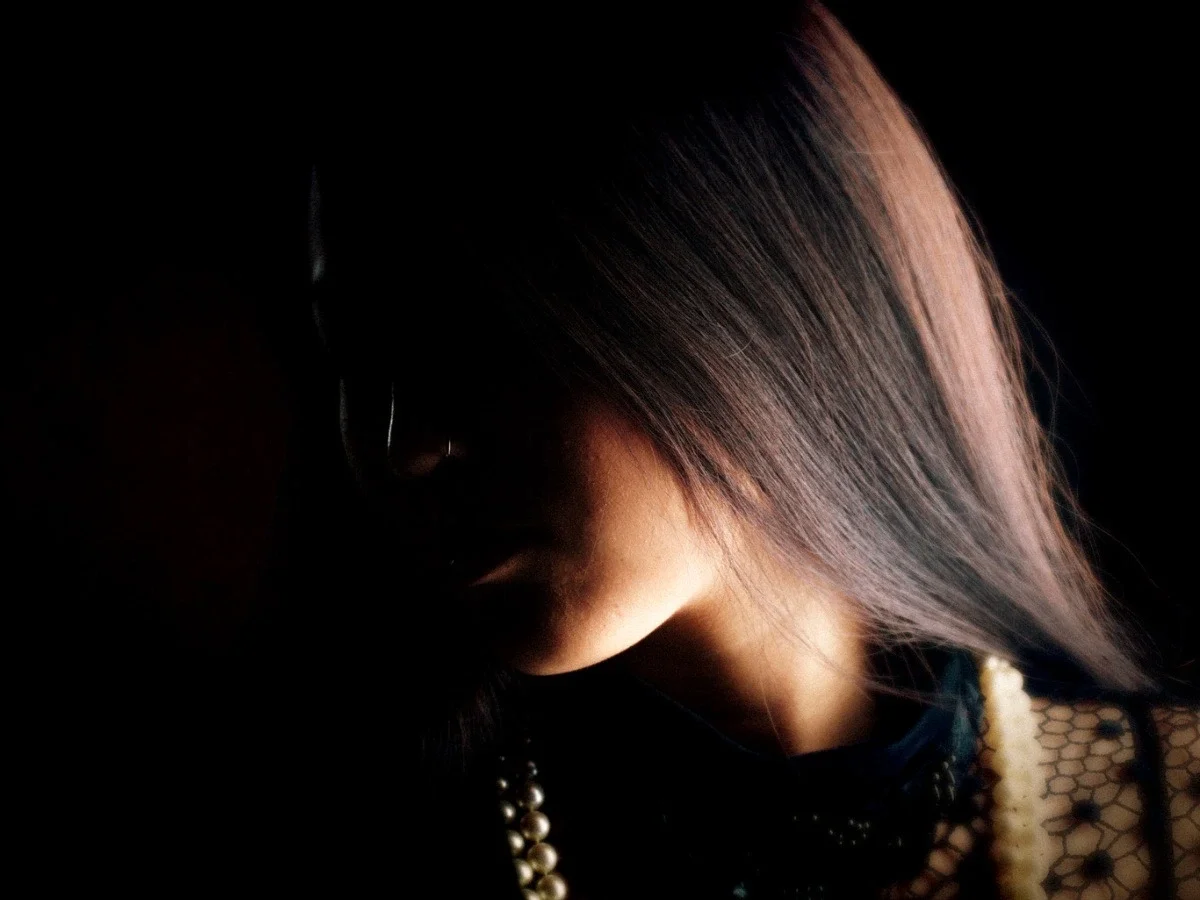
The partially hidden face reflects how modern self-images move between revelation and performance.
At its simplest, a selfie is a declaration of presence: I am here. I exist in this moment, and I am choosing how that moment appears.
But presence is never neutral. Every image carries a negotiation between what is seen and what is meant to be seen—between documentation and performance, recognition and control.
A selfie can be an act of attention or an act of adjustment. The difference doesn’t lie in the tool, but in the intention shaping its use.
Most contemporary images exist somewhere between these states. That instability is no longer exceptional. It is simply the condition of visibility.
What the Self-Portrait Actually Requires
Every serious self-portrait—painted, photographed, written, or constructed—begins with sustained attention.
Not to the self as it is performed. Not to the self as it is presented. But to the self that remains when presentation is no longer the primary task of looking.
This kind of attention resists speed and resolution. It does not settle easily into conclusions. It requires returning to the same subject until certainty begins to loosen rather than tighten.
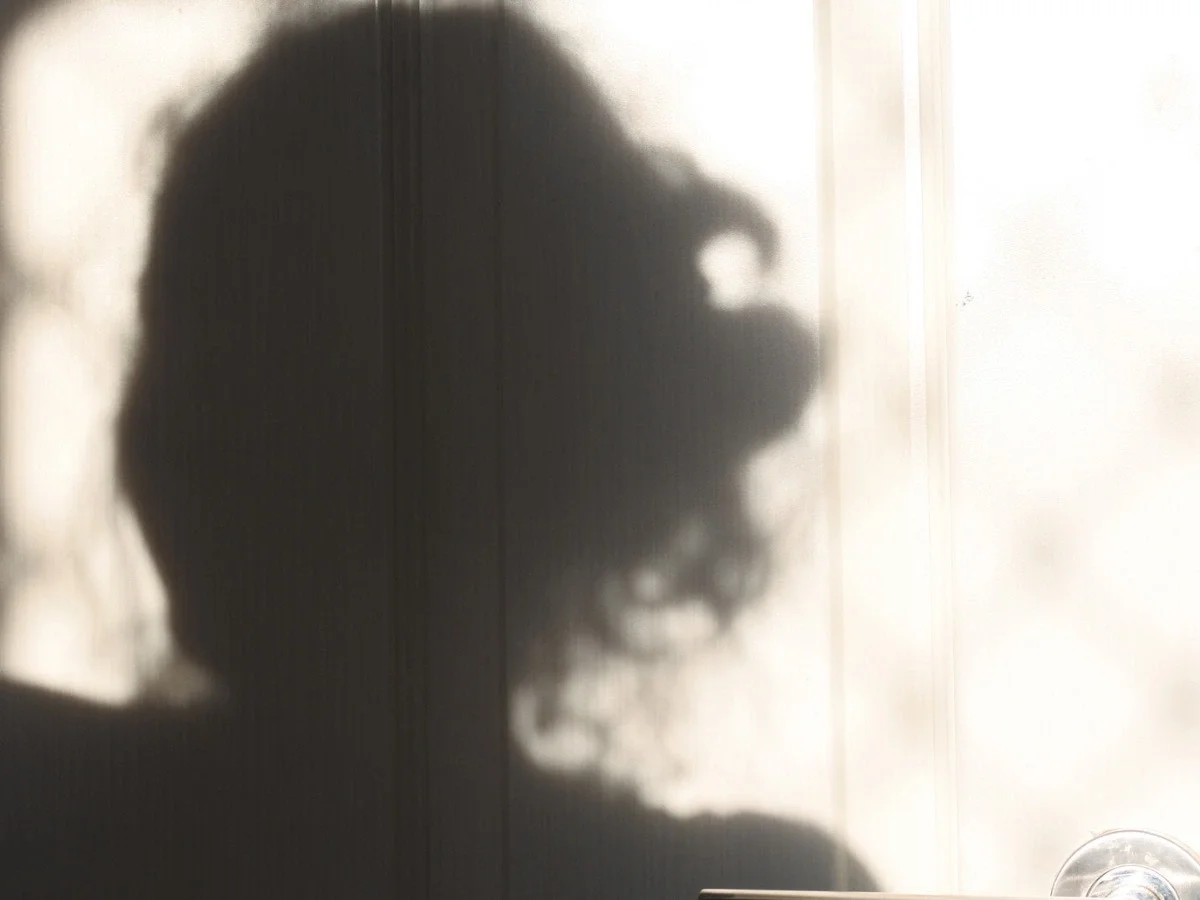
The self-portrait is not always a face. Sometimes it appears as absence, outline, or shadow held long enough to become recognizable.
Self-portraiture, in this sense, is not about producing an image that resembles you. It is about staying with the act of looking long enough for recognition to become unstable in productive ways.
That practice does not belong only to artists. It appears in smaller forms: in how someone writes, chooses, edits, withholds, repeats, or refuses. Each decision becomes a partial record of self-construction over time.
The self-portrait is not an image of what you look like.
It is evidence of what you are willing to see—and what changes in you when you keep looking.
Related Reading: For more on visibility, identity, and the art of being seen: explore Black Art and Joy as Resistance, Why Art Helps Grief, and What High-Performing Women Get Wrong About Self-Criticism.