On the body, the archive, and everything history left unrecorded.
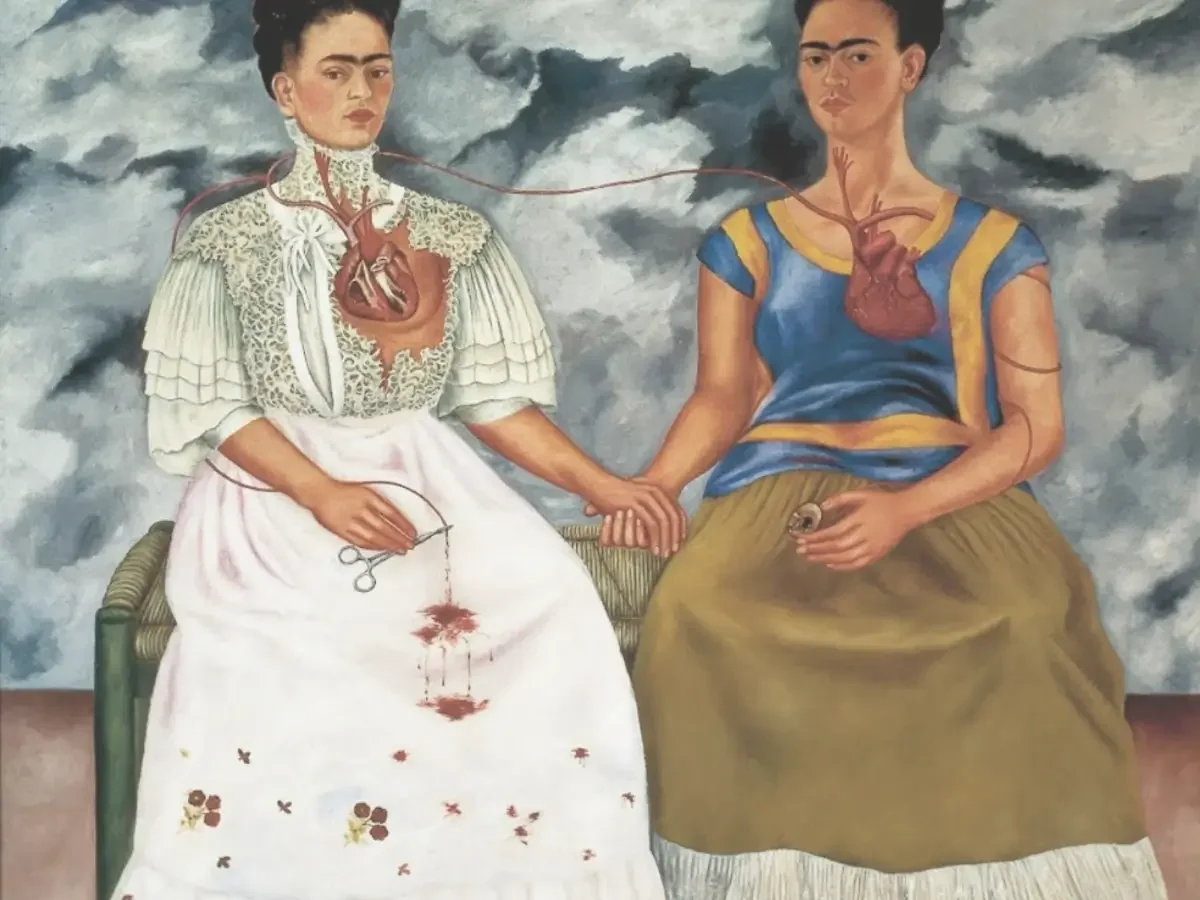
Frida Kahlo’s The Two Fridas reflects identity, resilience, and the complexity of cultural belonging.
A self-portrait is rarely only a self-portrait. Neither is a photograph of a body pressed into wet sand, or a satirical painting of a government official, or a canvas built from decades of unseen work. Each is a record: of pain official history didn't note, of a politics the museum wasn't built to hold, of a woman the art world took ninety years to notice.
Five Hispanic and Latinx women spent their careers making exactly that kind of work. Their mediums have almost nothing in common: performance, painting, satire, sculpture, self-portraiture. What they share is harder to name and more interesting: each treated her own body, her own history, or her own country as evidence worth preserving, long before anyone else agreed it was.
Ana Mendieta (1948–1985)—Cuba/USA
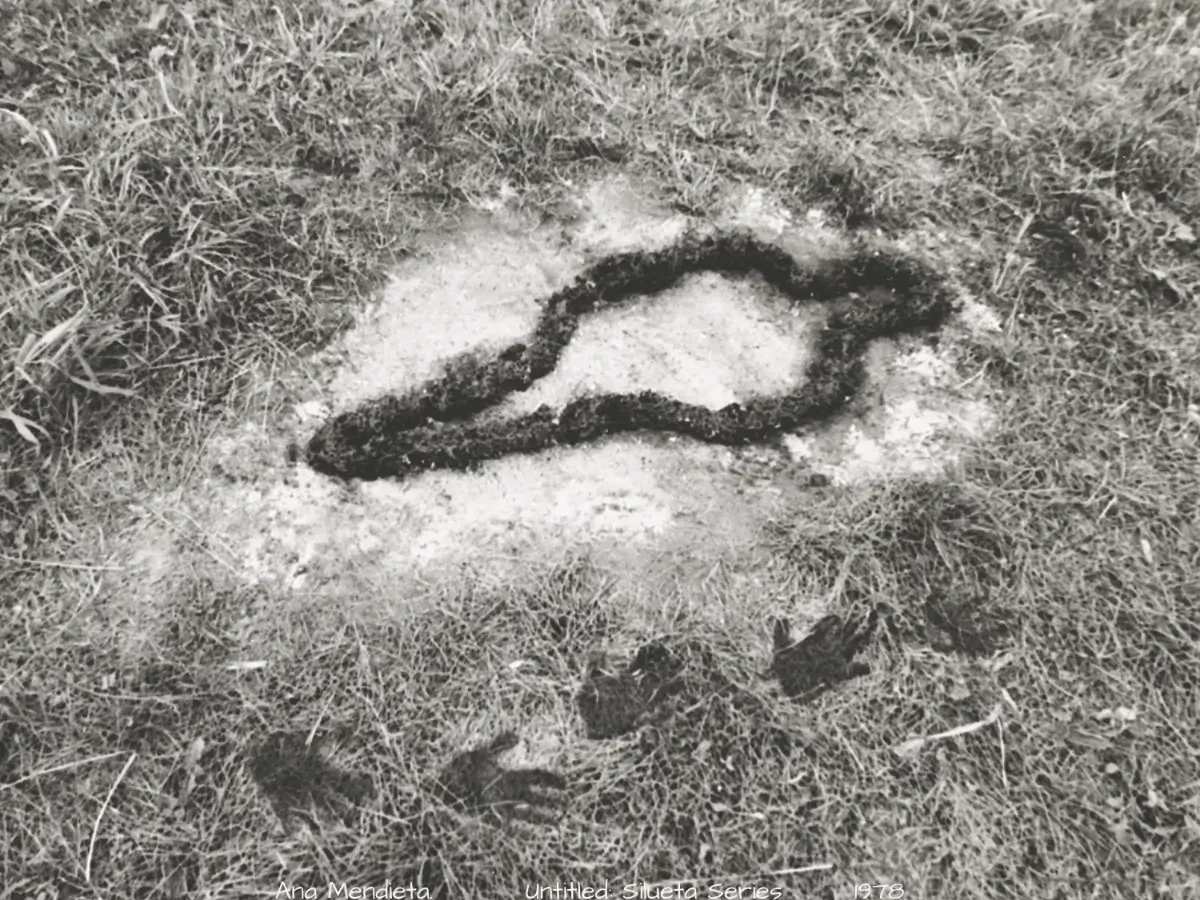
Ana Mendieta “Untitled Silueta Series” 1978
Ana Mendieta's Silueta series presses the outline of her own body into earth, sand, and stone, a hauntingly direct conversation between body and land. A pioneer of performance and body art, Mendieta used herself as the medium to explore displacement, violence, and belonging, themes shaped in part by her exile from Cuba as a child. Her life ended under still-unresolved circumstances in 1985, at thirty-six. Her work endures as a visual record of what displacement feels like from inside a body, rather than from the distance of a history book.
Her work is held in the collections of the Whitney Museum of American Art, the Smithsonian American Art Museum, the Museum of Fine Arts Boston, and the Guggenheim.
Luchita Hurtado (1920–2020)—Venezuela/USA
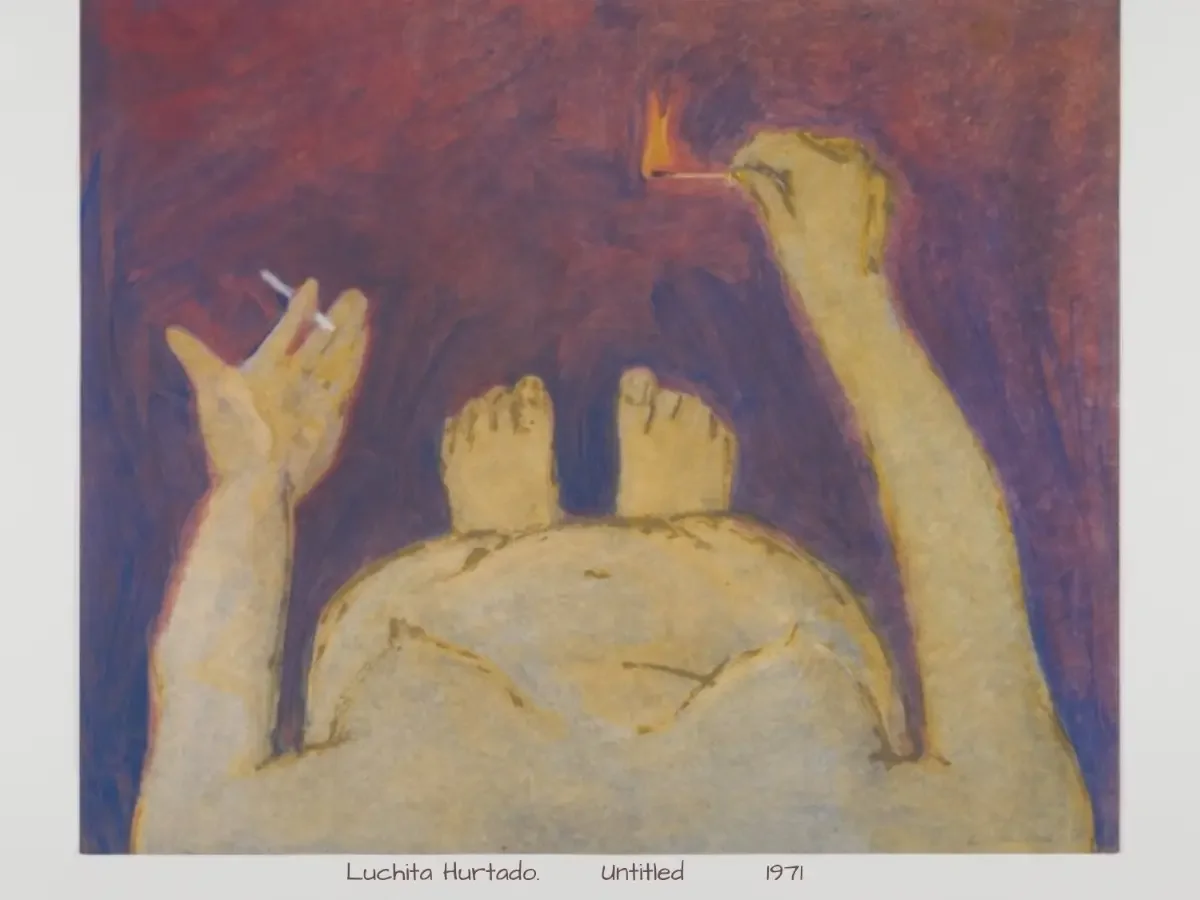
Luchita Hurtado’s “Untitled” 1971
Luchita Hurtado painted for seven decades before the art world took notice; recognition didn't arrive until her nineties. Her work explored feminism, the body, and humanity's relationship to the natural world, often from the self-portrait perspective looking down at her own body merged with landscape. She was writing about ecological urgency and the female gaze long before either was fashionable to write about. The decades of unwitnessed work are, in retrospect, part of the record too: evidence of what it costs to make art nobody is yet prepared to look at.
Her work is held at the Harwood Museum of Art, the Hammer Museum, BAMPFA, and the Serpentine Galleries in London.
Beatriz González (b. 1932 - 2026)—Colombia
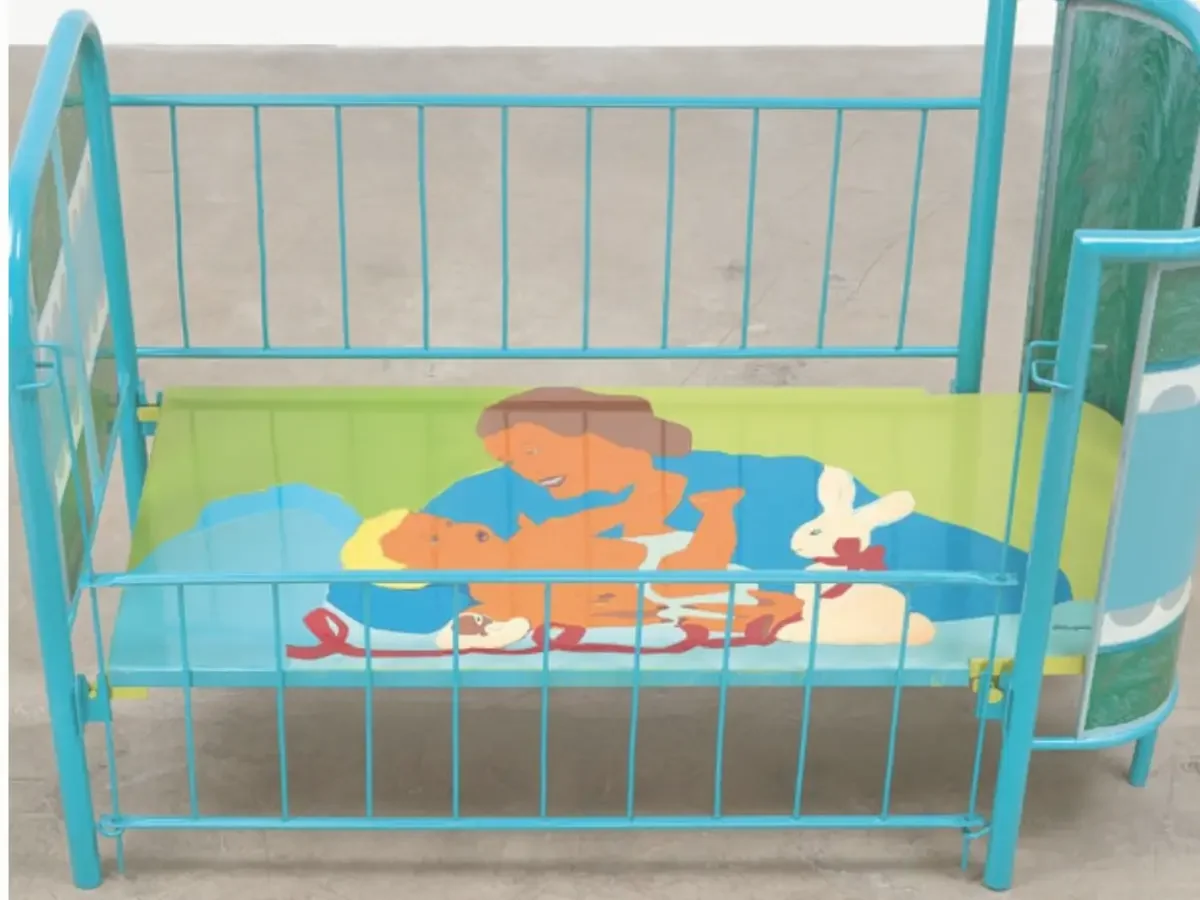
Beatriz González “Lullaby” 1970
Beatriz González fuses pop art with political critique—bright, satirical paintings that use humor to hold Colombian history and media accountable. She has described her subject as "people without culture," meaning the everyday citizens the art establishment routinely overlooks in favor of the elite. Her work insists that satire can be as serious a historical document as a photograph—sometimes more honest, because it doesn't pretend to neutrality.
"Sometimes I see myself like a transgressor that didn't fit in her time."
Her work is held at MoMA, Tate Modern, the Museo Nacional Centro de Arte Reina Sofía in Madrid, and the Museo de Arte Moderno in Bogotá.
Margarita Azurdia (1931–1998)—Guatemala
Margarita Azurdia worked across performance, sculpture, and poetry in a Guatemalan art scene that had little room for a woman doing any of it, let alone all three at once. Her surrealist, spiritual, feminist work asked viewers to look past the visible and toward the mystical and political underneath it—an argument, in form as much as content, that a woman's inner life was worth taking as seriously as a country's politics.
Her work is held at the Museo Nacional de Arte Moderno Carlos Mérida in Guatemala City and the Carnegie Museum of Art, among other collections.
Frida Kahlo (1907-1954)—Mexico
Frida Kahlo “The Two Fridas” 1939
No account of this history is complete without Frida Kahlo, whose self-portraits turned personal pain, chronic illness, and a difficult marriage into some of the most direct visual language in twentieth-century art. She painted the body as it felt to live inside—not idealized, not composed for the viewer's comfort—years before "the personal is political" was a phrase anyone used.
"At the end of the day, we can endure much more than we think we can."
What the record shows
None of these five women were working from the same country, decade, or medium. What connects them is what they refused to leave unrecorded: a body in exile, a life uncelebrated for seventy years, a political satire nobody wanted painted, a spiritual inner life treated as seriously as a nation's history, a body in pain rendered without apology.
Art history often waits generations to notice work like this. These five didn't wait for permission to make the record.
Further Reading: On What the Record Leaves Out
These pieces follow the same idea in different forms—that recognition and significance are not the same thing, and that a culture's record is shaped as much by what it overlooks as by what it chooses to keep.
→ The Art We Call Craft—And Why That Distinction Has Always Been Political: The same pattern that kept Luchita Hurtado unrecognized for seven decades, traced across an entire category of women's work.
→ Hair Is Heritage: The Story We Carry: A different kind of record—one carried on the body instead of in a museum.
→ Why Diaspora Travelers Experience Places Differently: What exile does to memory, the same displacement that shaped Ana Mendieta's earliest work.