She chose beauty on purpose, and she kept choosing it.
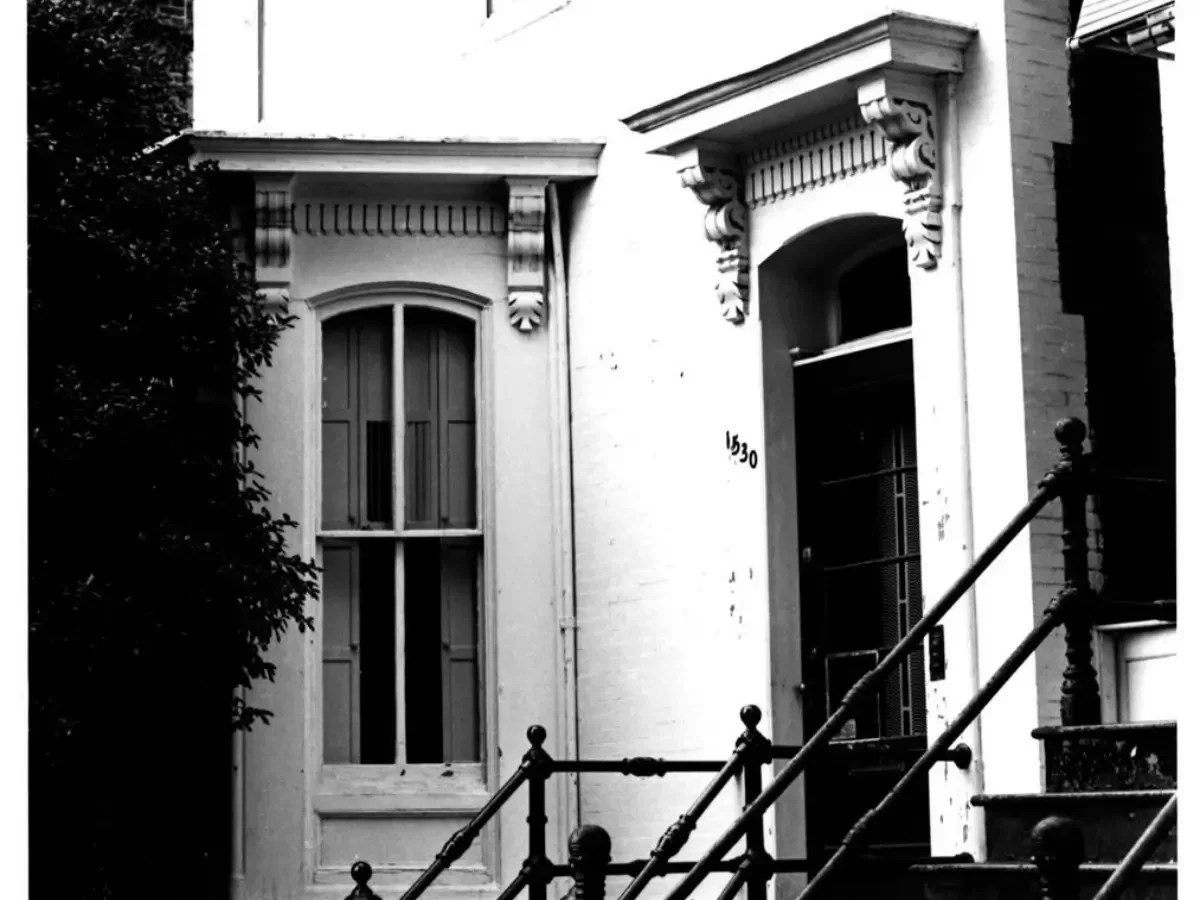
1530 15th Street NW, Washington, D.C. Her parents bought the house in 1907.
In 1907, Alma Thomas’s family left Georgia for Washington, for better schools and a little more safety. Her father bought a brick house on 15th Street. She lived in it for the rest of her life.
She was Howard University’s first fine arts graduate in 1924, then taught at Shaw Junior High School for thirty-five years and painted on the side: still lifes, realist scenes, group shows. Competent, the records say. Never singled out.
When she retired in 1960, arthritis pain made her think about giving up painting.
Then Howard offered her a retrospective, and she wanted something new to hang in it. What she had was a window. Outside, light moved through the trees and the flower garden, hour by hour. She was seventy-four. She began laying down small patches of color in bands and rings, the white of the raw canvas showing between them.
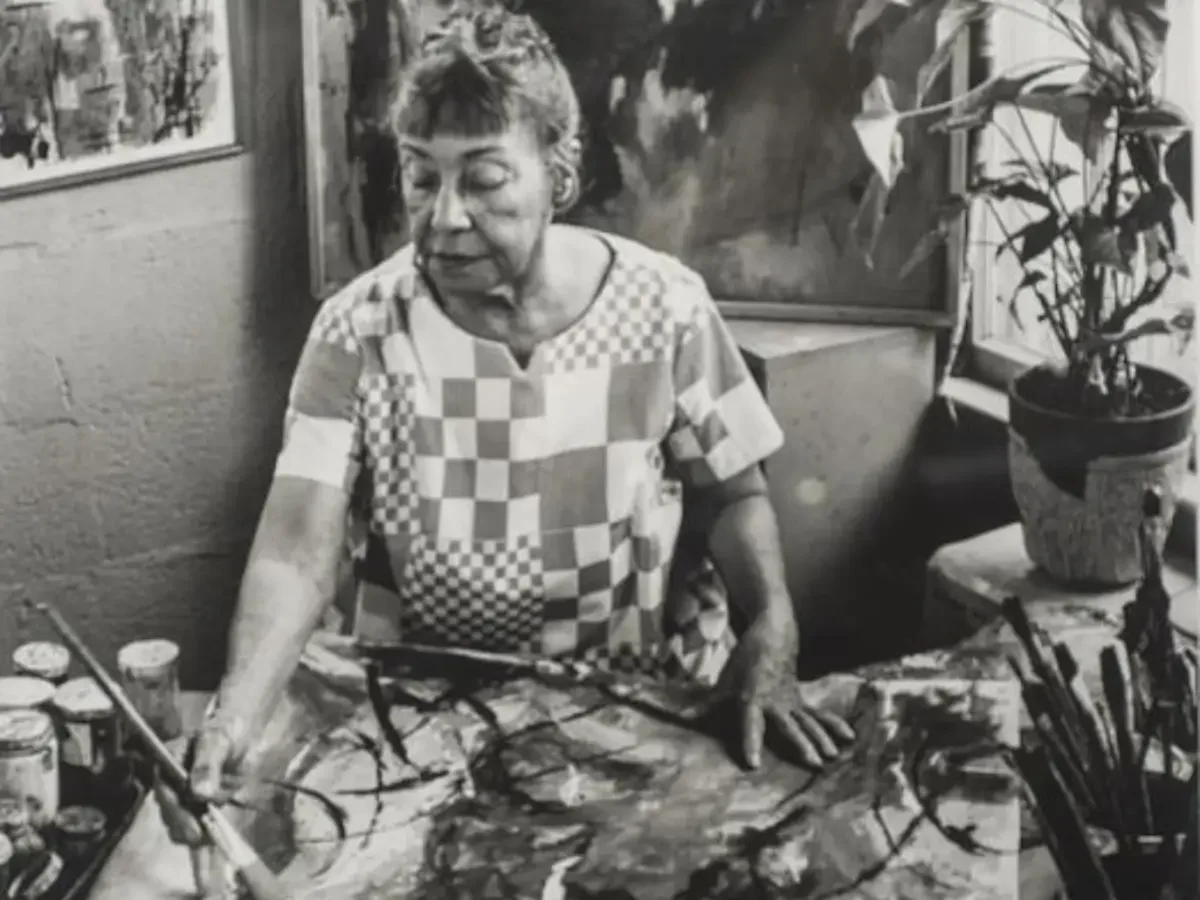
Alma Thomas in her studio, c. 1968. Photograph: Ida Jervis. Alma Thomas papers, Archives of American Art, Smithsonian Institution
Beauty and Happiness
Her own account of the paintings was short. She said she would rather give her attention to beauty and happiness than to what people do to one another.
Her family had left Georgia because it wasn’t safe. In 1963, she went to the March on Washington and made three works from it. Nine years later, the Whitney gave her a solo show, the first for a Black woman. Around then she remarked that as a child she couldn’t enter a museum, let alone imagine hanging a picture in one. The Corcoran gave her a show the same year. The Met acquired a painting.
Orion
She began her space paintings after the 1969 moon landing. Before them, her Earth paintings had been rows of azaleas and cherry blossoms; she kept the rows and imagined the view from a plane window. The scale had changed, but the way of looking had not.
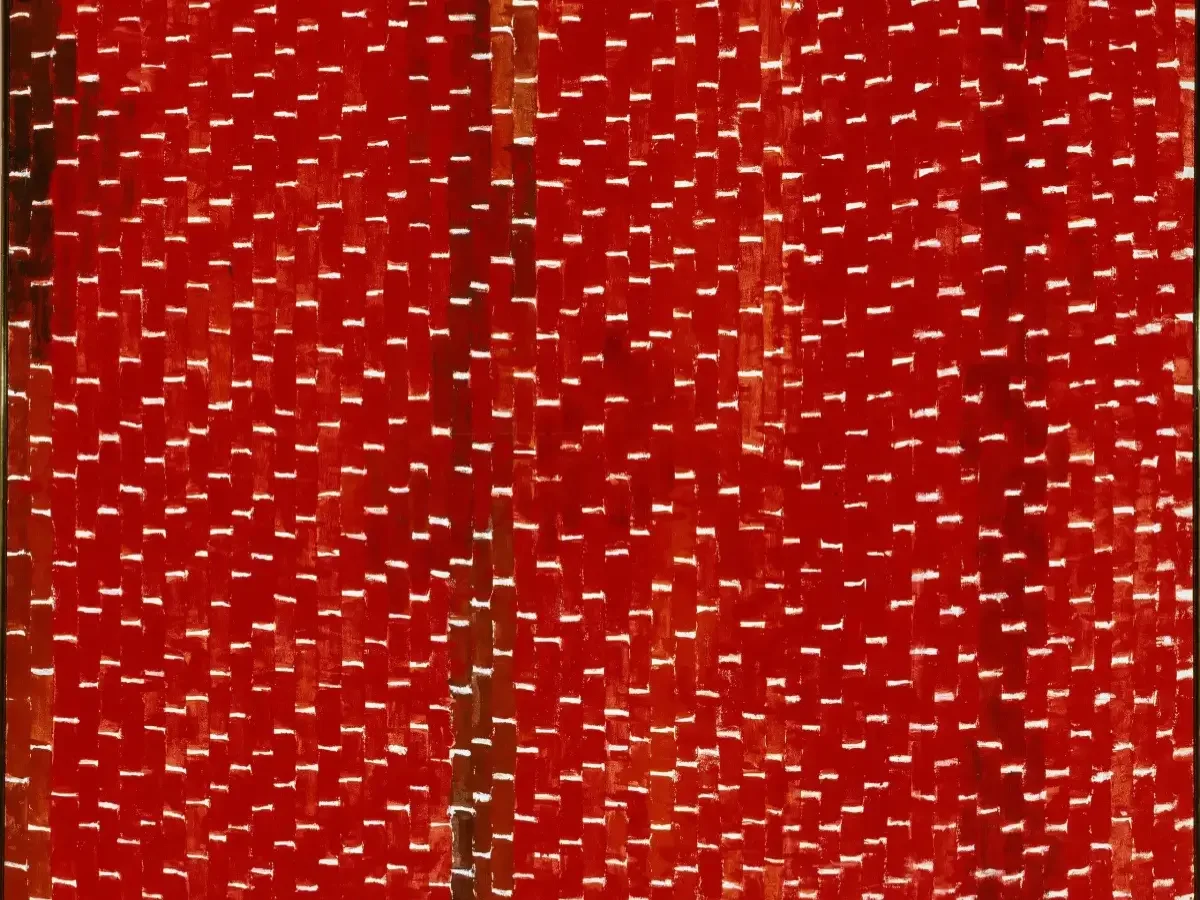
Alma Woodsey Thomas, Orion, 1973. Acrylic on canvas, 59 3/4 × 54 in. National Museum of Women in the Arts, Gift of Wallace and Wilhelmina Holladay. © Estate of Alma Thomas
Orion, from 1973, is nearly five feet tall and almost entirely red. Short vertical strokes stand in columns, and between them a small white dash flickers where the canvas shows through, each one offset from its neighbor like bricks in a wall. The reds drift from stroke to stroke, bright to nearly brown. For most of the canvas, the pace is even. Then a dark seam runs the full height just left of center, and the eye, which has been traveling steadily across, stops there and has to decide whether to cross it. The white spaces are as deliberate as the color.
She said she wanted something beautiful you could sit down and look at. After that, she said, the paintings change you.
Further reading
→ What the Sky Is Doing to Your Nervous System: another case for what happens when you give the eye somewhere to go.
→ What Black Art Has Always Understood About Joy as Resistance: the tradition she sits beside.
→ What Amy Sherald Leaves Out: a different artist who also won’t explain her subject for you.