On the color she takes away and what she gives the viewer instead.
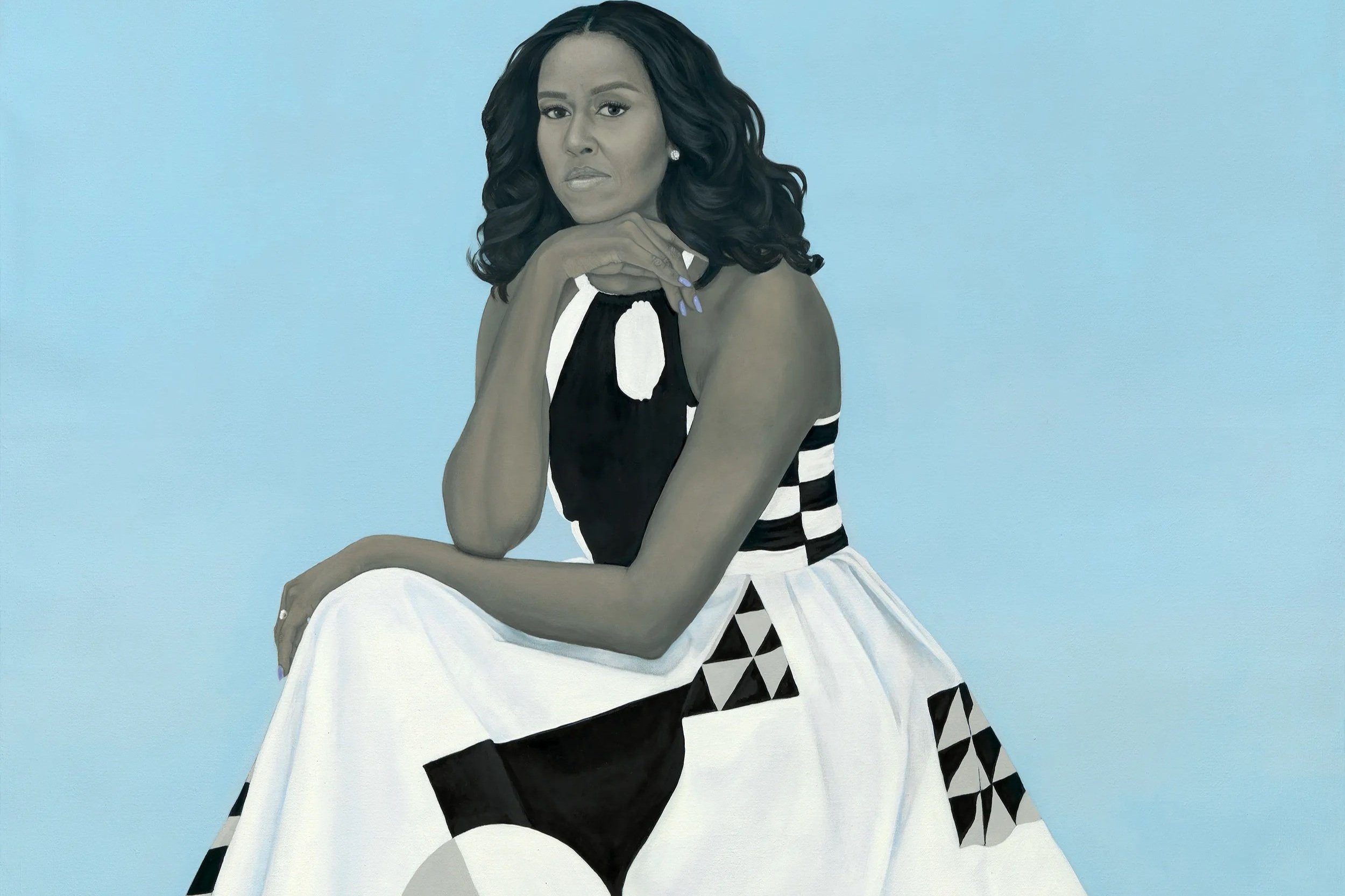
Stand in front of an Amy Sherald portrait and the first thing you notice is what’s missing. The skin is rendered in grisaille—grays, entirely without color—while everything surrounding the figure is saturated, sometimes almost aggressively so: a field of turquoise, a wall of yellow, a pattern lifted from someone’s actual dress.
The absence isn’t an oversight. It’s the argument.
Removing the Shortcut
Skin color is one of the fastest visual signals a viewer processes, often before any other detail registers. Sherald’s grisaille deliberately interrupts that shortcut. Strip the color away, and the viewer must look past the first visual categorization. Race is no longer something the painting announces immediately; attention has to move elsewhere—to expression, posture, clothing, gesture.
It’s a technical choice with a real cost. It’s harder to build a convincing, dimensional figure without color doing some of the work. Sherald has built a distinctive language around a decision that makes the easier version of the painting impossible.
A Background With Nothing to Explain
What surrounds her subjects isn’t a place. There’s no room, no landscape, no narrative prop telling the viewer where they are or what’s happening. Just color—flat, unapologetic, holding the frame with the subject rather than behind them.
That absence of context is the decision. A traditional portrait background often exists to explain its subject: a study to signal intellect, a garden to signal leisure, a window to signal wealth or interiority. Sherald’s subjects don’t need explaining. The color field gives a frame without a story attached, leaving the person standing in it as the primary fact.
What the Technique Made Room For
In 2016, this approach won Sherald the National Portrait Gallery’s Outwin Boochever Portrait Competition for Miss Everything (Unsuppressed Deliverance), making her the first woman and first African American to receive the prize. Two years later, Michelle Obama chose Sherald to paint her official portrait—bringing the same visual language to one of the most recognizable Black women in the country.
Then, in 2020, Sherald painted Breonna Taylor for a magazine cover. The portrait carried the weight of a public moment without reducing Taylor to the circumstances of her death. The grisaille and the flat blue field did what Sherald’s paintings so often do: they give the viewer a person before they give them a story.
The Space Left for the Viewer
Sherald’s paintings don’t tell you what to feel about the people in them. They remove some of the visual information that usually does that telling—the assumptions attached to color, the explanations supplied by setting—and leave a single figure, fully present, asking for nothing except to be looked at directly.
What’s left in that emptied-out space isn’t absence.
It’s room.