Before The World Was Ready
On readiness, and the artist who made the work before anyone was ready to see it.
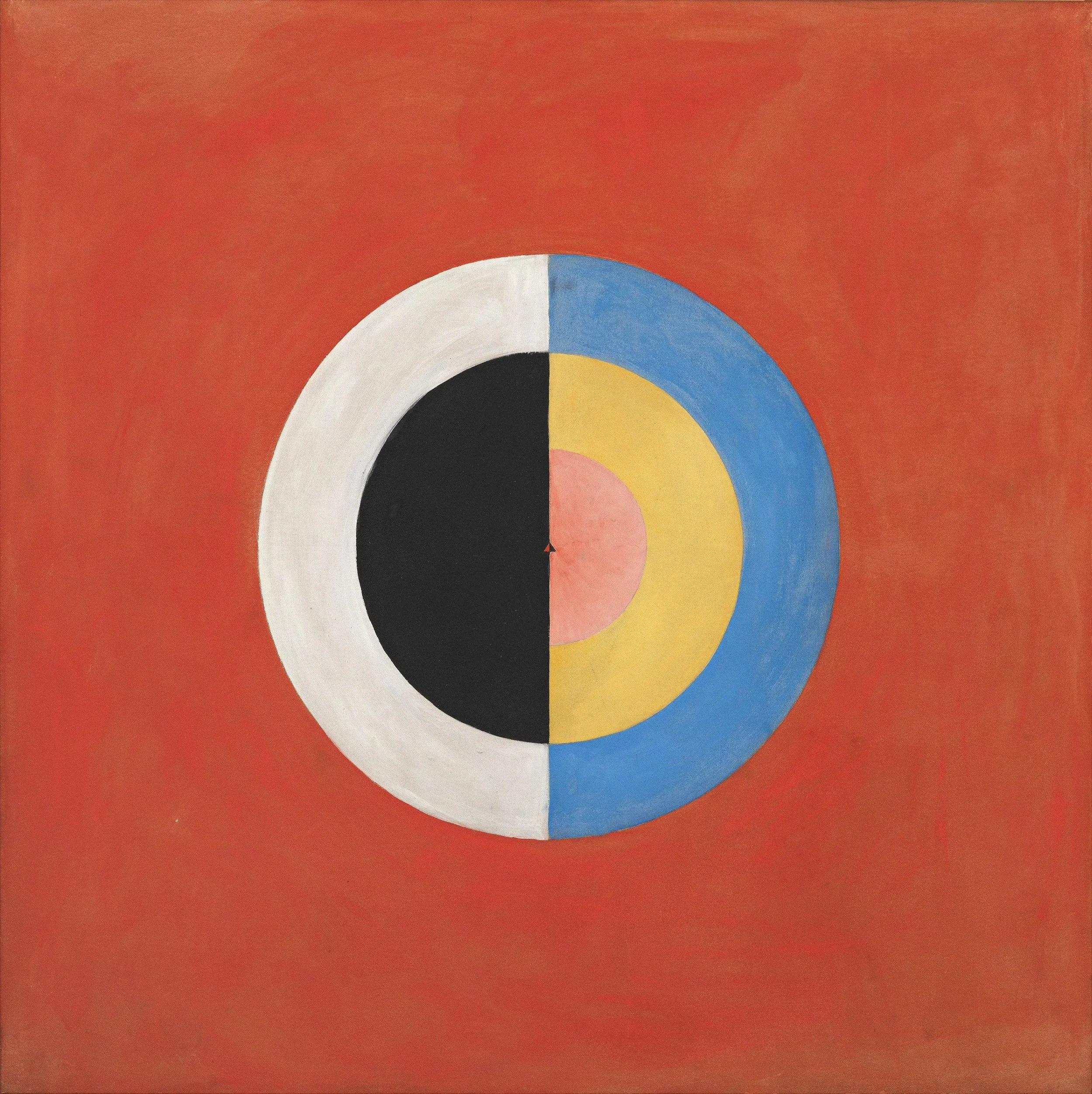
Hilma af Klint, The Swan, No. 22, SUW/UW series (1914–1915). Photograph by Gotogo, via Wikimedia Commons. CC0 1.0.
Beginning in 1906, Hilma af Klint produced radically nonrepresentational paintings, years before the artists traditionally credited with establishing European abstraction.
She did not begin there. Born near Stockholm in 1862 and formally trained at the Royal Academy of Fine Arts, af Klint understood the profession's conventions. She painted landscapes and botanical subjects and earned a living within the established art world. Alongside that public practice, she developed something entirely different: large, symbolic paintings concerned with spirituality, consciousness, and forces that conventional imagery could not represent.
She was searching for a new language.
The Five
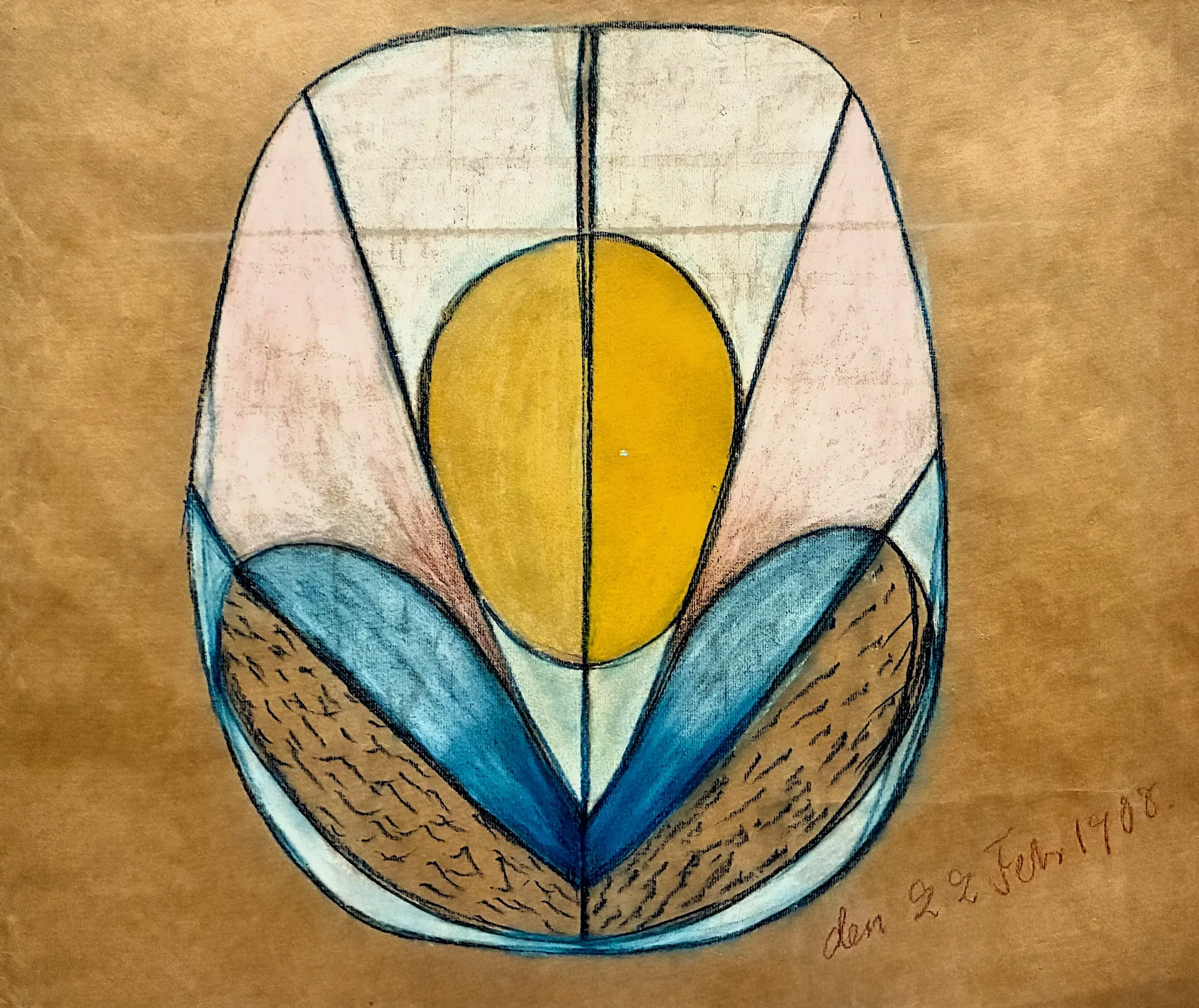
Hilma af Klint, The Five. No title (1908). Pastel on paper. Photograph by Gotogo, via Wikimedia Commons (CC0 1.0).
That language did not emerge in isolation. In the late nineteenth century, af Klint joined Anna Cassel, Cornelia Cederberg, Sigrid Hedman, and Mathilda Nilsson to form The Five. The women explored spiritualism, automatic writing, meditation, and drawing and recorded the communications they believed they received, creating a private space to investigate ideas outside the accepted structures of knowledge.
Spiritualism looks like an eccentric detail from another era. It was a method: five women thinking, experimenting, and making images together, developing a vocabulary for experiences that had no established place in the official culture around them.
The familiar story of the solitary artistic genius does not fit here. Before af Klint's monumental abstract paintings came a collective practice, and she carried that vocabulary into the work that followed.
Knowing When Not to Be Seen
Af Klint died in 1944. She had stipulated that much of her work should not be shown until twenty years after her death. In practice, the wider public had to wait longer: her work was first shown publicly on a significant scale in 1986, forty-two years after her death.
The decision is easily read as fear of rejection. But her notebooks suggest something more deliberate: she believed the work was intended for future audiences, and that the world was not yet ready for what it was trying to communicate.
She left the work for another audience that did not yet exist.
The Intelligence of Readiness
Knowing the limits of the room you are in takes its own intelligence: when an idea can be introduced, when it will be dismissed, when authority will listen and when it will not. Reading the room is not the same as accepting its limits.
Af Klint read hers without letting it set the scale of her imagination. She did not wait to make the work. She waited to show it.
She created her work without any guarantee of recognition or protection.
After the World Changed
When af Klint's work eventually entered the wider cultural conversation, it unsettled the chronology of abstraction. The history of modern art had already settled on its pioneers (Kandinsky, Mondrian, Malevich), its movements, and its accepted sequence of events. Then came paintings that hadn’t been public before the sequence began.
The paintings had not changed. The context had.
Further Reading: On Work That Waited for Its Audience
These pieces follow the same idea in different forms — that what a culture is ready to see is not the same as what has been made.
→ The Secret Life of Sunflowers: Another body of work that waited for the world to catch up, and the woman who decided it deserved to survive until it did.
→ What Five Hispanic Artists Made Visible: The archive as a choice, and everything history left unrecorded.
→ Why Women Are So Good at Hiding It: The same room-reading applied to the self: what an expressive woman decides is safe to show.