On discretion, and the one night a year Lyon lets you see inside.
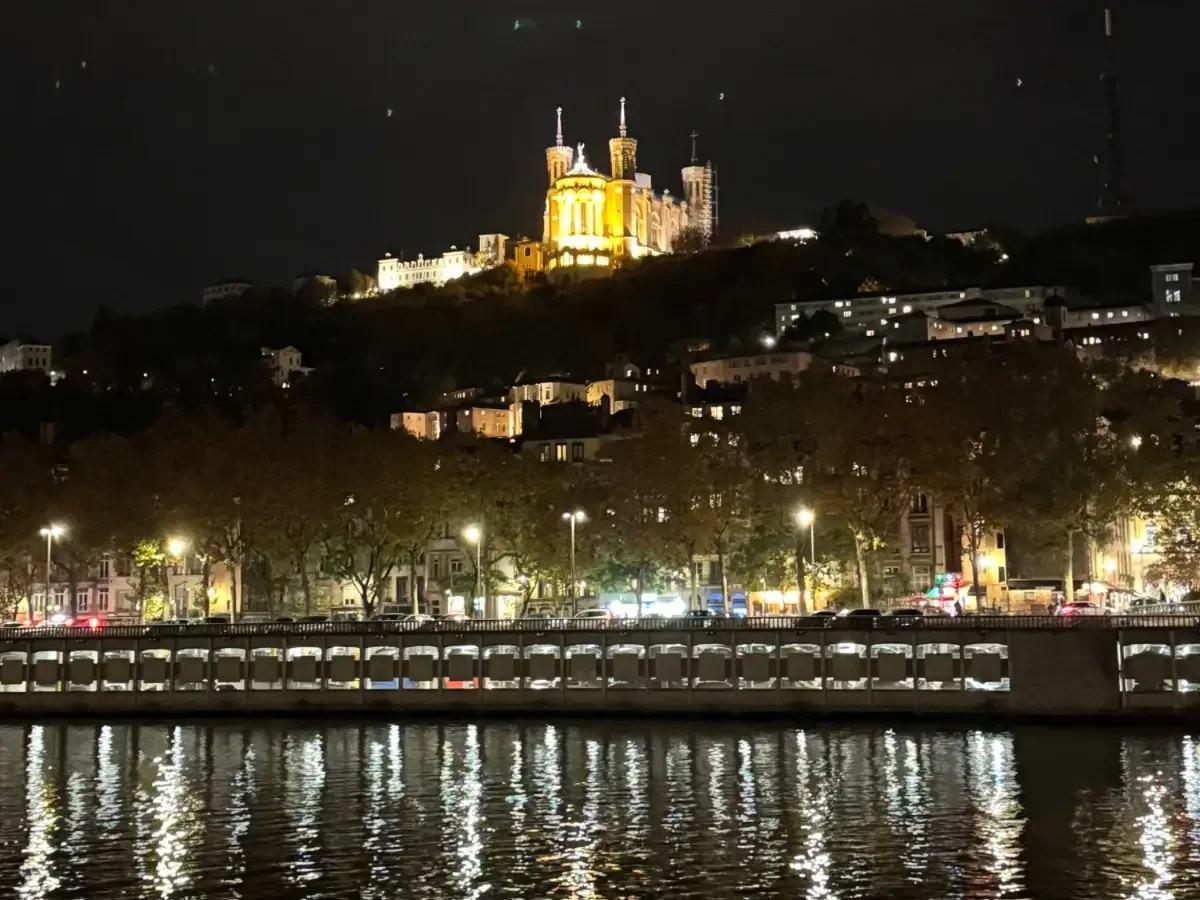
Fourvière keeps watch over Lyon after dark, its illuminated basilica visible across the Saône.
Silk could not get wet, and Lyon was built accordingly.
The weavers worked at the top of one hill, the merchants who paid them lived at the bottom, and the finished cloth had to travel between the two without meeting the weather. The city answered with passages that run straight through buildings, from one street to the next, via courtyards and staircases never meant for visitors. There are around five hundred. About fifty are open to the public by agreement.
The habit outlasted the silk. Lyon still keeps its best things indoors, and forty-eight hours is long enough to find the doors.
The Streets Inside the Houses
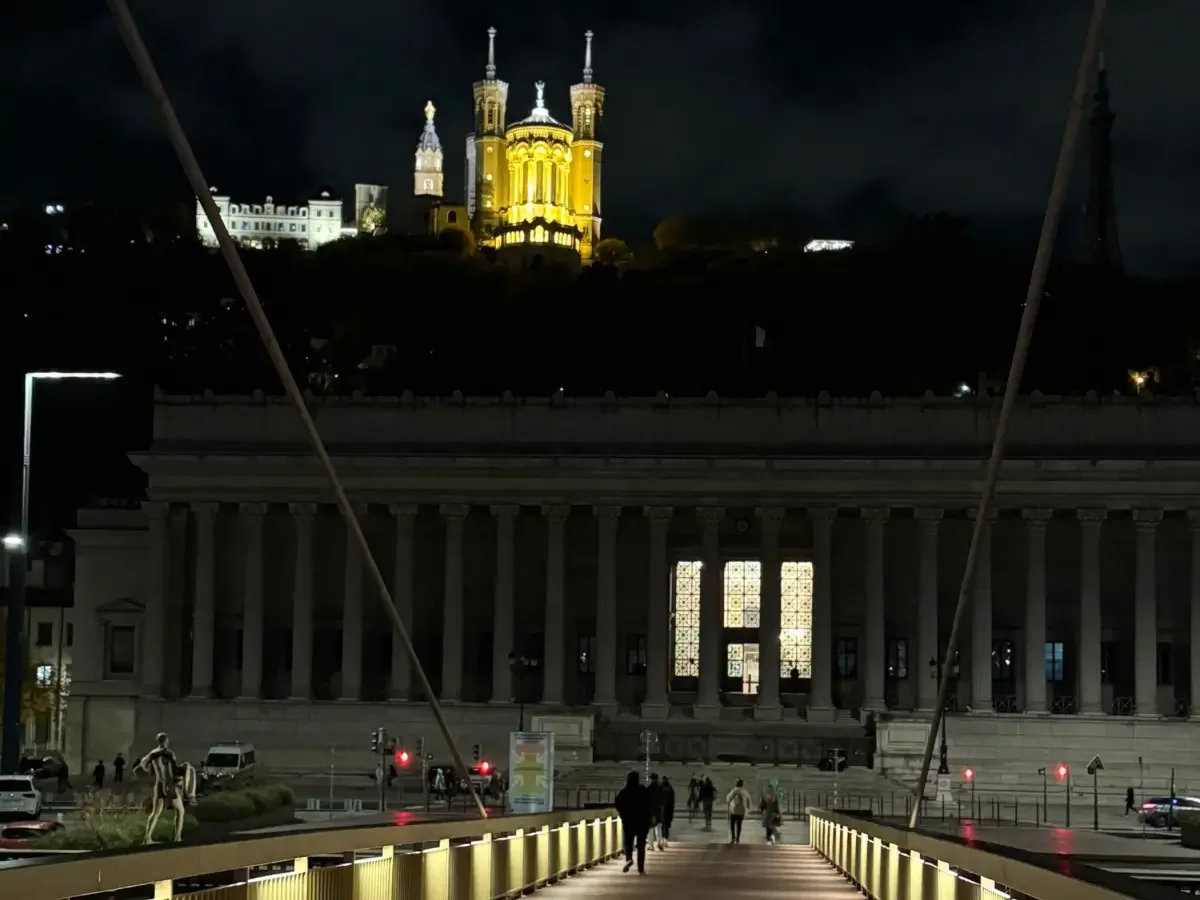
Fourvière illuminated above Lyon after dark, its golden basilica keeping watch over the city.
Vieux Lyon, on the right bank of the Saône, is the natural place to begin. Its Renaissance houses crowd the river, and UNESCO listed the historic center in 1998. The passages are called traboules, from the Latin for walking through. Many began as nothing grander than a way to reach the water, and silk gave them a second life.
Most are someone’s front hall. A small bronze plaque usually marks the open ones, and under a 1990 agreement the city pays toward their maintenance, cleaning, and lighting in exchange for daytime passage. By local reckoning, a true Lyonnais knows them all.
Lyon became one of the principal centers of the French Resistance, and in September 1944, from the balcony of the Hôtel de Ville, de Gaulle called it the capital of the Resistance. The passages belong to that story, too: in by one door, out by another. One local guide will tell you the city has embroidered how much they mattered. Both things can be true.
Saved for Inside
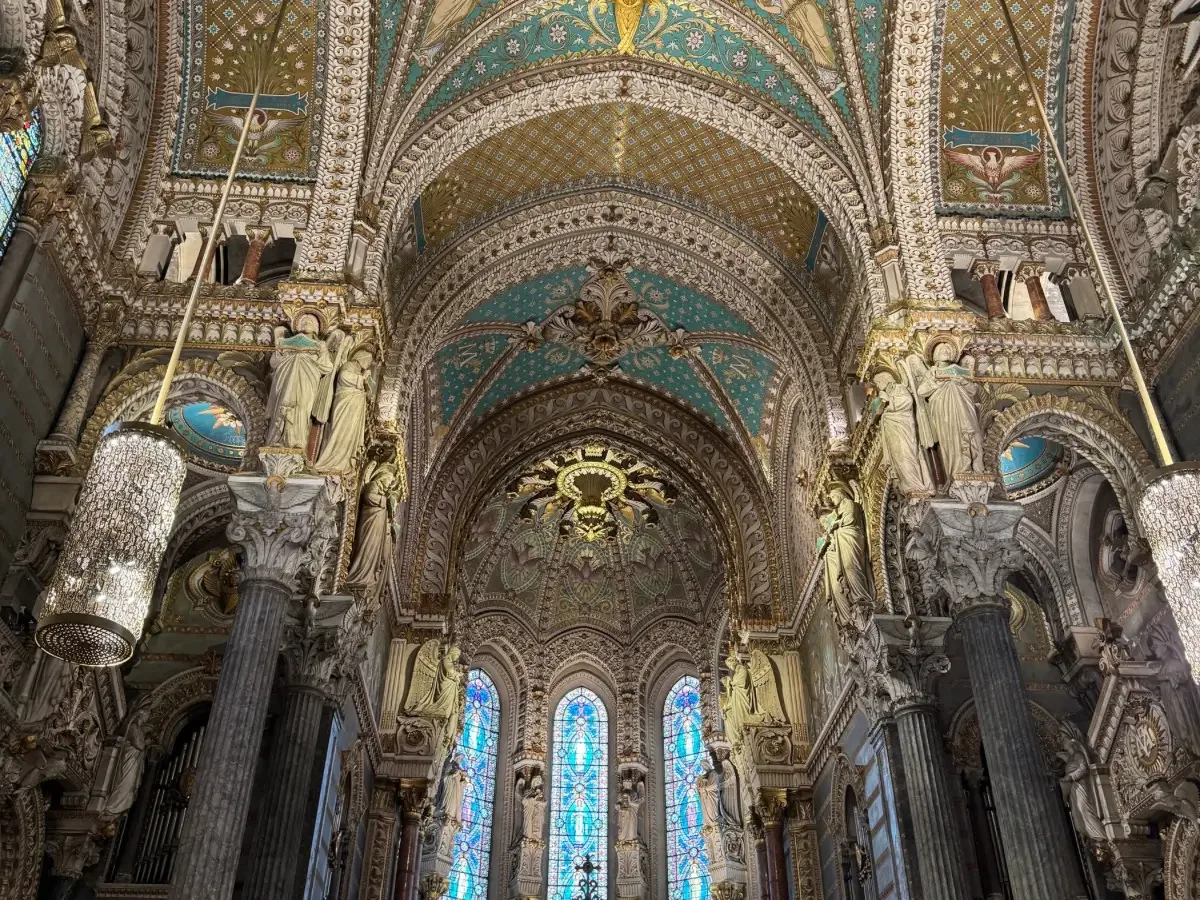
Behind Fourvière's restrained white exterior, a world of mosaics, marble and color.
The funicular climbs from Vieux Lyon to Fourvière, where the basilica’s first stone was laid in 1872. Two years earlier, as Prussian forces threatened the city, Lyon had vowed to build a sanctuary if it were spared.
From outside, it is white and composed. Inside are two churches, one stacked above the other, with mosaic and stained glass, and decoration that kept craftsmen busy for decades after the structure was finished. The terrace looks down on a city laid out between two rivers.
The Loom That Outgrew the Old Town
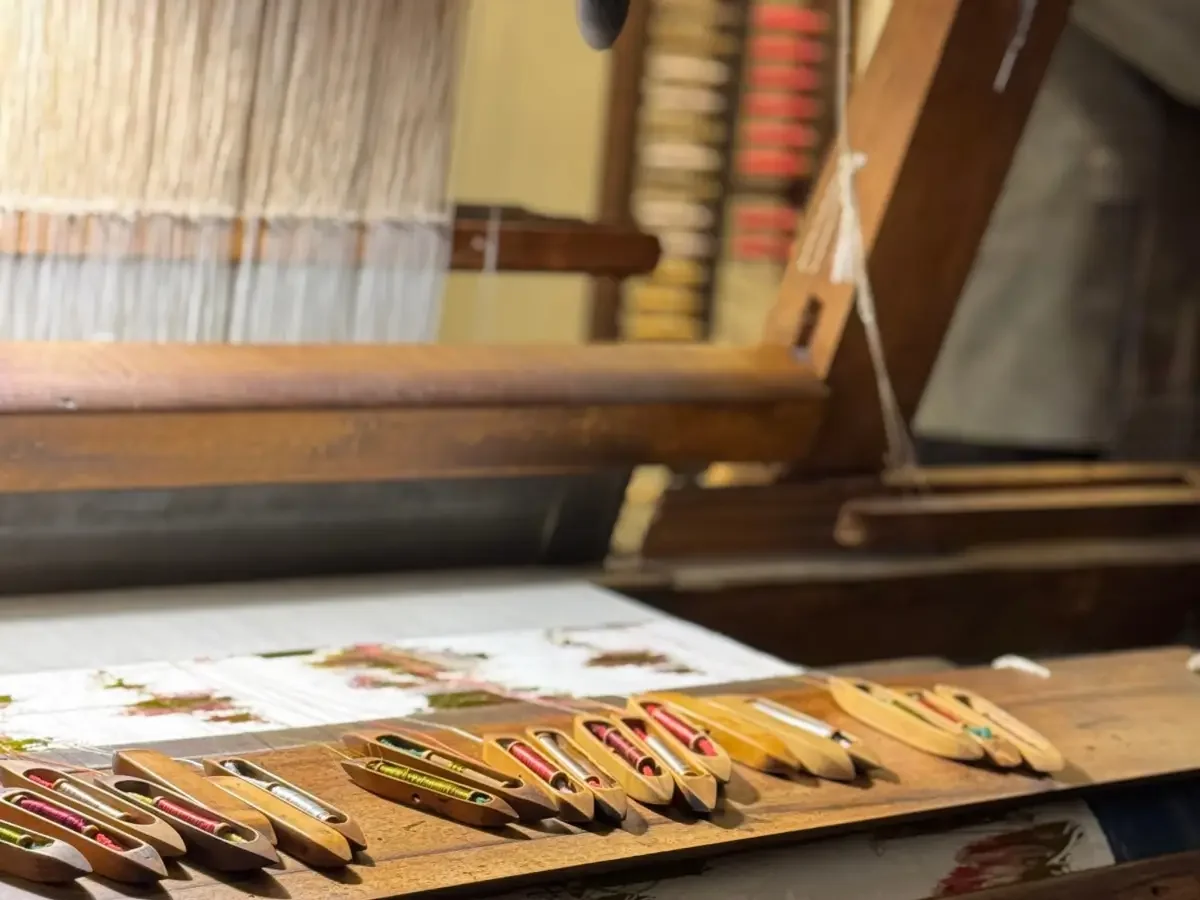
The tools of Lyon's silk trade, a craft that shaped the city's streets and fortunes.
Lyon’s shorthand for its two hills is that Fourvière prays and the Croix-Rousse works.
Vieux Lyon was a silk district first, until the Jacquard loom arrived in the early nineteenth century. The machines needed more room than the old houses could offer: ceilings barely three meters high could not hold them. So the trade climbed to the Croix-Rousse, where taller rooms and broad windows brought daylight down onto the looms. The canuts, as the weavers were known, lived and worked in the same room as the machine. The machinery occupied the space; daily life fitted around it. Below, the merchants waited for the finished silk, which came down through the passages.
When the merchants refused to honor an agreed rate, the canuts rose in 1831, in what is counted among the first major workers’ uprisings of the industrial age, and again in 1834 and 1848. Their black flag carried a motto: Vivre en travaillant ou mourir en combattant. Live by working, or die fighting. The Cour des Voraces, with its monumental open staircase, takes its name from a society of canuts.
La Maison des Canuts keeps the trade at working scale: a museum and a workshop in one, where weavers demonstrate on Jacquard handlooms, and a shop that sells only what is made in the region.
Learned in Other People’s Kitchens
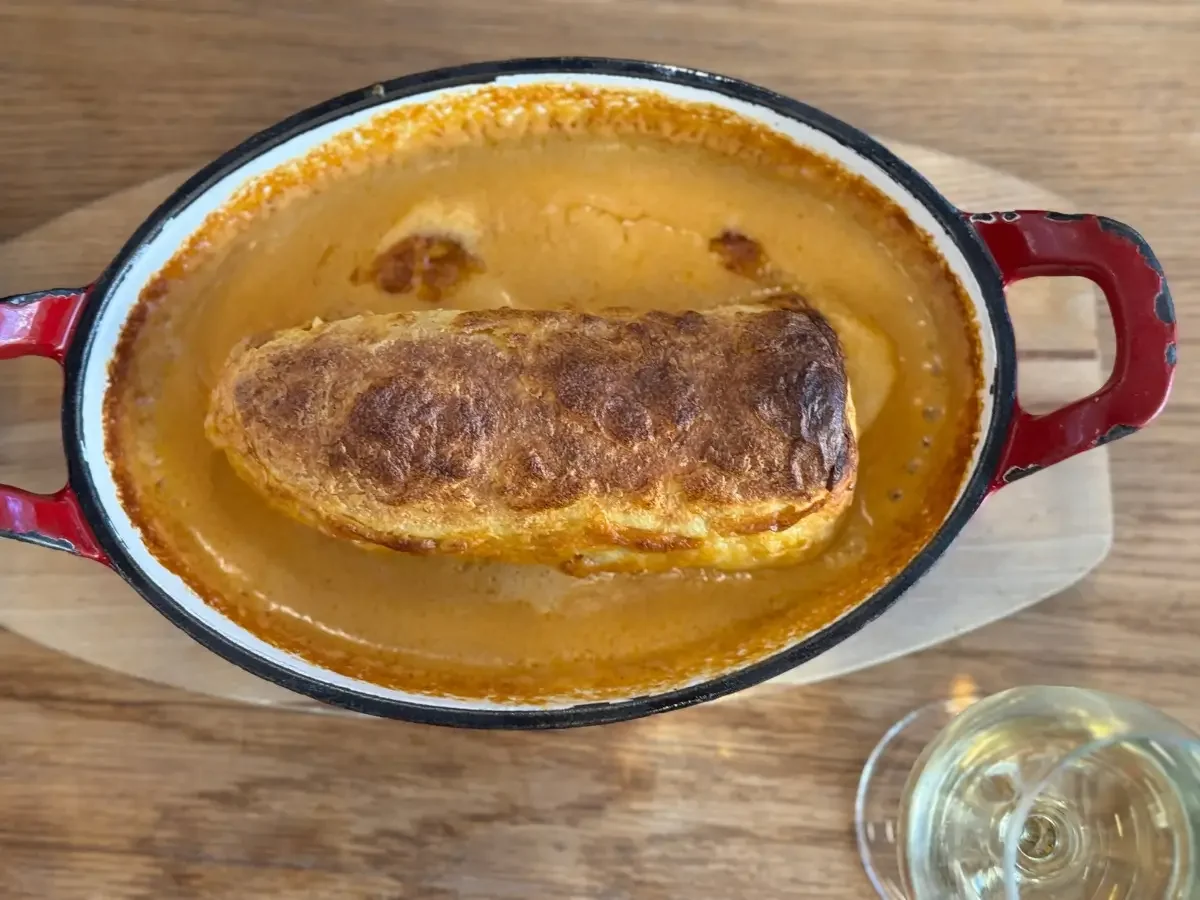
A taste of Lyon, where the city's culinary traditions are as deeply rooted as its history.
Many of the women Lyon called its mères began as cooks in private households. Eugénie Brazier went into domestic service at nineteen, opened La Mère Brazier on rue Royale in 1921, and in 1933 became the first chef to hold six Michelin stars, three at each of two restaurants. She later trained a young Paul Bocuse. The restaurant is still on rue Royale.
Bocuse’s name now graces the market, whose history predates his fame: a covered hall on place des Cordeliers in 1859, a purpose-built one in Part-Dieu from 1971, and, since its renovation in 2006, Les Halles de Lyon Paul Bocuse. More than sixty merchants work under one roof: quenelles, Saint-Marcellin, tarte aux pralines roses, and cervelle de canut, a herbed fresh cheese named, with some irony, for the silk weaver’s brain.
The Cloister, Left Standing
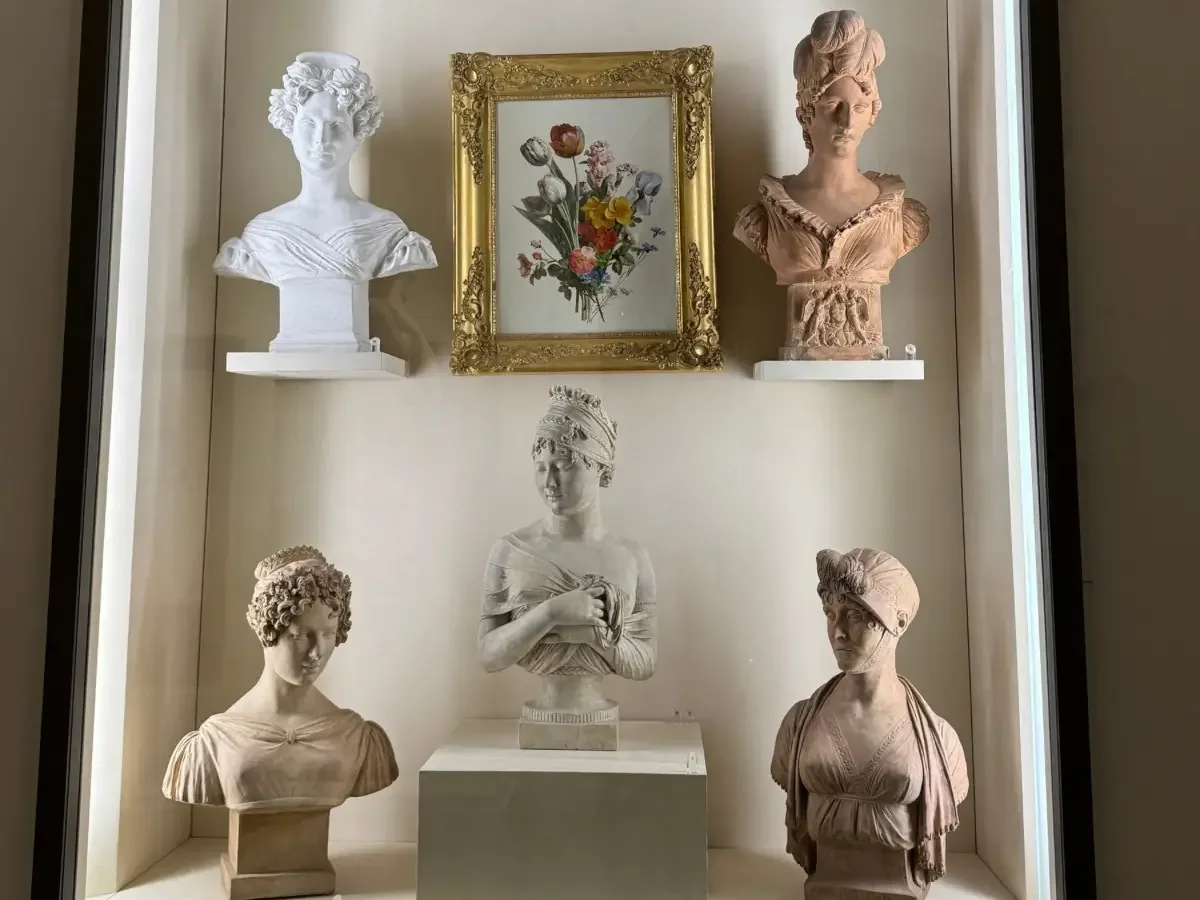
The Musée des Beaux-Arts occupies the Palais Saint-Pierre, home to Benedictine nuns until 1792. The museum opened in 1801. The cloister became a garden, with Rodin’s The Shadow among its sculptures, and the enclosed space remains one of the quietest places in the city center.
Beyond the garden, the galleries extend through more than seventy rooms and span some five thousand years, with murals by Puvis de Chavannes on the stairs. The collection is among the most substantial in France outside Paris, yet the building retains the character of a place conceived for contemplation.
The Head of Gold, Still Missing
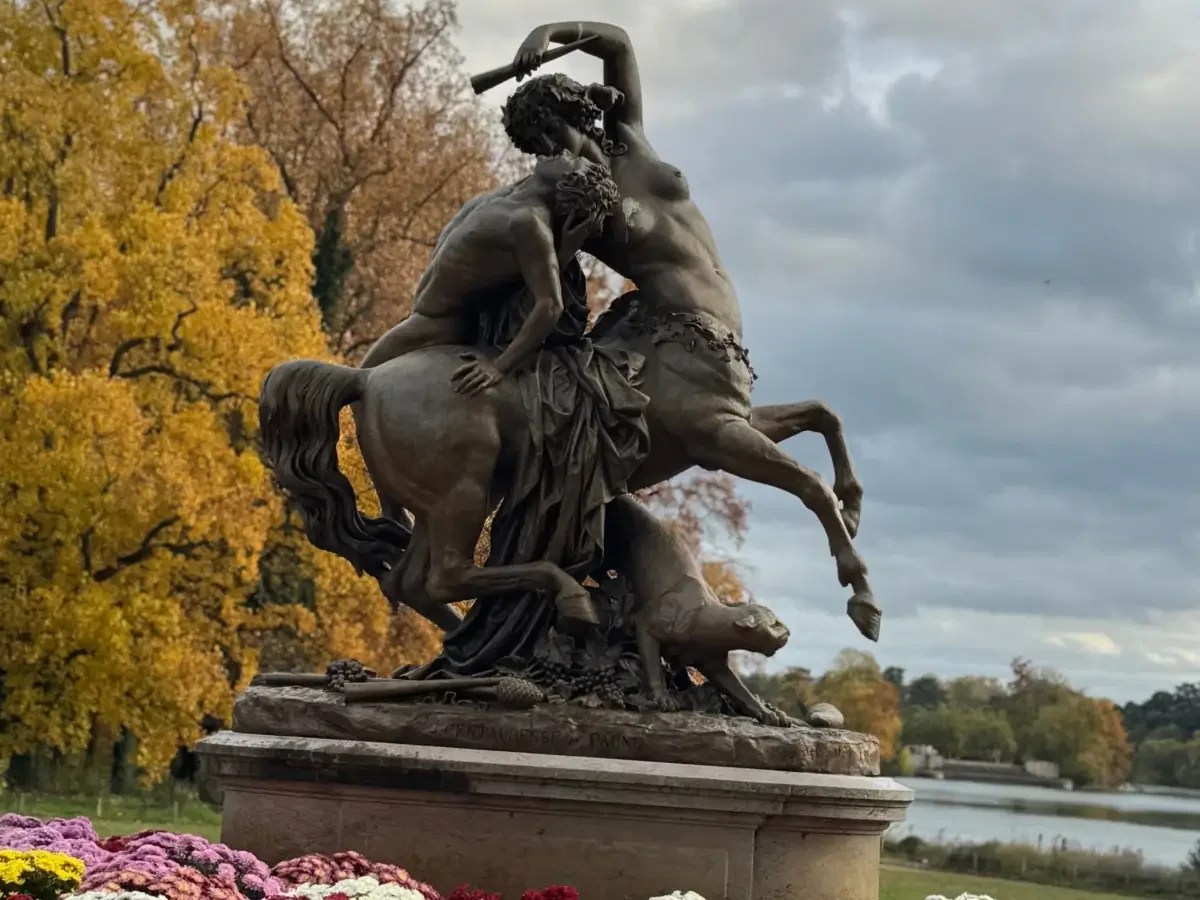
Lyon’s great opening towards nature came in 1856, when the city acquired roughly a hundred hectares of Rhône floodplain. Parc de la Tête d’Or opened in 1857, laid out by the Swiss landscape architects Denis and Eugène Bühler, with a lake, greenhouses, a botanical garden and a zoo. Entry is free, zoo included. Its backers wanted to give nature to people who had none.
The name comes from a much older legend: that a golden head of Christ lay buried somewhere on the grounds, left by Crusaders in most tellings. In one telling, a clairvoyant was hired to find it. She could not. It has not turned up since.
The Exception
A statue of the Virgin was to be raised on Fourvière on September 8, 1852. A flood delayed it; the ceremony slipped to December 8, and when the day came, residents set candles in their windows. They have done it every year since: small candles in colored glass, called lumignons. Around them, the city now stages the Fête des Lumières, four nights of light installations in early December, always including the 8th.
Most of the year, Lyon keeps the door shut. For a few nights in December, it puts a candle in every window because of a flood.
Further Reading: On Cities That Keep Their Own Counsel
These pieces follow the same idea in different forms: that a place shows its character in what it does without being asked.
→ Where History Is Still How People Get to Work: Ferrara, a Renaissance city that never became a museum, and how a place carries its past without staging it.
→ The City That Keeps Its Own Hours: Bergamo, a hilltop city that has not hurried for the visitor, and the quiet that comes with it.
→ The Cities That Reward Walking Alone: Five cities best understood on foot, where attention is the only ticket.