What Your Hair Is Actually Telling You: A Non-Toxic Hair Barrier Repair Guide

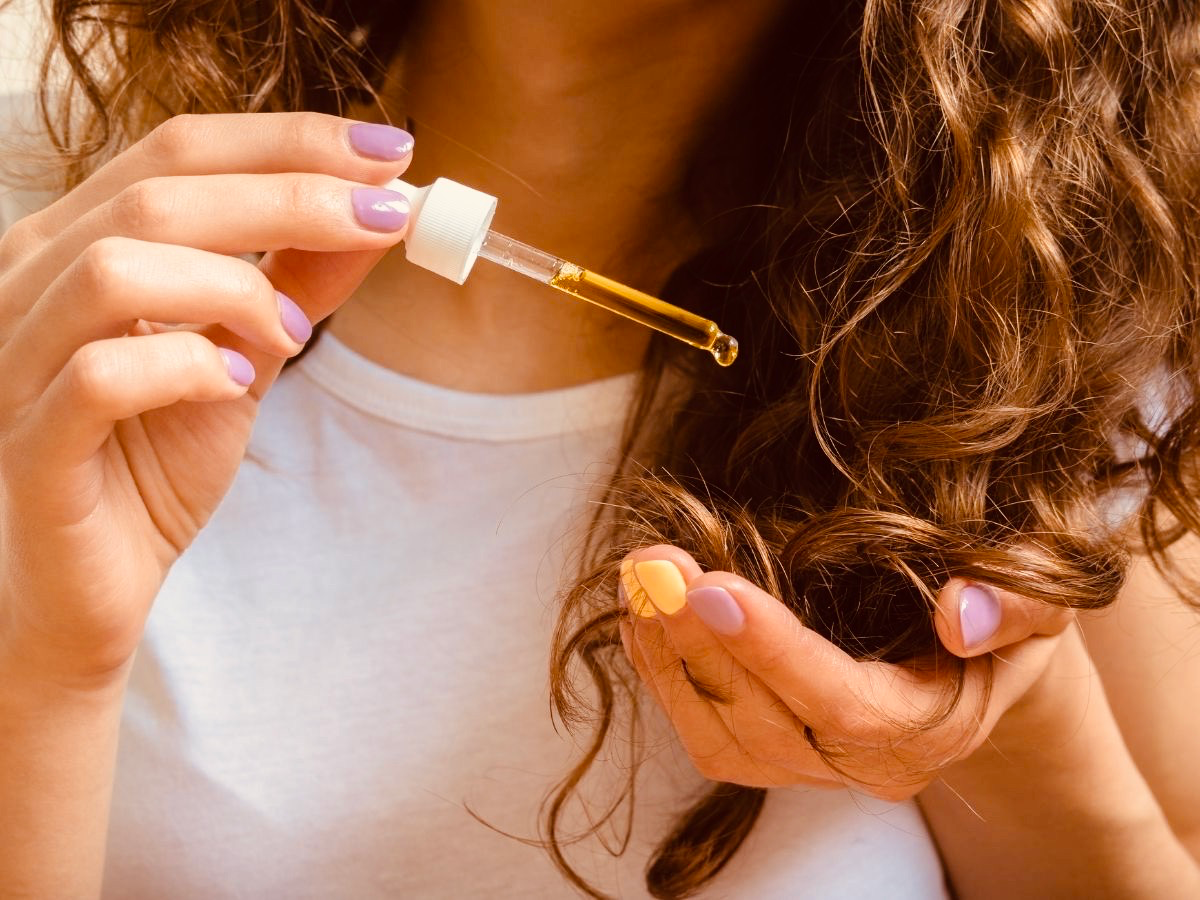
Hands applying hair oil with a dropper to the ends of curly hair — illustrating a pre-shampoo oil treatment using jojoba and buriti for hair barrier repair.

Quick Answer: When split ends keep returning despite good habits, the cause is often a compromised hair barrier. Restoring pH, reducing chemical stress, and using penetrating oils like jojoba and buriti can support the hair structure rather than temporarily masking damage.

Your skin has a barrier. So does your hair.

The same way skin can become compromised by over-exfoliation and synthetic overload, hair can also lose resilience when its protective barrier is repeatedly disrupted — something I explore in more depth in my guide to spring skin barrier repair.

When that barrier weakens, split ends, dryness, and breakage stop being cosmetic issues and start becoming signals.

I spent years trying to solve what I thought was a split ends problem. I trimmed regularly. I stopped using heat entirely — no dryer, no flat iron, nothing. Still, the dryness returned. Still, the ends frayed. Hair that should have been thriving was quietly struggling.

The turning point was not a product. It was learning that I had been treating a symptom instead of the actual problem.

So I simplified. Oils. Organic apple cider vinegar. Peppermint essential oil. Ingredients that existed long before hair care became a shelf of synthetic fragrance, silicones, sulfates, dyes, and seventeen-ingredient formulas in plastic bottles.

That same philosophy eventually shaped the way I travel with personal care products, too: fewer, multi-use essentials instead of overpacked routines filled with products I do not actually need.

What I learned is what I want to share here — not as a prescription, but as a framework. Once you understand what your hair is asking for, the answers become more intuitive.

Hair Has a Barrier — And Most Products Disrupt It

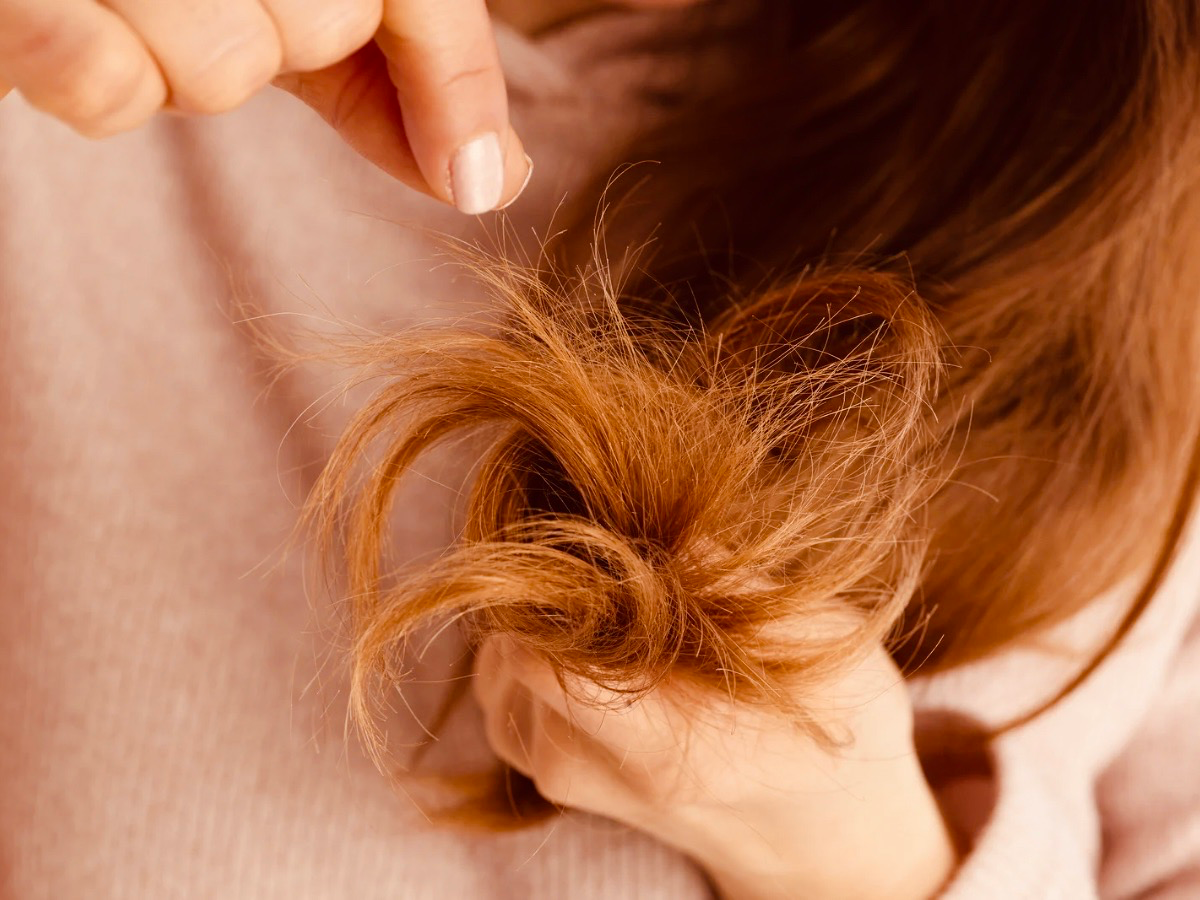
Close-up of damaged, frizzy split ends on auburn hair — showing the visible signs of a compromised hair cuticle barrier.

Hair has its own protective outer layer: the cuticle layer, made of overlapping scales that lie flat when healthy. When that structure is disrupted by excessive processing, harsh cleansing, or repeated pH imbalance, the cuticle begins to lift and fray.

Moisture escapes. Friction increases. Strands weaken.

Split ends are often visible evidence of that structural stress.

Many conventional shampoos and conditioners — even those marketed as “repairing” or “nourishing” — can contribute to the cycle. Sulfates strip natural oils. Silicones create temporary smoothness while limiting moisture penetration over time. Higher-pH formulas can leave the scalp and cuticle dehydrated and roughened.

The result is hair that feels manageable temporarily, then increasingly dependent on more product to maintain that effect.

Why Split Ends Keep Coming Back

If you are not using heat tools and your ends still split, the issue is often ongoing moisture loss or chronic barrier disruption.

Fine, dry hair usually needs nourishment that penetrates rather than coats. Heavy oils can sit on top of the strand, leaving hair limp while doing very little underneath. Lightweight oils that behave more like the scalp’s natural sebum tend to work differently, absorbing into the shaft instead of remaining on the surface.

For long hair, the ends tell the oldest story: the most washing, the most exposure, the most time.

That is why pre-shampoo oiling can be so effective. Applied before cleansing, oils help support the lengths and ends before shampoo removes surface oils from the hair.

The Two Treatments I Keep Coming Back To

I don't measure. I never have. With long hair, you learn to read what you're working with: how much oil the length needs, how saturated the ends are, how the hair responds on a given day. I give you the ingredients and the why. You give it the intuition.

Two bottles of organic hair treatment oils — Brazilian buriti oil and cold-pressed organic jojoba oil — used in a pre-shampoo hair barrier repair mask.

The Pre-Shampoo Oil Mask

Organic Jojoba + Organic Buriti

I combine organic jojoba oil with organic buriti oil, working it through the mid-lengths and saturating the ends before shampooing.

Jojoba is the foundation. Its composition closely resembles human sebum, which absorbs into the hair shaft rather than heavily coating it. For fine hair, that distinction matters. It softens without flattening and helps retain moisture without excessive residue.

Buriti is what makes the treatment restorative.

How to use it:

1. Mix enough oil in your palms to lightly coat the length of your hair
2. Work through the mid-lengths first, then focus on the ends
3. Massage any remaining oil into the scalp
4. Leave on for about 20 minutes
5. Shampoo normally afterward

Unless your hair feels especially heavy, a second shampoo usually is not necessary.

What Makes Buriti Oil Different

Cold-pressed from the Amazonian Moriche Palm, buriti oil has natural fatty acids and is exceptionally rich in vitamins A, C, and E, which support moisture retention and elasticity.

Its deep orange color comes from its high beta-carotene content. Unrefined versions retain more of the nutrients that make the oil effective, which is why cold-pressed and organic forms tend to work best.

Its deep orange color comes from its high beta-carotene content. Unrefined versions retain more of the nutrients that make the oil effective, which is why cold-pressed and organic forms tend to work best.

Some studies suggest buriti oil may help reduce breakage and improve the condition of damaged ends over time.

Together, jojoba and buriti create a balance: one helps moisture penetrate, the other helps support and soften hair that has already become fragile. With consistency, the improvement is gradually noticeable.

The Scalp and Ends Reset

Organic Apple Cider Vinegar + Organic Peppermint Essential Oil

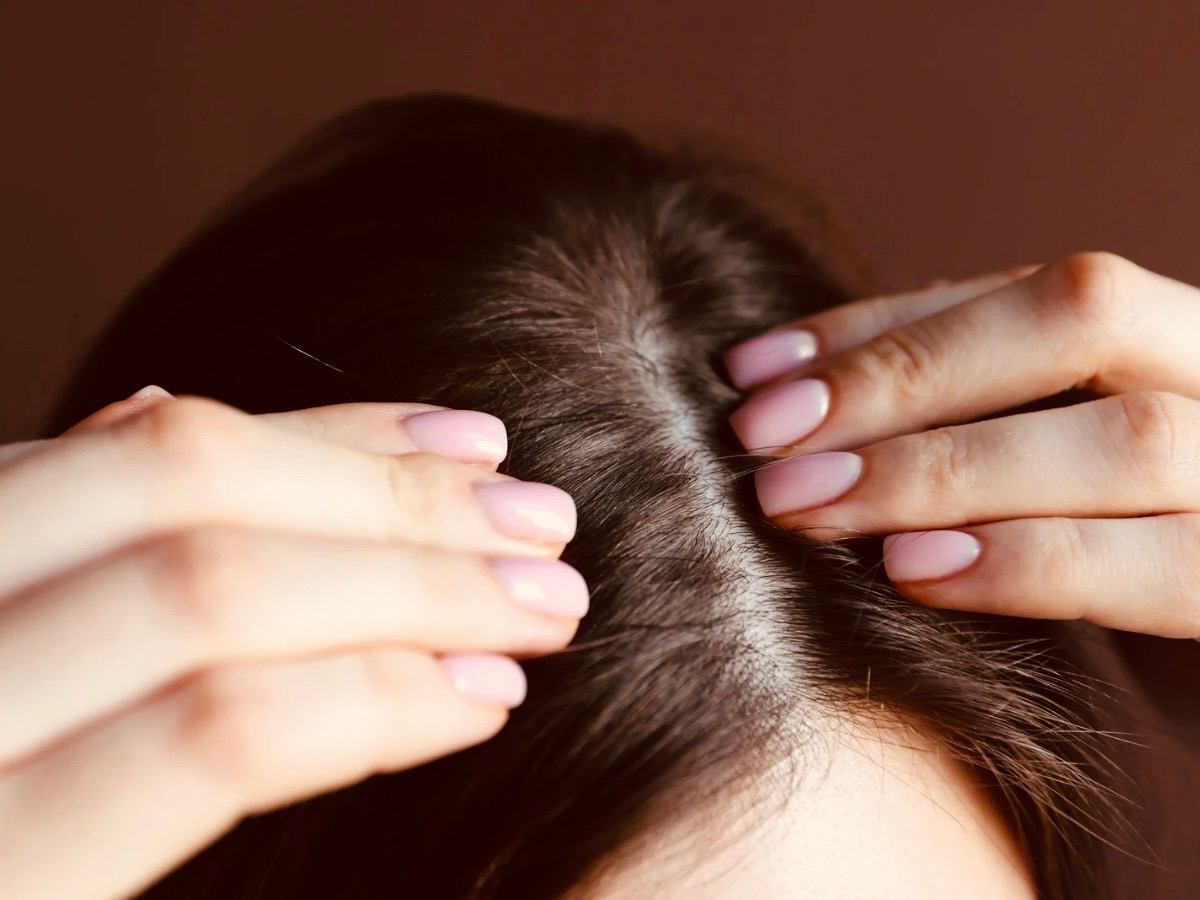
Close-up of hands massaging the scalp with fingertips — illustrating the application technique for a natural apple cider vinegar and peppermint scalp treatment.

The second treatment I use is an apple cider vinegar rinse with a few drops of peppermint essential oil.

Apple cider vinegar works primarily because of its pH. Its acidity helps smooth the cuticle, reduce buildup, and restore balance to the scalp after cleansing. When the cuticle lies flatter, hair retains moisture more effectively and reflects more light naturally.

Peppermint essential oil adds a cooling effect and can help refresh the scalp. A small amount goes a long way.

How to use it

  1. Dilute one part apple cider vinegar with three parts water

  2. Add two to three drops of peppermint essential oil

  3. Apply from scalp to ends

  4. Leave on for two to three minutes

  5. Rinse thoroughly

Some days I use it before shampooing. Other days, I leave it as the final rinse. The adjustment depends entirely on how my hair feels that day.

Always dilute the vinegar. Full-strength ACV is too acidic for direct scalp application.

What I Avoid in Hair Products

The ingredients I personally try to minimize are:

  • sulfates

  • silicones

  • synthetic fragrance

  • parabens

  • synthetic colorants

Over time, heavy buildup and repeated irritation can leave hair drier, rougher, and more difficult to manage.

Truly minimal, non-toxic hair care is still harder to find than skincare. Reading ingredient labels carefully matters. And sometimes, making your own treatments is less about DIY culture and more about what is in contact with your scalp and hair in the first place.That is ultimately how these routines began for me.

How to Support Your Hair Barrier Naturally

What I want to leave you with is not a strict routine, but a different way of reading your hair.

Persistent dryness is communication. Hair that stops responding to products usually does too. Split ends that return immediately after trimming are communicating as well.

When you reduce unnecessary chemical stress, restore pH balance, and use ingredients that genuinely support moisture retention, hair often begins responding differently.

Not instantly. Gradually.

For hair that has spent years overloaded or stripped down, patience becomes part of the process.

FAQs About Hair Barrier + Split Ends

What does jojoba oil do for fine hair?
Jojoba closely resembles human sebum, so it absorbs into the hair shaft rather than sitting on top of it. Unlike heavier oils and conditioners, it fills gaps in a compromised cuticle and retains moisture without weighing fine hair down.

How do you use apple cider vinegar on hair?
Dilute one part organic ACV with three parts water, add two to three drops of peppermint essential oil, and apply to the scalp and ends for two to three minutes before rinsing. Always dilute. Full strength ACV is too acidic for direct scalp application.

What is buriti oil and why is it used for hair?
Buriti oil is a nutrient-rich oil derived from the Amazonian Moriche Palm. Love for its fatty acids, antioxidants, and vitamin content, which may help support dry or damaged hair.

What ingredients should I avoid in hair products?
Many people with dry or fragile hair choose to reduce sulfates, silicones, synthetic fragrance, parabens, and artificial colorants, especially if they notice buildup, irritation, or recurring dryness.


J Martinez

Jessy writes about the places culture lives in everyday life — the overlap between books, music, film, food, and art, and how these things move through our days without us always noticing. She also writes about travel from the inside, drawn from personal experience rather than itinerary.

https://www.shetheking.com
Next
Next

Dressing for the Woman You Are Becoming