The Scent Someone Keeps of You
On scent and the memory we leave in other people.

Of all the choices we make about how we present ourselves to the world, fragrance works the deepest. It doesn’t just communicate. It remembers.
A dish that takes you back before you’ve taken a single bite. A song that returns you so completely to a specific room, a specific person, a former version of yourself, that you have to stop what you’re doing. A place whose smell- rain on hot pavement, salt air, woodsmoke- you could identify blindfolded because your body learned it before your mind did.
Intuitively, we know that the senses carry memory. What we talk about less is that they do not carry it equally.
Scent carries it most directly.
The Short Route

Sight, sound, and touch pass through the thalamus, the brain’s relay station, before reaching the regions that make sense of them. Smell takes a shorter route: signals travel from the olfactory bulb to regions closely tied to emotion and memory, including the amygdala and hippocampus. When a scent is present during an emotional moment, the two can become linked. Years later, the same scent can bring the memory back with striking immediacy. Music can bring something back. Scent places you inside it.
That is why certain scents do not simply remind you of a person. They can make you miss them with a physical immediacy other senses rarely match.
What Someone Keeps
Someone who keeps meeting your scent tends to attach it to you, and that link can outlast almost everything else about the encounter. Not a visual memory. Not the sound of your voice. A scent memory, the kind that can resurface years later, vivid and uninvited.
Think about the people whose scent you still carry: a grandmother whose skin held a certain warmth, a partner whose shirt you kept longer than made sense, a friend whose perfume you catch in passing and have to stop walking. These are not small memories. You are that for someone. The question is whether you choose your scent with that awareness or wear it by default.
The Woman Who Sprayed the Room
Coco Chanel understood this long before science could explain it. Before No. 5, many fashionable fragrances centered on single flowers: gardenia, rose, jasmine. Chanel wanted what she later described as “a woman’s perfume, with the scent of a woman.” Her perfumer, Ernest Beaux, presented her with a series of numbered samples, and she chose the fifth.
Before it reached a wider audience, Chanel tested it among her fashionable friends. According to legend, at a dinner on the Riviera Coco Chanel sprayed the fragrance around the table, and every woman who passed asked what it was. By one account, the fitting rooms at rue Cambon were scented, and clients asked for more. No. 5 went on sale on 5 May 1921 at her boutique, to select clients. Its early promotion was discreet, and it spread the way scent does: by being noticed and asked about.
How a Scent Becomes Yours
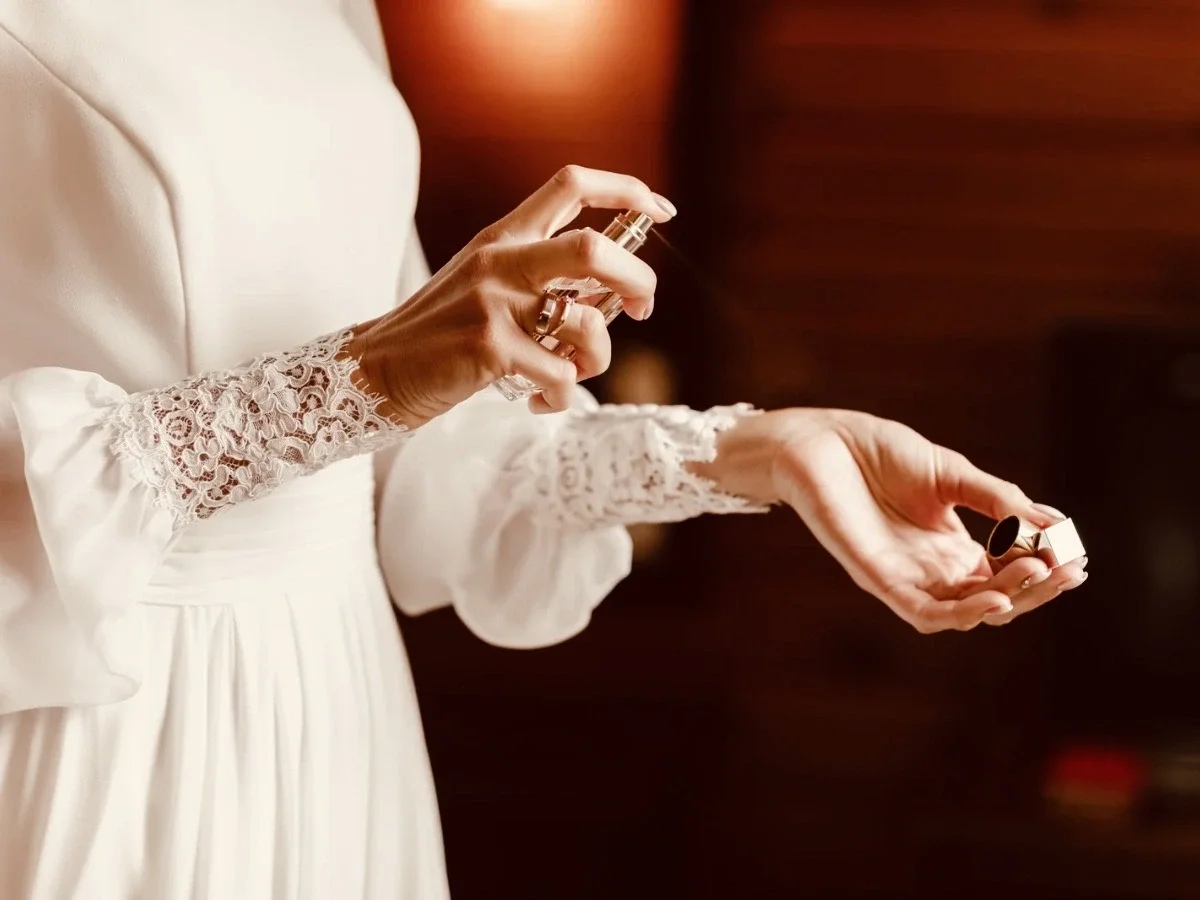
Many women arrive at a signature scent passively: a gift, a sample, something worn by someone they admired, a quick purchase that becomes habit. Whether it still fits is rarely revisited. The scent you wore at twenty-two may have suited you perfectly. If it is still on the skin now, it is worth asking whether it reflects who you are today. Asking is not a criticism.
Fragrance holds chapters. A perfume tied to a past relationship can carry its emotional residue long after it ends. A scent worn during a difficult period can echo that feeling each morning. Choosing a new fragrance during a transition, a new role, a reinvention, or a return to yourself is a quiet way of marking change: the same decision a wardrobe sends, made invisibly.
Choosing One
Fragrance has its technical vocabulary, but the more useful language is personal. Before the counter or the browser, the questions are what it should feel like to wear this, and what it should leave behind. Some prefer presence without announcement: woods, resins, vetiver, a cool amber that stays close to the skin. Others want warmth that feels like an embrace: musk, sandalwood, rich florals, vanilla with depth. Others are drawn to something precise and alive, green, slightly sharp, quietly distinctive. None is better than another. They are different expressions of identity, and the work is recognizing which one is yours.
That takes time, because fragrance lives on skin, shaped by chemistry, temperature, and movement, and what works on paper rarely tells the full story. Chanel’s test is still the right one: wear it, let it unfold, notice how it feels hours later and what it becomes in proximity to someone else. Then see who asks.
Further Reading: On the Choices That Carry Memory
These pieces follow the same idea in different forms — that what we wear on the body carries a history the wearer often didn’t choose.
→ Hair Is Heritage: The Story We Carry: Another inherited sense of self worn on the body: the hands that first taught us what our hair means.
→ Dressing for the Woman You Are Becoming: The wardrobe is half of the same decision: what to wear when a transition makes the old choice stop fitting.
→ Beyond Style: The Cultural Meaning of the Outer Self: Why scent, clothing and care are a cultural language, not only style.