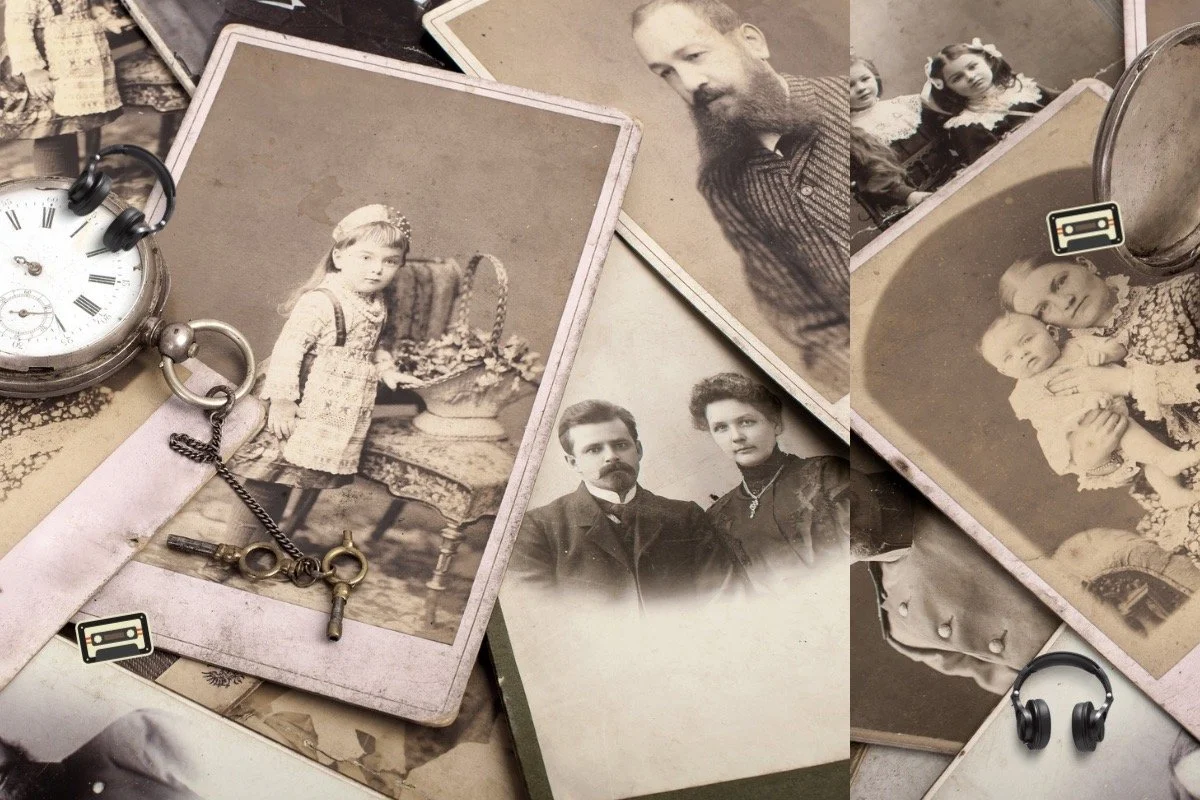
Music and Memory: How Books Live On Beyond the Final Page

music and memory illustrated through reading with music and emotional reflection

Some stories don’t end when the book closes — they echo. They linger in the body, in the quiet moments between tasks, in the way a certain sound can summon an entire emotional world.

The Invisible Life of Addie LaRue is one of those stories, shaped by centuries of living and the fragile architecture of remembrance. In my spoiler-free reflection on identity and legacy in The Invisible Life of Addie LaRue, I explore why memory becomes a form of survival rather than nostalgia.

Music and memory are intertwined because sound activates emotional and autobiographical recall, allowing stories to live on beyond the act of reading.

This is where literature becomes personal. Where creativity quietly asserts its power. Where a book stops being something you finished and starts being something you carry.

Why Music and Memory Are Inseparable

music and literature blending through memory and storytelling

Memory is not a static archive. It is emotional, sensory, and deeply subjective — especially for women, whose inner lives are often rich, layered, and historically undervalued.

Music activates memory not by recalling facts, but by reawakening emotional states. Neuroscience supports this: music engages regions of the brain associated with emotion and autobiographical memory, which is why music-evoked memories feel more vivid and enduring than those triggered by other cues.

When we listen to music connected to a meaningful experience — a relationship, a season of life, or a book — we are not remembering what happened.
We are remembering who we were.

That distinction matters.

It explains why music and literature form such a powerful alliance: together, they preserve feeling rather than information, atmosphere rather than plot.

A Playlist for Books Is a Memory Device

Creating a playlist for books is not about background noise. It’s about encoding a story into emotional memory.

When you finish a novel like The Invisible Life of Addie LaRue, the narrative may end — but the emotional questions remain:

  • What does it mean to be remembered?

  • What is the cost of living unseen?

  • How do women leave traces of themselves in a world that forgets them?

playlist for books connecting music and literature through memory

A playlist allows those questions to keep breathing.

Listening to music after reading helps consolidate the emotional experience of the book. Research suggests that music can influence how memories are stabilized and recalled, especially when emotion is involved. In this way, a playlist becomes a second vessel for the story — one that lives outside the page and inside the listener.

This is why returning to a song from a book-inspired playlist can feel like stepping back into the novel’s atmosphere, even months later. The music doesn’t summarize the story — it holds its residue.

Women, Memory, and the Quiet Power of Creativity

the invisible life of addie larue memory and emotional legacy

There is something especially resonant about pairing music and literature when the story centers on a woman’s interior life.

Women have long preserved identity through nontraditional archives: letters, rituals, relationships, art, sound. Music becomes a form of legacy — a way of saying I was here, even when history fails to record it.

In Addie LaRue, memory is survival. To be remembered is to exist. To be forgotten is a kind of erasure.

When readers engage with a playlist inspired by the book, they participate in that act of remembrance. Creativity becomes power — not loud or domineering, but persistent. Emotional. Enduring.

This is where the emotional connection to books deepens: when a story stops being something you read and becomes something you carry forward.

How Music Extends the Life of a Story

Pairing music with literature enhances creativity in subtle but profound ways:

  • It invites reflection rather than consumption

  • It encourages emotional processing instead of passive reading

  • It allows stories to evolve alongside the reader’s own life

Music does not dictate interpretation. It opens space.

Studies on music and cognition suggest that sound can enhance imaginative thinking and emotional fluency — especially when it aligns with mood rather than competing for attention. For reflective reading, music acts less like a soundtrack and more like a threshold — a place where meaning lingers.

The Afterlife of a Book

A well-chosen playlist doesn’t summarize a book. It preserves something more elusive: the feeling of having been changed.

This is the invisible life of stories — the way they resurface unexpectedly years later through sound. The way a song can collapse time. The way memory, music, and identity quietly weave together.

And perhaps that is the most enduring form of legacy there is.

Listen, Remember, Continue

Explore THE INVISIBLE LIFE OF ADDIE LARUE playlist — a curated space where music and memory keep the story alive, long after the final page. Because some stories don’t end. They listen back.

Next
Next

Why Christmas Music Makes Us Emotional: The Science and Nostalgia Behind the Songs We Love