The Marriage Portrait by Maggie O'Farrell
On what happens when a portrait becomes a countdown.
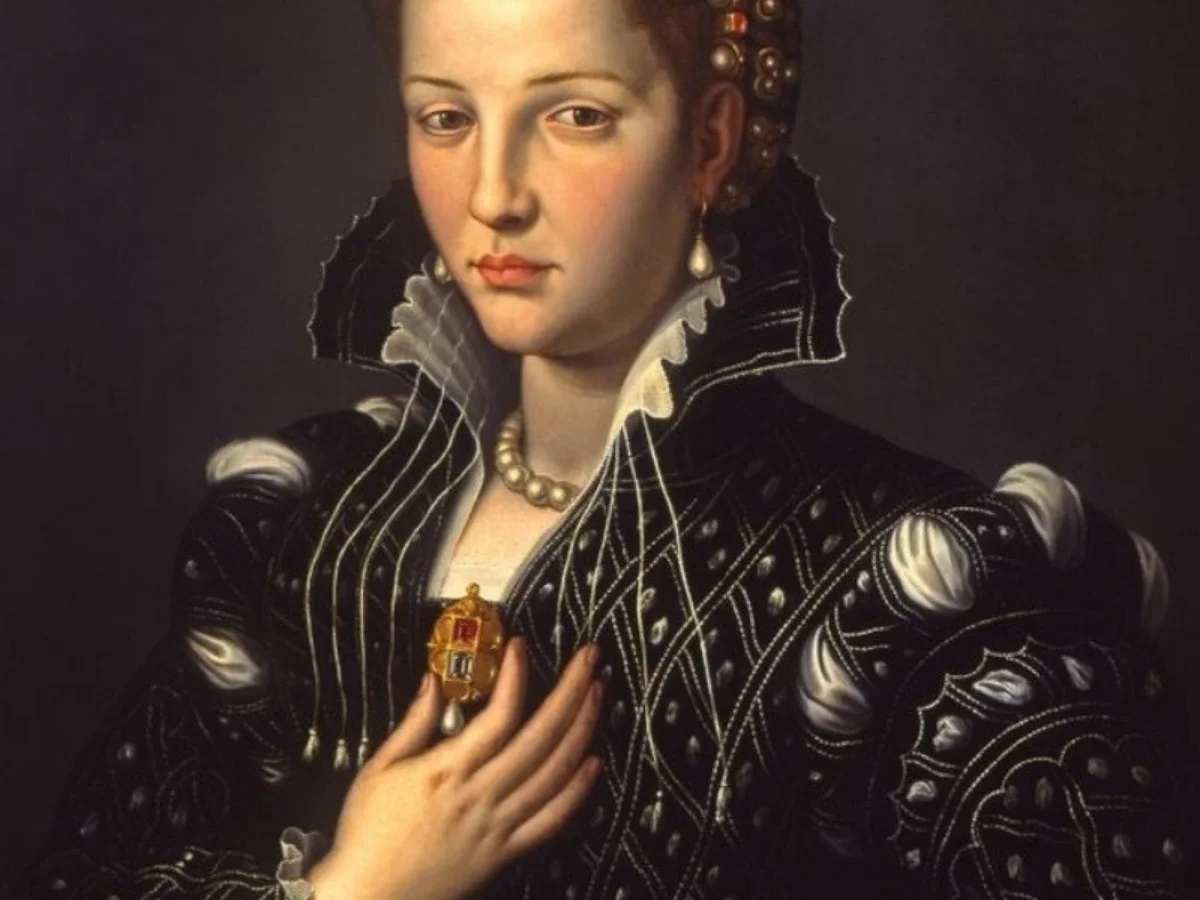
Lucrezia di Cosimo de' Medici, attributed to Bronzino or his student Alessandro Allori, c. 1560—North Carolina Museum of Art. The real portrait behind O'Farrell's novel.
In 1560, fifteen-year-old Lucrezia de' Medici leaves Florence for Ferrara, where she is to marry Alfonso II d'Este, Duke of Ferrara. Less than a year later, she is dead. The official record attributes her death to fever. For centuries, rumor has suggested otherwise.
The Marriage Portrait begins in the space between the historical record and what it cannot tell us. From the few surviving details of Lucrezia's life, Maggie O'Farrell imagines the girl behind them: artistic, observant, and suddenly trapped in a marriage she did not choose.
Lucrezia: Taught to Watch
Lucrezia is the overlooked third daughter of the Medici court, more comfortable with her paints and her father's menagerie than with the politics around her. Then her older sister dies just before her wedding to the Duke of Ferrara, and Lucrezia, barely in her teens, is sent in her place.
Her new husband is charming, cultured, and difficult to read. The marriage begins with all the ceremony of a courtship, but Lucrezia soon understands that she has entered a world where others have already decided what she will be.
Her instinct is to watch. She notices pauses, glances, changes in tone. At court, attention becomes a form of protection.
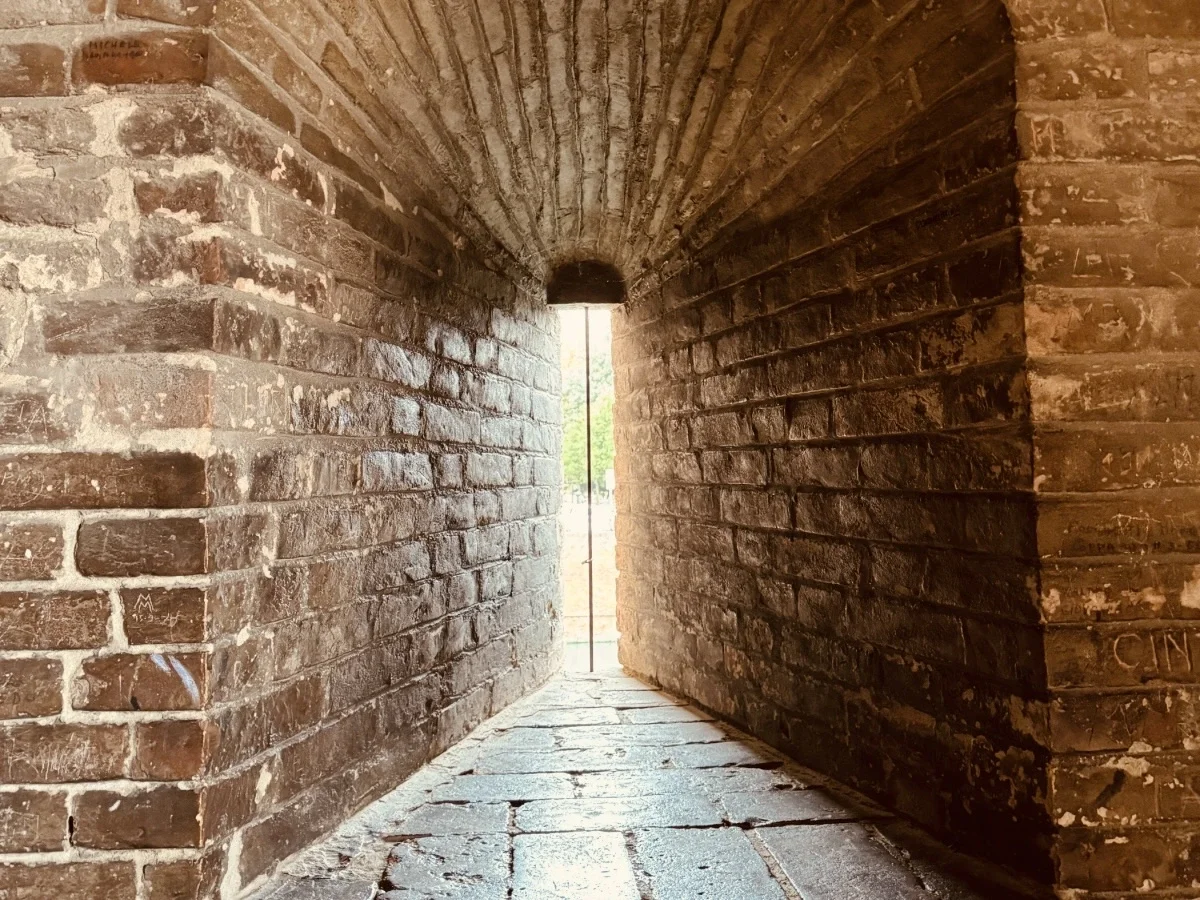
A corridor inside Castello Estense in Ferrara—the actual seat of power Lucrezia entered as Alfonso's bride.
O'Farrell keeps us close to Lucrezia's perspective without giving her easy answers. She does not always know what the people around her are thinking. She knows when something is wrong.
Alfonso: The Uncertainty That Frightens
Alfonso is more complicated than the villainous historical rumor might suggest. He can be playful, attentive, and genuinely passionate about art and music. Yet his presence leaves Lucrezia unsettled before she can fully understand why.
That uncertainty is what makes him frightening. Lucrezia cannot easily separate the husband who charms her from the man she has reason to fear.
O'Farrell leaves the contradiction unresolved. Lucrezia has to live inside it, with no way to be sure which version of him she is looking at.
The Portrait
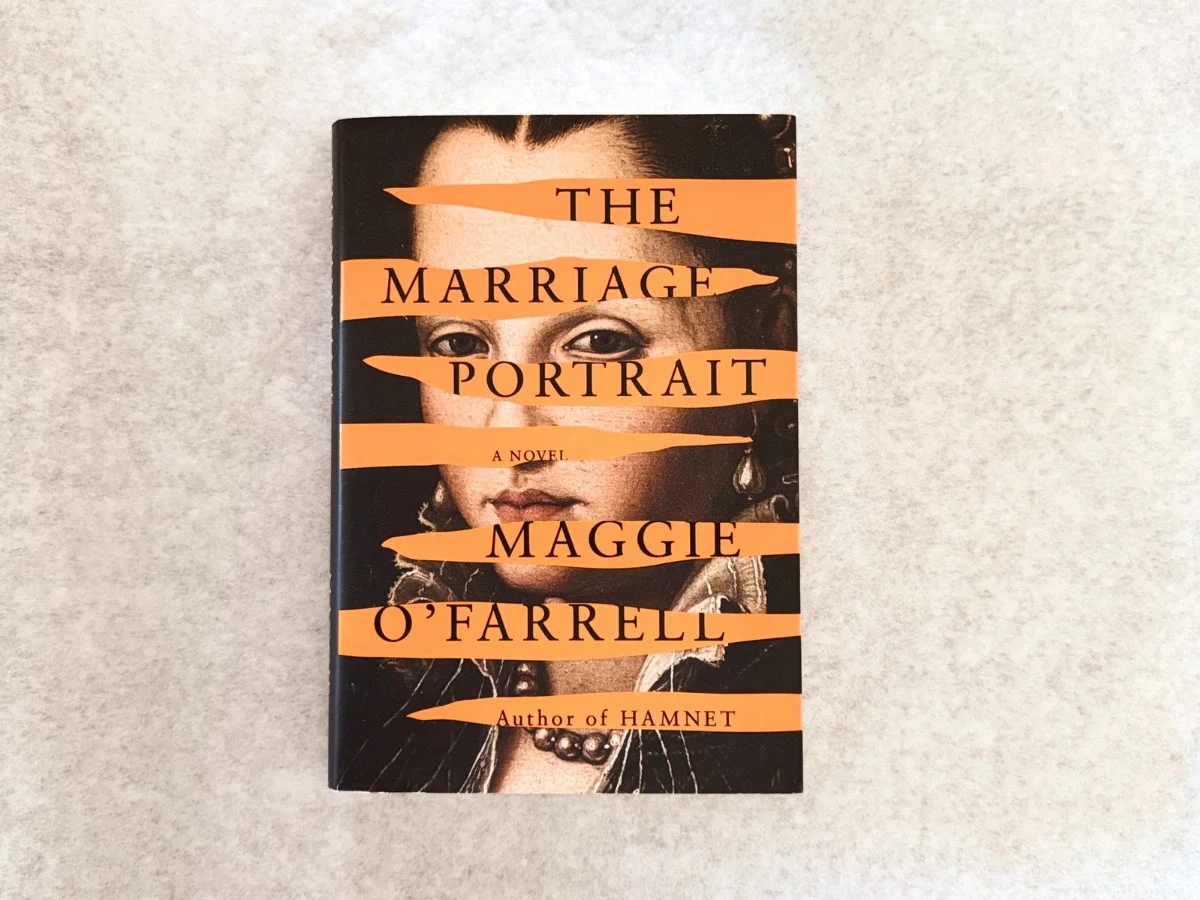
The Marriage Portrait by Maggie O'Farrell.
The portrait, attributed to Bronzino or his student Alessandro Allori, is one of the novel's quietest sources of tension. Lucrezia is asked to sit still while someone else decides how she will appear.
The painting becomes another form of control. It captures Lucrezia, but it also turns her into an image that can be possessed and interpreted without her having any say in the story.
When Alfonso admires the finished portrait and refers to his "first" duchess, the moment is small but chilling. Lucrezia understands what she is being turned into: the portrait will outlive her.
What History Leaves Behind
The real Lucrezia de' Medici left little behind: no diary, no letters, only a handful of details in the historical record and a portrait now held by the North Carolina Museum of Art.
Centuries later, Robert Browning folded her story into My Last Duchess. For generations, the poem offered one of the few ways to imagine Lucrezia's fate. But it gave her no voice of her own.
That distinction is where O'Farrell's novel begins.
She cannot change what history recorded about Lucrezia. She can imagine the life beyond those surviving details: the girl who watched carefully, understood more than people realized, and found herself inside a world that had already decided who she was supposed to be.
Further Reading
→ The Women by Kristin Hannah—August Book Pick and Review: A companion read on whose stories get preserved—and whose get quietly written out of the record instead.
→ Minbak: Ela Lee's Novel of Secrets, Silence, and Three Generations: On what it costs to protect an image at the expense of the person underneath it.
→ On Being Witnessed Without Being Known: On the specific loneliness of being looked at constantly and understood rarely—Lucrezia's exact predicament, four centuries early.