On aging and the grief that comes with a life continuing.
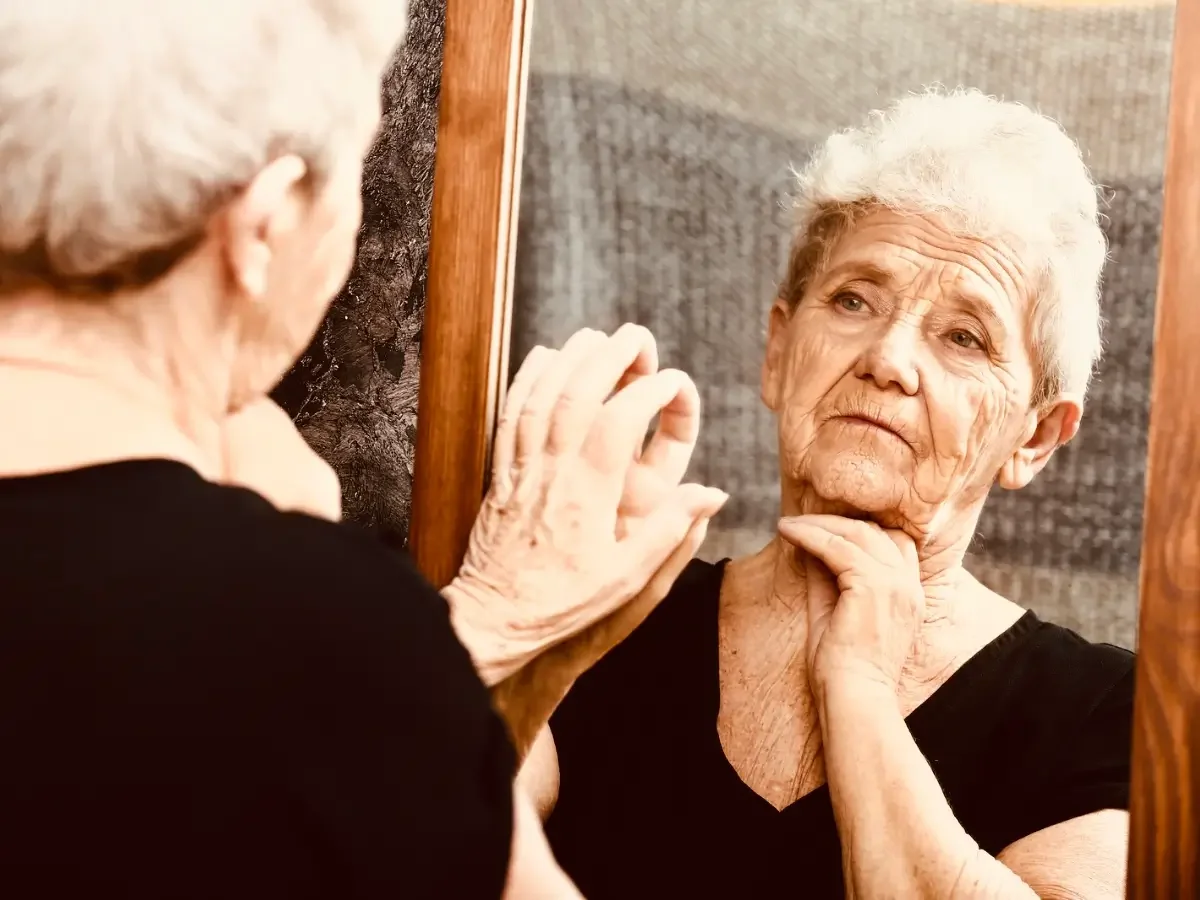
Appearance is part of continuity.
Watching yourself age is strange because, most of the time, you don't feel it happening.
You wake up as yourself. Your memories remain intact. Your sense of humor has not changed. You recognize the person in the mirror, even as the face looking back begins, gradually, to belong to another stage of life.
The changes rarely announce themselves dramatically. They accumulate. The face becomes less familiar in photographs. Skin acquires histories it did not have before. The body changes its proportions, its speed, its tolerance for things that once seemed inconsequential. Then, occasionally, you catch your reflection at an unfamiliar angle and experience the shock of seeing time where you hadn’t expected it.
We tend to frame this as a choice between two positions: fight aging or embrace it. Spend money to reverse what you can, or reject the premise that there is anything to fix. Neither describes the experience.
You can want to grow older and still feel sad about getting older.
The Face You Remember

Change rarely announces itself.
Part of the difficulty is that the self-image we carry changes more slowly than the face in the mirror. For years, sometimes decades, the internal picture stays current. You still recognize yourself as the woman you were at thirty, or twenty-five, or at whatever age your appearance settled into memory as simply you. When the two finally meet, there is a moment of discrepancy.
It is not only vanity that produces it. Appearance is part of continuity: we use our faces to recognize ourselves across time, and when the face changes, the change registers as a small interruption in identity.
This is why the language of acceptance falls short. Acceptance assumes a problem to resolve: resist the change or make peace with it. But grief is not resistance. We can know perfectly well that a change is natural and still miss what it took, the way we miss a city we left on purpose or a house we would never move back into. Some losses are worth grieving precisely because what is disappearing was worth having.
What Aging Asks of Women
Both can be true.
Women have long been evaluated, in part, through appearance. In 1972, Susan Sontag observed that culture allows men two standards of beauty, the boy and the man, and women only one, the girl. Men too meet change in appearance, desirability, capacity, and status. What differs is the vocabulary. A man is said to look distinguished. A woman is said to be aging gracefully, a compliment that assumes a way of doing it badly.
The culture has since added a second expectation: reject the pressure to look young, celebrate natural aging, refuse the idea that beauty determines worth. The two expectations coexist. A woman can reject the machinery built around female insecurity and still feel a private sadness when her face changes. She can decide not to pursue every available intervention and still miss the face she had before making that choice.
Women are not uniquely capable of grief about aging. They have been given more reasons to feel conflicted about what that grief means.
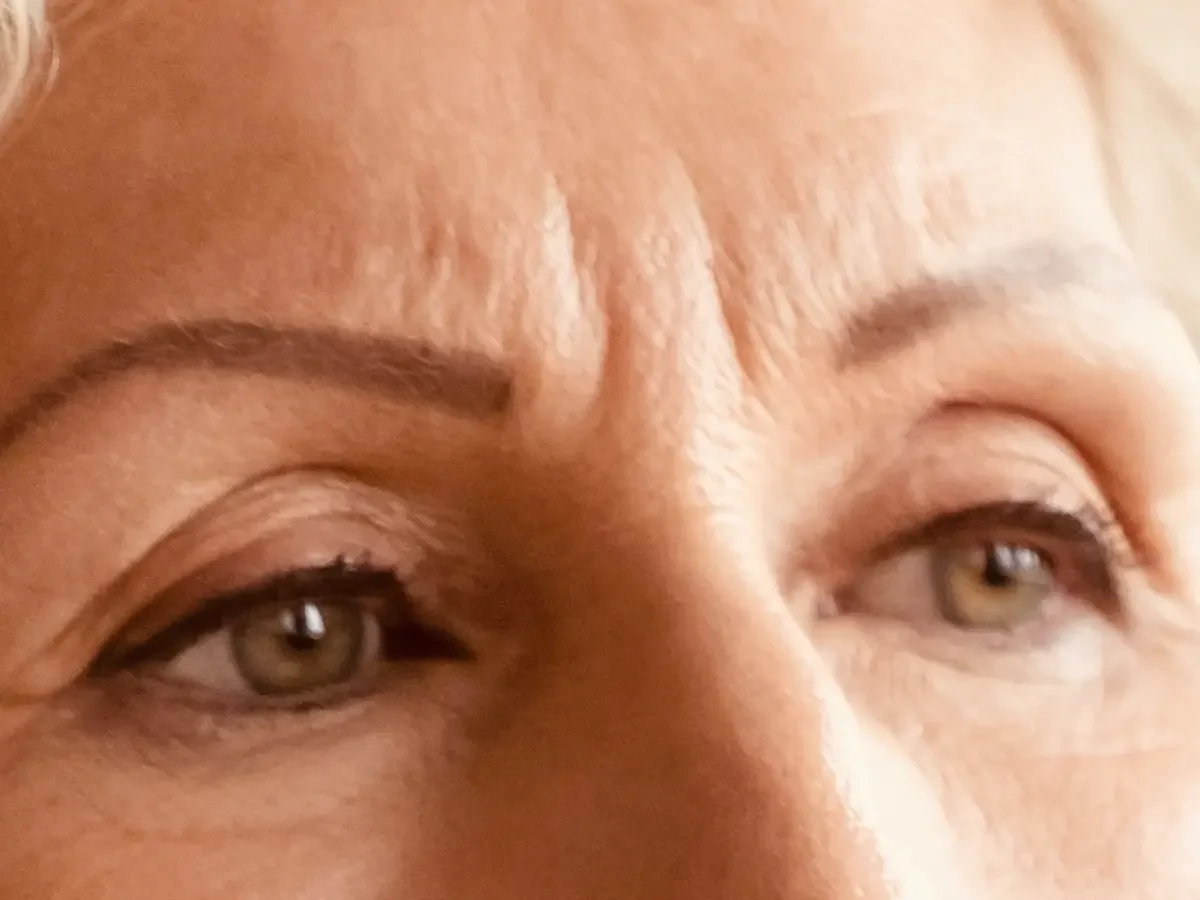
Skin acquires histories.
The Right to Miss What Is Gone
The goal is not to arrive at a precise attitude toward aging. We can be interested in who we are becoming while remaining tender toward who we have been. We can notice a changing body without treating what we have now as a failure. We can grieve a younger face without wanting to be young again.
The strange grief of aging comes from knowing that nothing has gone wrong. This is simply what a life looks like as it continues: one version of you becoming another, while all the earlier versions remain somewhere inside the person who is still here.
Time takes something from us. It also gives us the only thing that makes loss possible in the first place: more life.
Further Reading: On the Self That Stays While the Face Changes
These pieces follow the same idea in different forms — that a self can change in public, through a face, a wardrobe or a life story, and remain recognizably her own.
→ The Life That Doesn’t Fit in a Sentence: The same permission without a verdict: a life, like a face, keeps changing and does not need a conclusion.
→ What Iris Apfel Knew About Getting Dressed: Another answer to aging that is neither fighting it nor embracing it: Apfel wore the same instinct at ninety that she wore at thirty.
→ Beyond Style: The Cultural Meaning of the Outer Self: Why appearance is more than vanity: the outer self as the place where identity becomes visible, and changes because we change.