What to Eat While Reading Minbak: A Food Pairing Guide
Minbak is a novel about what happens in the spaces between people: the silences, the withheld truths, the ordinary acts of care that substitute for the things no one can bring themselves to say. Food is never incidental in this novel. In Korean tradition, preparing a meal for someone is itself a form of communication, a claim about their worth, an act of love that does not require language.
These three dishes are chosen to sit alongside the novel's three emotional registers: duty, longing, and the tentative warmth of something beginning to thaw.
Jangjorim
For Hana. For the meal that says, I am still here.
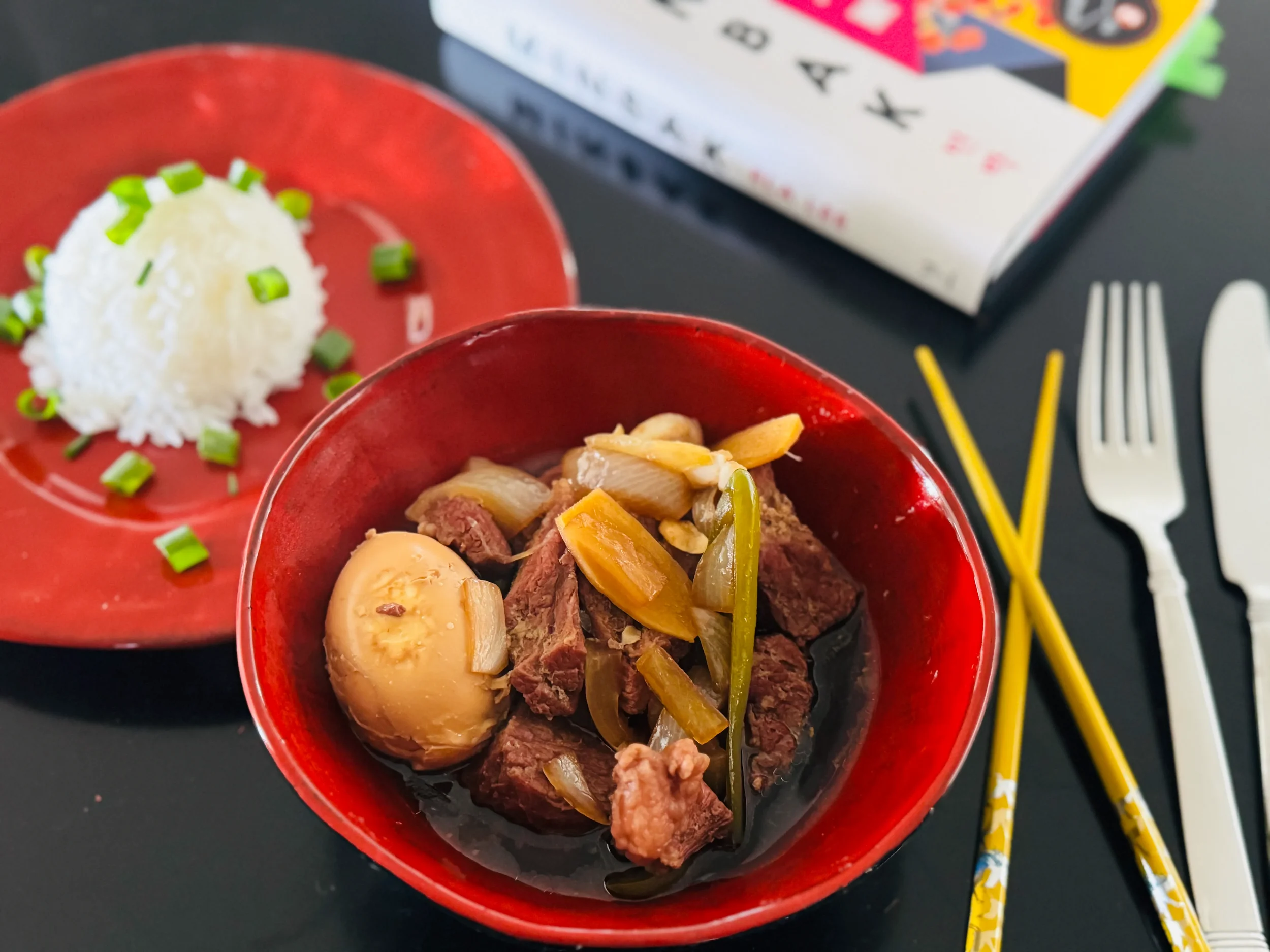
Jangjorim is braised beef in soy sauce, slow-cooked until it yields completely: tender, deeply savory, made to last. In the novel, it is one of the dishes Hana prepares for the minbak guests: functional, considered, and quietly revealing. It is the food of someone who has learned to show care through precision rather than warmth. There is nothing showy about jangjorim. It does not ask to be noticed. It simply sustains.
It is also, unmistakably, a dish that requires patience. You cannot rush it. The flavor develops in the waiting, which feels exactly right for a novel about truths that take decades to arrive.
Making it is part of the point. The preparation asks something of you before the reading even begins: trimming the beef, measuring the soy, waiting through the long braise while the smell slowly fills the room. By the time you sit down with the novel, you have already done something Hana would recognize.
Jangjorim
Braised beef in soy sauce. A dish made to last.
Ingredients — serves 4
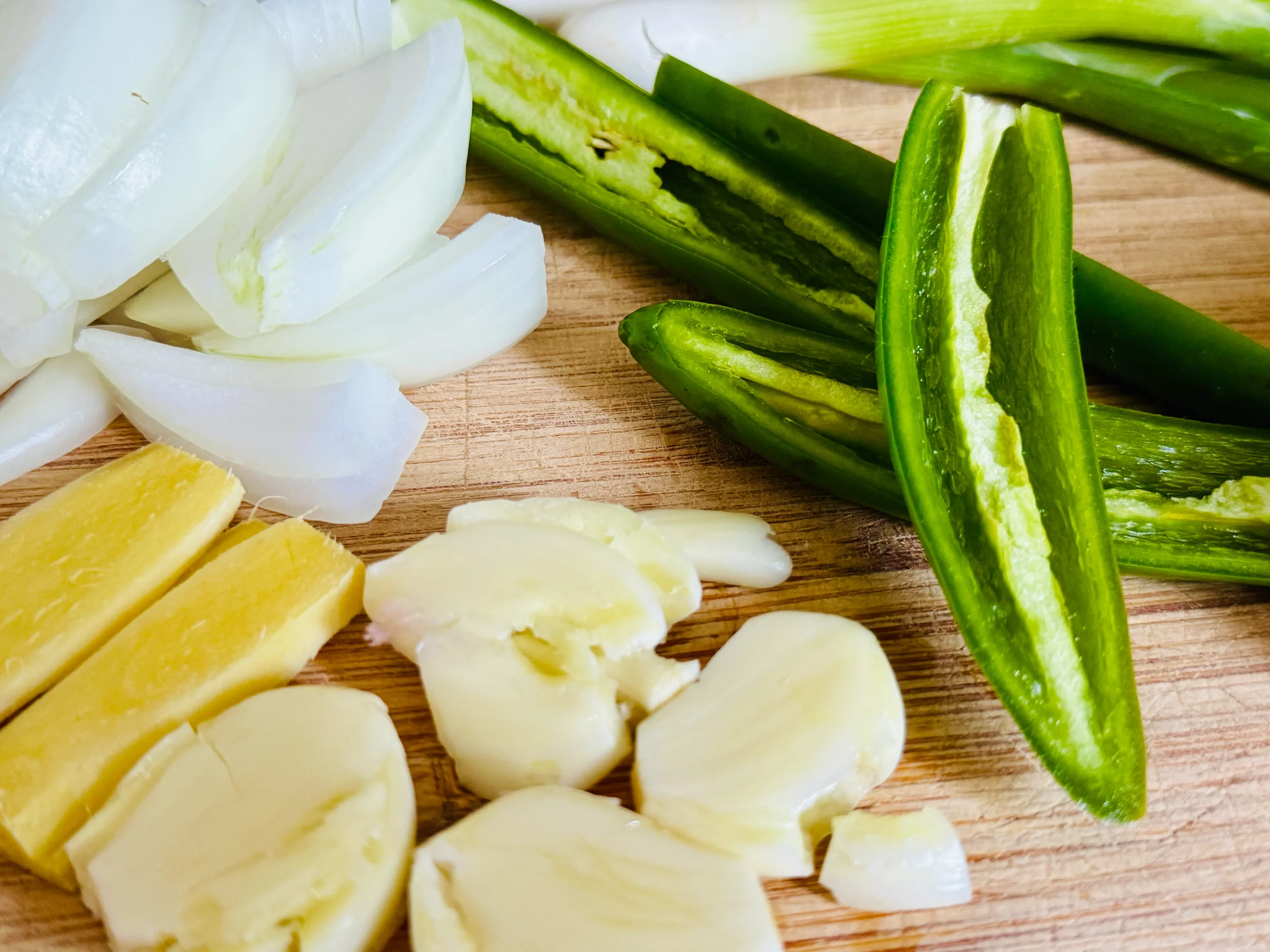
1 pound beef brisket or flank, cut into large pieces½ cup of soy sauce1 tablespoon sugar4-5 garlic cloves, peeled and lightly crushed1 medium onion in wedges3 thin ginger slices4 hard-boiled eggs, peeled2 shishito or mild green peppers (optional)3 scallions to serve7 cups of water
Instructions
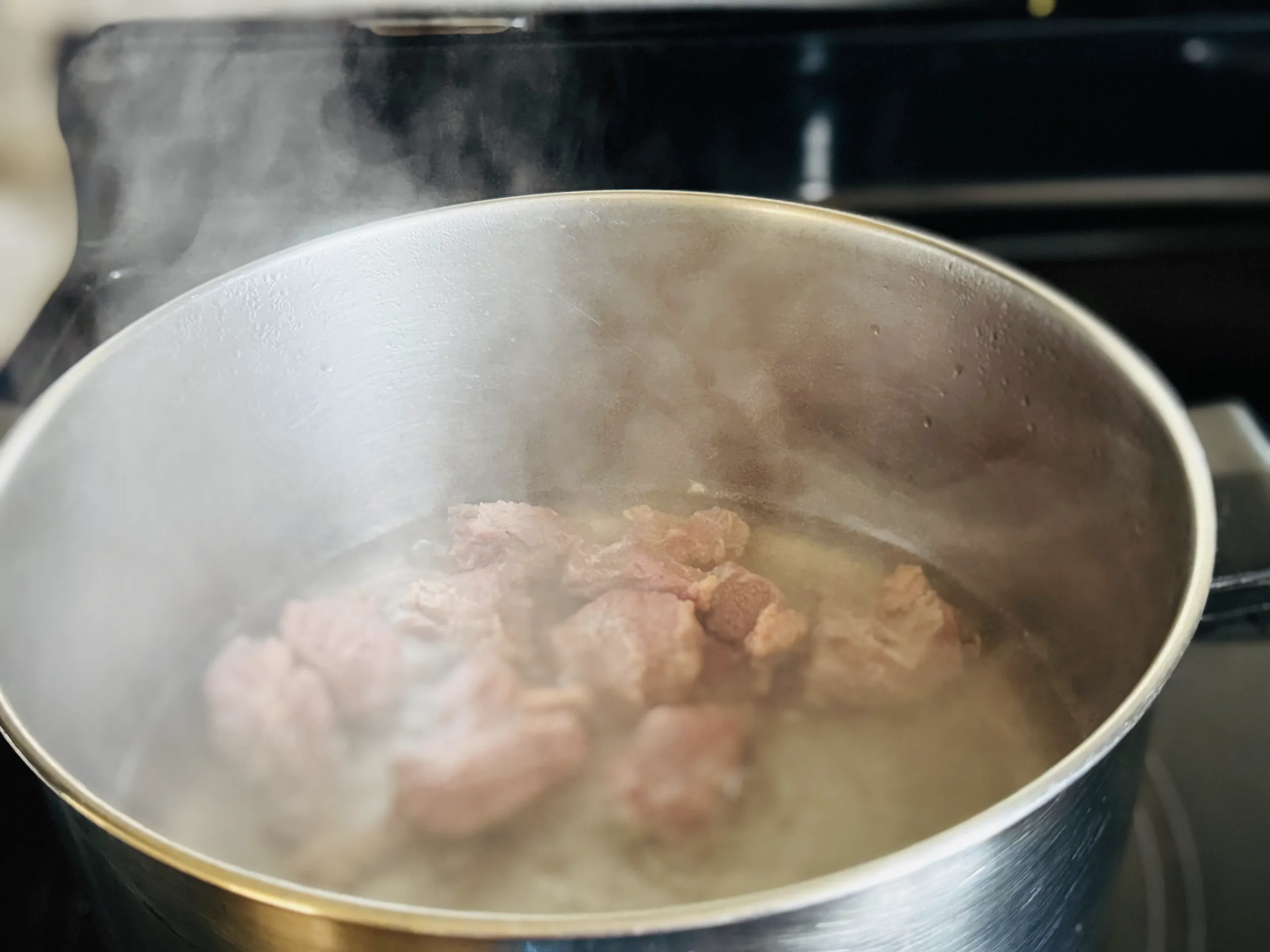
Place the beef in a pot with 3 cups of water. Bring to a boil and blanch for 5 to 7 minutes. Drain and rinse. This step is not glamorous. It is just necessary; the kind of preparation Hana would do without comment.
Return the beef to the pot. Add 4 cups of water, cover, leaving a small gap to let steam escape, reduce to medium heat, and cook for about 40-45 minutes.
Once the liquid has reduced and deepened, add the soy sauce, ginger, sugar, garlic, onion, and green peppers if using. Stir a few times with a wooden spoon.
Reduce to a low simmer. Add the peeled eggs. Cover and cook for another 15-20 minutes, until the eggs have taken on color and the beef pulls apart easily at the edges.
Remove from heat and allow to cool slightly in the braising liquid. Jangjorim can be eaten at room temperature or cold, which makes it ideal for preparing ahead. It keeps for several days, improving as it sits. It is, in this way, patient food.
Serve with steamed rice, scallions, and whatever silence the evening asks for.
Pair with the chapter where Ada begins to understand that her mother's distance was never indifference.
Doenjang jjigae
For Youngja. For memory, and the smell of home.
Fermented soybean paste stew is one of the oldest, most personal dishes in Korean cooking. Every family makes it differently. Every version carries the specific memory of whoever taught you. For Youngja (whose grip on the present loosens throughout the novel even as the past sharpens), doenjang jjigae is the kind of food that lives in the body before it lives in the mind. The smell of it is home. The taste of it is a time before everything went wrong.
It is also a dish that foreigners sometimes find difficult on first encounter: complex, a little bitter, and an acquired depth. Much like Youngja herself.
A recipe here would be the wrong instinct. The point of doenjang jjigae is that your version already exists, passed down from whoever taught you. That is exactly what the novel is about.
Pair with Youngja's chapters, particularly the ones where past and present blur into each other.
A Simple Roast With Bread
For Ada. For London, and the life Hana tried to build.
Ada has grown up in Wimbledon. Her frame of reference is English: Sunday roasts, corner shops, the particular social performance of a well-maintained household on a well-maintained street. The food of her childhood is her mother's careful assimilation made edible, Korean techniques quietly folded into Western forms, the seams invisible unless you know to look.
Including something plain, uncomplicated English here is intentional. It honors the in-between space Ada inhabits, neither fully inside her mother's world nor fully outside it, and the way Minbak treats diaspora identity with honesty rather than sentimentality. Ada is identified as not fully Korean when her grandmother is.
She is something new, still becoming, and the novel does not ask her to be otherwise.
Pair with the London timeline chapters, and with the moment Ada finally asks the question she has been holding for years.
As we explore in The Table as Connection, the shared meal asks something specific of the people around it: presence, the willingness to need, the temporary suspension of the careful self-sufficiency we perform everywhere else. In Minbak, three women compressed into one room cannot avoid this. The kitchen becomes the safe place where everything Hana allows to become visible.
That is what food does in this novel. The kitchen becomes an argument, made slowly, in soy sauce and silence, for the things that could not be said any other way.
Further Reading:
Minbak — May Book Review—our May book pick
What to Eat While Reading Wild Dark Shore—our April food pairing guide
The Table as Connection: How Shared Meals Build Emotional Intelligence