Written in the Space Between
On Latina writers who turned what couldn't be said directly into the very architecture of the story.

Isabel Allende. Photo credit: Lori Barra
Some truths don't survive being stated plainly. A few writers have built entire careers on finding the form that could hold them anyway.
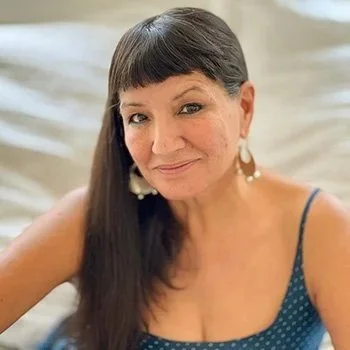
Sandra Cisneros - Photo credit: Keith Dannemiller/Library of Congress
Cisneros and the Sentence Left Unfinished
Sandra Cisneros' The House on Mango Street opens plainly enough—"We didn't always live on Mango Street"—and builds from there in vignettes, not chapters: short, spare, deliberately incomplete, closer to English shaped by a Spanish cadence than to a fully resolved narrative. Some experiences of growing up between two cultures could never fit inside a finished sentence. The incompleteness was never the flaw.
Allende and the Truth Too Dangerous to Say Directly
Isabel Allende’s The House of the Spirits utilizes a circular narrative structure, opening and closing with the same six words: "Barrabás came to us by sea." Between those two identical lines sits a Chile living through dictatorship and disappearance, told through ghosts, premonitions, and a family whose women see what hasn't happened yet. Magical realism does real work here: it tells a history that direct realism, under a regime that punished directness, was never safe enough to tell straight.

Elizabeth Acevedo - Photo credit: Poetry Foundation
Acevedo and the Voice That Needed a Different Shape
Elizabeth Acevedo's The Poet X, winner of the 2018 National Book Award for Young People's Literature, is written entirely in verse. Its narrator describes the world she's grown up in as one that "wears masking tape over its mouth"—and the verse form exists specifically to remove that tape, giving Xiomara's interior life the rhythm of a voice finally finding its way into language after years of being held in.
Moreno-Garcia and the Horror That Told the Truth Plainly
Silvia Moreno-Garcia’s Mexican Gothic blends a traditional haunted-house story with real history, focusing on British silver barons in the Mexican countryside whose patriarch preaches eugenics, and a mansion whose very walls are diseased by the force keeping the family alive. Horror gave Moreno-Garcia something a straightforward historical novel couldn't risk—permission to make colonial exploitation as viscerally monstrous as it was, instead of describing it from a comfortable distance.
Alvarez and the Story Told Backward on Purpose
Julia Alvarez’s How the García Girls Lost Their Accents moves in reverse chronological order. It opens with the sisters as grown women in New York and concludes in the Dominican Republic, chronicling their childhood before the family fled. Alvarez structured the novel this way to mimic the immigrant mind—constantly looking back toward its origins rather than searching forward for a resolution. The structure isn't a device. It's the closest thing prose can do to reconstructing a life the way exile reconstructs memory: backward, in pieces, toward a home no longer reachable in the present tense.
What the Form Was Holding
None of these five authors were writing around a limitation. Each found the exact shape for what a plain sentence, a plain narrative, a plain telling could never contain.
The form was the truth. It was how the truth was told.
Further Reading: On Form as the Only Honest Telling
These pieces follow the same idea in different forms—that some truths only survive when a writer or director finds the exact shape built to hold them, rather than stating them outright.
→ What the Frame Was Asked to Hold: The same argument, carried by film instead of the page—four directors who let a formal choice hold what dialogue alone couldn't.
→ What Five Hispanic Artists Made Visible: A different mechanism, the same instinct—the body and the archive as evidence, rather than form as the vessel for what couldn't be said.