The Skin Barrier Asks for Very Little
On restraint, and what skin gives back when it is left alone.

Your skin has boundaries, too.
The skin barrier works quietly, holding moisture in and the weather out. When it is worn thin, from harsh weather, chronic stress, or simply doing too much, it shows. Tightness that lingers. Sensitivity that wasn’t there before. Skin that feels reactive instead of resilient.
Skin barrier repair isn’t a trend. It’s a return.
The Era of More
For years, skincare culture rewarded excess. The ten-step routine, brought to the West by Soko Glam, boomed around 2016 and taught a generation that clear skin depended on layering: more exfoliation, more actives, more steps. Over time, “more” proved unsustainable, especially for sensitive, dry or reactive skin. By 2021, “skinimalism” was trending on TikTok and Reddit, and Pinterest’s trend report called it the biggest skin-care trend of the year.
A compromised barrier reveals itself: flaking skin, redness that won’t settle, breakouts that ignore treatment, a sting when a product goes on. Even the most expensive product can feel irritating. These are not signs that skin needs stronger solutions. They are signals that it needs less, and better. “Problem skin” often reflects a compromised skin barrier.
A Wall, Not a Surface

Dermatologists describe the barrier as a brick wall. Skin cells are the bricks, and the lipids between them, ceramides, cholesterol, and fatty acids, are the mortar. Ceramides make up roughly half of it. Strong surfactants, hot water, and layered acids strip the mortar along with the dirt. The result is a barrier that can no longer hold moisture, leaving skin prone to dryness and reactivity.
That is why repair comes down to what to put back and what to stop taking out. Ceramides instead of acids. Balms instead of foams. Gentle cleansers that respect the skin’s natural rhythm. Ceramides help restore the lipid barrier; fatty acids and cholesterol return softness and flexibility, and glycerin or hyaluronic acid hydrate without irritation. Fragrance, harsh surfactants, and unnecessary actives can wait until the wall is rebuilt.
What Subtraction Looks Like
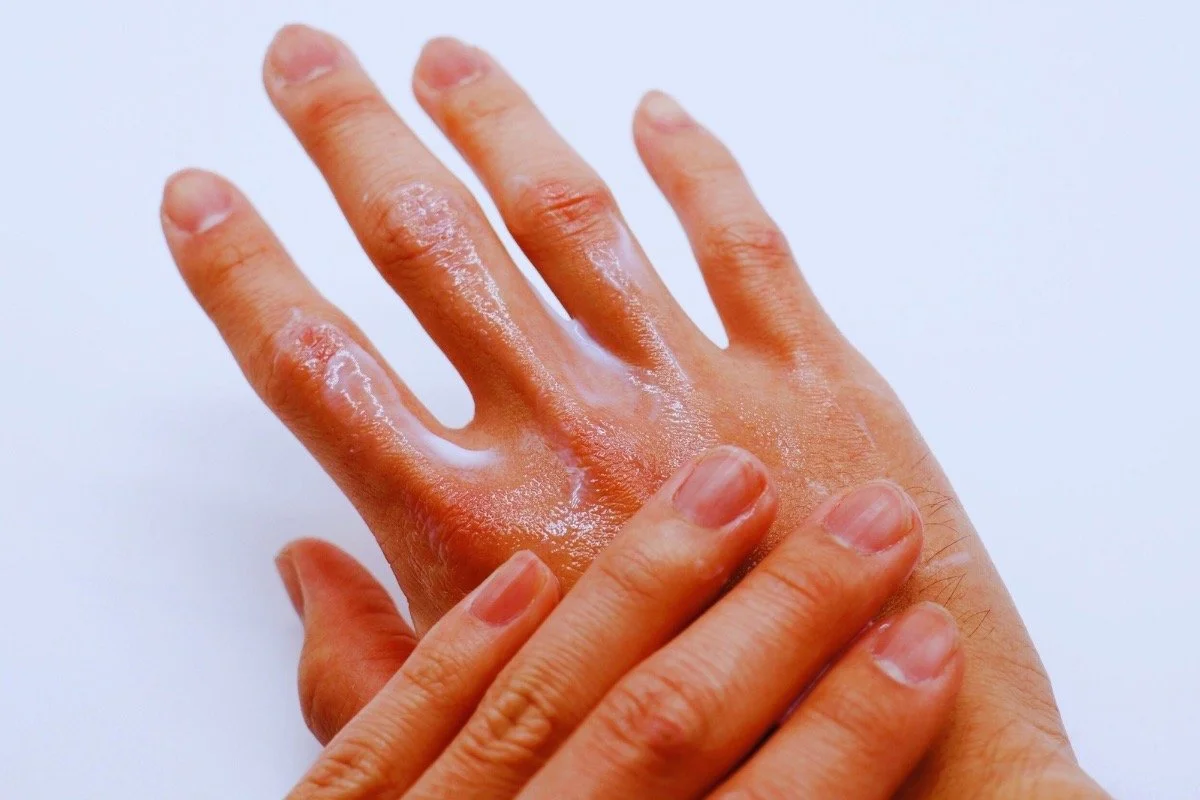
Repairs Requires Calm
Repair is also about knowing when to stop. Sometimes it means removing a step, not adding a serum: exfoliation paused, retinoids and acids set aside, skin left to recalibrate. For a few weeks, the routine is three things: a gentle non-stripping cleanser, a barrier-supporting moisturizer, and daily SPF, with a light occlusive layer at night to reduce moisture loss. Repair requires calm before it requires anything else, and the “glow” that returns looks calm instead of shiny. Often the practice is attention: washing without rushing, noticing how the skin responds, stopping before irritation sets in.
Most skin begins to settle within two to four weeks, though more serious damage can take months. Persistent pain, open skin, or symptoms that outlast about twelve weeks are reasons to see a dermatologist for assessment. The urge to fix every fluctuation with a new product is the habit the barrier is recovering from. Repairs take patience.
It extends past the bathroom shelf. Sleep, hydration, stress, and nervous-system regulation all bear on the barrier, and stress and poor sleep slow repair. Skin reflects a life more honestly than we are often taught to admit.
What the Barrier Asks

The skin barrier doesn’t ask for much: less stripping, less overloading, and a little more care. Give it that consistently and patiently, and it returns the favor: skin that holds its own and does not flinch at every change in weather or season.
That is what barrier repair builds. Not a better routine. A more resilient relationship with your own skin.
Further Reading: On Restraint as a Form of Care
These pieces follow the same idea in different forms — that care is often a matter of attention and restraint more than addition.
→ The Ritual We Rush Through: The same care at a different speed: a few minutes of attention before the day takes over, where this piece takes weeks of subtraction.
→ What The Body Is Trying to Tell You: The same barrier logic — gentleness, restraint, patience — applied to hair.