On a ballet that opened to a cool reception, and the holiday ritual it became.
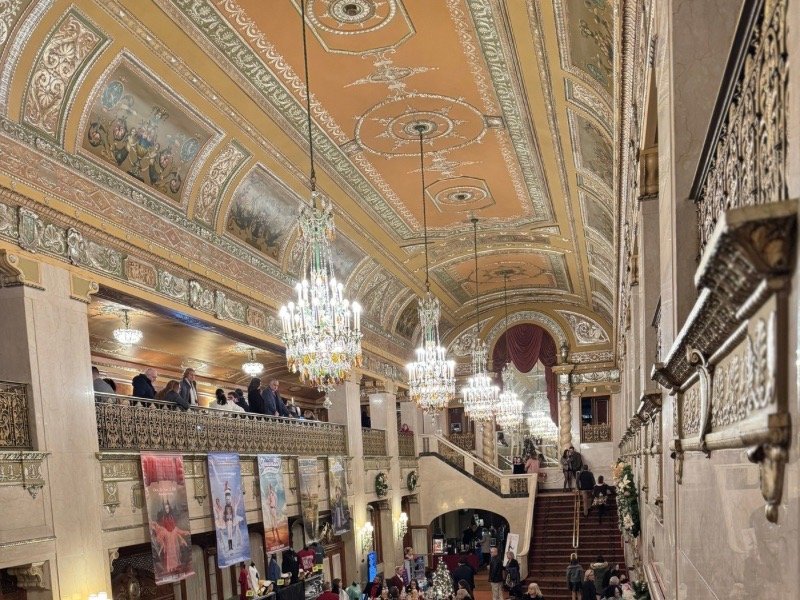
Benedum Center lobby
The Nutcracker did not begin as a tradition. It began as a disappointment. When it premiered at the Mariinsky Theatre in St. Petersburg on December 18, 1892, paired with Tchaikovsky’s one-act opera Iolanta, the reception was cool. Tchaikovsky died less than a year later and never saw it become one of the most performed ballets in the world.
The Score Outlived the Ballet
The music was a success from the start. Tchaikovsky had arranged a suite from the score months before the premiere, and audiences responded to it at once. Its most famous sound came from an instrument he had heard in Paris: the celesta, invented only a few years earlier. He arranged for one to be sent to Russia and asked his publisher to keep it quiet, so that no rival composer would use it first.

Nutcracker doll and ballet shoes for The Nutcracker.
That secret is the shimmer in the Dance of the Sugar Plum Fairy. Heard live, it floats through the auditorium in a way a recording flattens, and it echoes the way holiday music carries emotional memory, the idea explored in The Emotional Power of Christmas Music.
How America Made It Christmas
It was in the United States, not Russia, that the ballet became a seasonal fixture. San Francisco Ballet staged the first full-length American production on Christmas Eve 1944, and Balanchine’s New York City Ballet version followed in 1954. Within a few decades, the ballet had become the box-office engine for companies across the country, and the holiday outing for families who might attend no other performance all year.
A Movie Palace Becomes a Ballet House
The Benedum Center suits the story. It opened in 1928 as the Stanley Theatre, a movie palace built for the shared dark of the cinema, and it was restored and reopened as the Benedum Center in 1987. A room made for communal wonder on film now holds it live, and the line between the two rituals is thin. Anyone who returns each December to the films described in The Snuggled Season: Holiday Movies will recognize the habit.
The atmosphere in the lobby is electric before the curtain rises. Children arrive in festive dresses, families and couples clutch their programs and pause for photographs, and the glow of holiday décor stretches from the lobby into the auditorium. It feels less like attending a show than joining a cherished seasonal ritual.
What the Stage Does
Once the curtain rises, the ballet sparkles. Clara’s curiosity radiates from the stage, and the Nutcracker Prince carries elegance and quiet heroism. The choreography is precise and warm, with a narrative clarity that makes every transformation, from cozy living room to the Land of Sweets, feel genuinely enchanting.
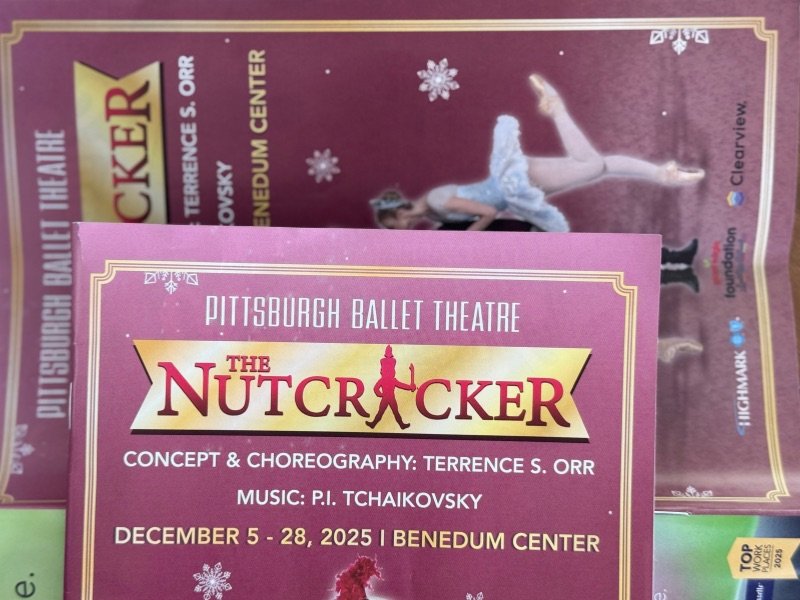
Program for the 2025 Pittsburgh Ballet Theatre Nutcracker.
During the Waltz of the Snowflakes, dancers cascade across the stage, and the delight of children and adults alike amplifies the moment. It is the same shared thrill of a grand opera or a live concert, when audience and performers fall completely in sync. Period costumes, luminous backdrops, and imaginative set design turn the house into a winter wonderland. As snow drifts down in the final moments, the boundary between stage and audience seems to dissolve.
The Room It Made
What stays after the performance is the room: children’s faces lit up, adults whispering memories of past Decembers, a warmth that only a full house can produce. Live performance gives people something a screen cannot, which is presence, shared and unrepeatable.
Tchaikovsky never saw any of it. The Benedum Center, full of children and snow, is what became of the ballet he thought had failed.
Further Reading: On Shared Wonder
These pieces follow the same idea: that what we experience together is what we remember together.
→ How to Bring Back Family Movie Night: On a ritual that began in a backyard, and how to return it there.
→ Albums That Feel Like a Foreign Country: Music as emotional geography.
→ Why We Cry at Fiction We Know Isn’t Real: On why the same story can find one person in tears and leave another completely untouched.